Tomatoes are everywhere—from salads and sandwiches to soups, sauces, and pasta dishes.
Most people have also heard that tomatoes are “good for you.” But what are the actual health benefits of tomatoes, and what makes them nutritionally interesting?
The answer is not just one nutrient.
Tomatoes provide lycopene, vitamin C, potassium, folate, vitamin K, fiber, and several other plant compounds. Lycopene, the carotenoid responsible for much of a ripe tomato's red color, has received particular attention in nutrition research.
So rather than simply listing “10 tomato benefits,” let's look at what tomatoes actually contain, what research suggests, and whether it matters if you eat them raw or cooked.
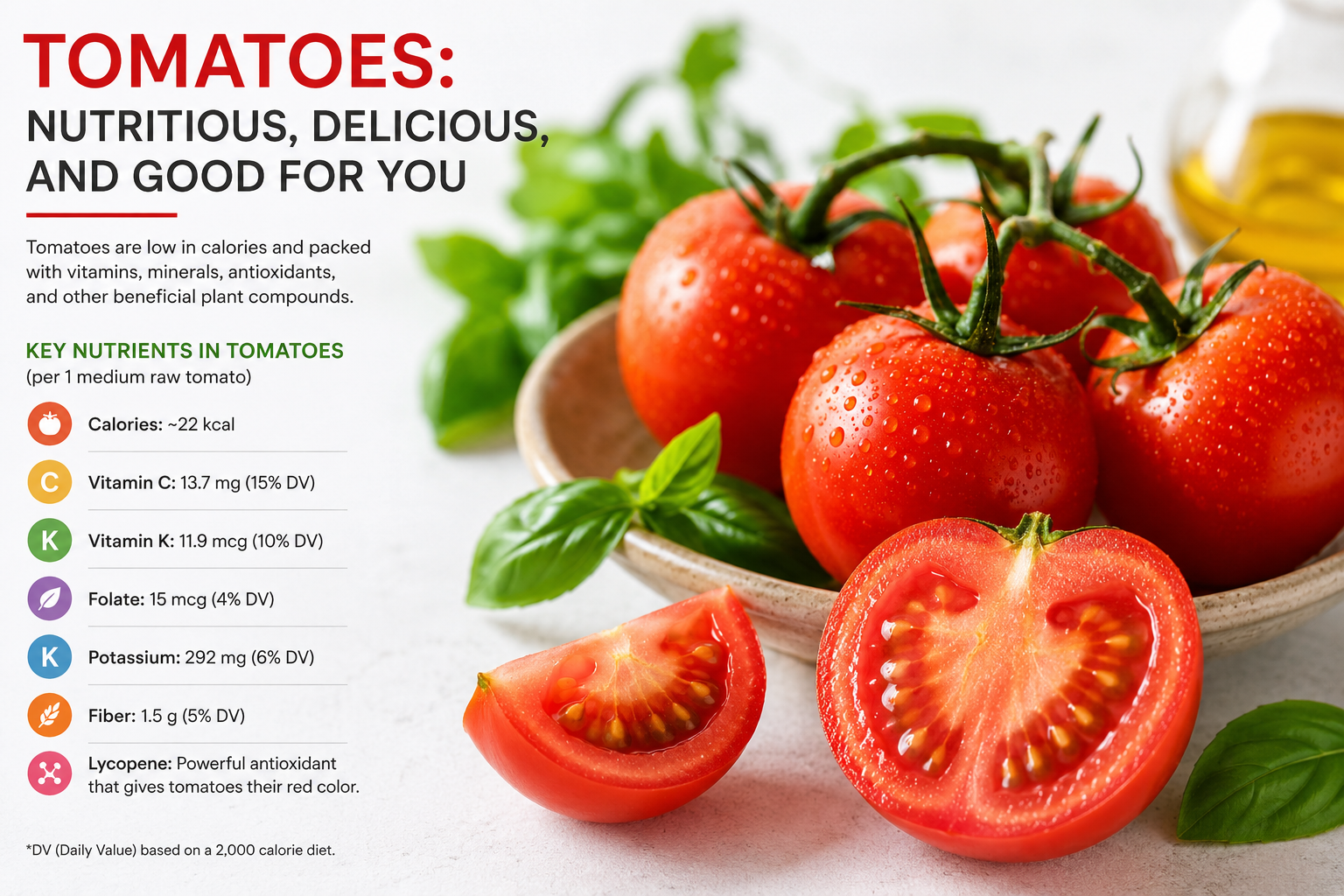
Tomato Nutrition: What's Actually Inside a Tomato?
Tomatoes contain relatively few calories while providing several important nutrients.
A medium raw tomato provides vitamin C, potassium, vitamin K, folate, fiber, and a variety of carotenoids and other plant compounds.
One of the best-known is lycopene.
Lycopene is a carotenoid pigment found in red and pink foods, with tomatoes and tomato products being major dietary sources.
But it is important not to reduce the nutritional value of tomatoes to lycopene alone.
Tomatoes contain a mixture of vitamins, minerals, carotenoids, and phytochemicals, and researchers continue to investigate how the whole food may relate to health.
What Are the Main Health Benefits of Tomatoes?
1. Tomatoes provide antioxidant compounds
Lycopene and other compounds found in tomatoes have antioxidant properties.
Antioxidants are involved in protecting cells from oxidative damage caused by reactive molecules in the body.
This is one reason tomatoes and lycopene have attracted considerable scientific interest.
However, the presence of antioxidants does not mean that eating tomatoes can automatically prevent or treat disease.
The effects of a whole diet are much more complicated than the action of one food or one nutrient.
2. Tomatoes can contribute to heart-healthy eating
Tomatoes and lycopene have been investigated in relation to cardiovascular health.
Reviews of human studies have reported associations between tomato or lycopene consumption and several cardiovascular markers, including blood pressure, cholesterol, inflammation, and blood vessel function.
Results are not identical across every study, however.
That means tomatoes are better viewed as one component of an overall heart-healthy dietary pattern, rather than a treatment for cardiovascular disease.
3. Tomatoes provide vitamin C
Tomatoes are also a source of vitamin C.
Vitamin C has several important physiological functions and also acts as an antioxidant in the body.
Tomatoes are certainly not the only way to obtain vitamin C—citrus fruits, peppers, berries, and many other fruits and vegetables provide it as well—but they can contribute to overall daily intake.
4. Tomatoes contain potassium
Potassium is an essential mineral involved in functions including normal nerve transmission and muscle contraction.
Tomatoes provide potassium along with many other plant foods.
Again, the important point is not that tomatoes contain a “special” form of potassium. It is that regularly eating a variety of fruits and vegetables can contribute to adequate nutrient intake.
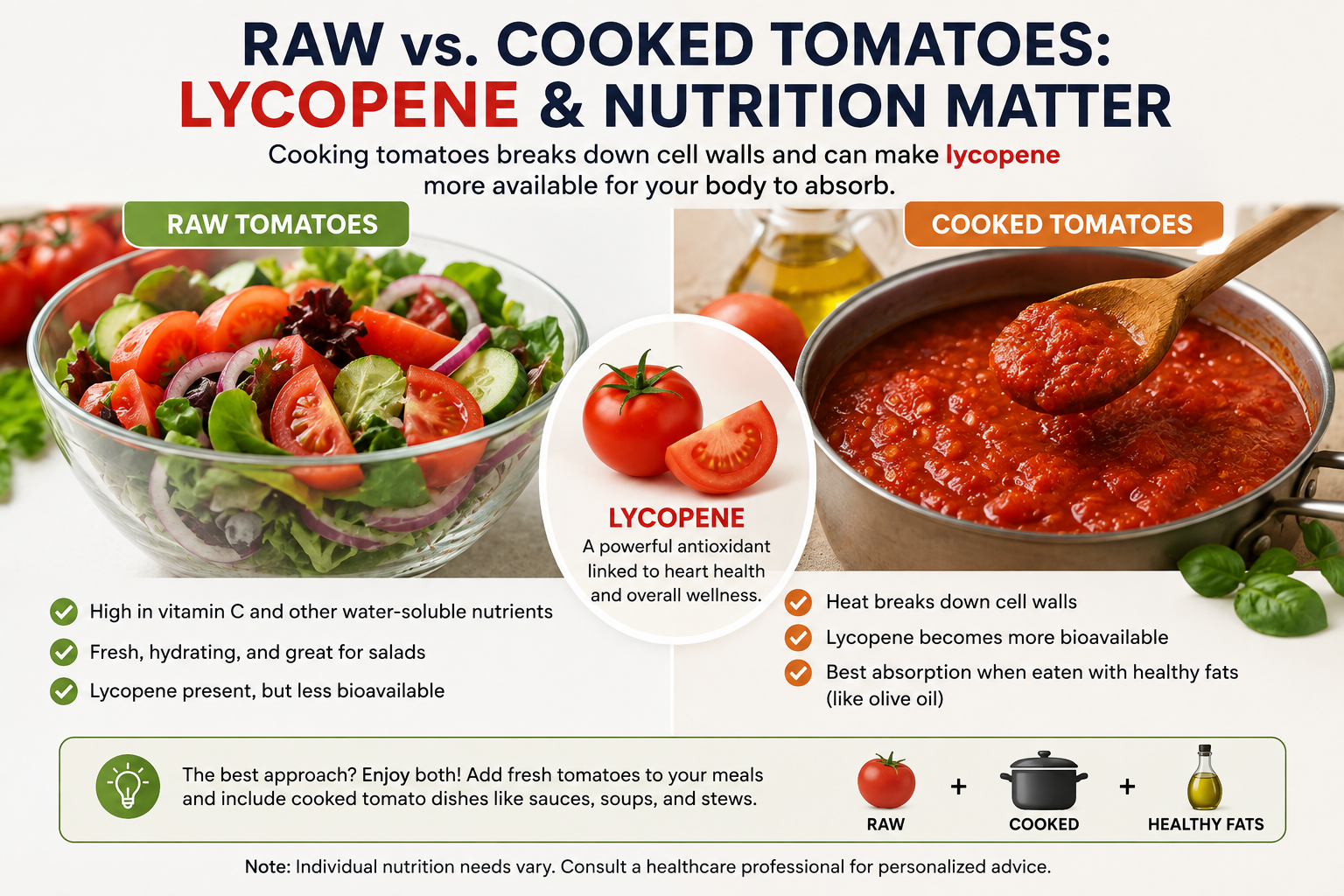
Raw vs. Cooked Tomatoes: Which Is Better?
This is where tomatoes become particularly interesting.
You might assume that raw vegetables are always more nutritious than cooked ones.
With tomatoes, it isn't quite that simple.
Processing and heating tomatoes can alter their plant structure and affect the availability of carotenoids such as lycopene.
Research suggests that lycopene can become more bioavailable in cooked or processed tomato products compared with raw tomatoes.
Lycopene is also fat-soluble, so consuming tomatoes with some dietary fat may influence its absorption.
That is one reason combinations such as cooked tomato and olive oil have been studied.
Does that mean cooked tomatoes are always healthier?
No.
Cooking can also affect heat-sensitive nutrients, and raw tomatoes remain a nutritious food.
There is no need to choose only one.
Fresh tomatoes can work well in salads and sandwiches, while cooked tomatoes can be used in soups, sauces, stews, and other meals.
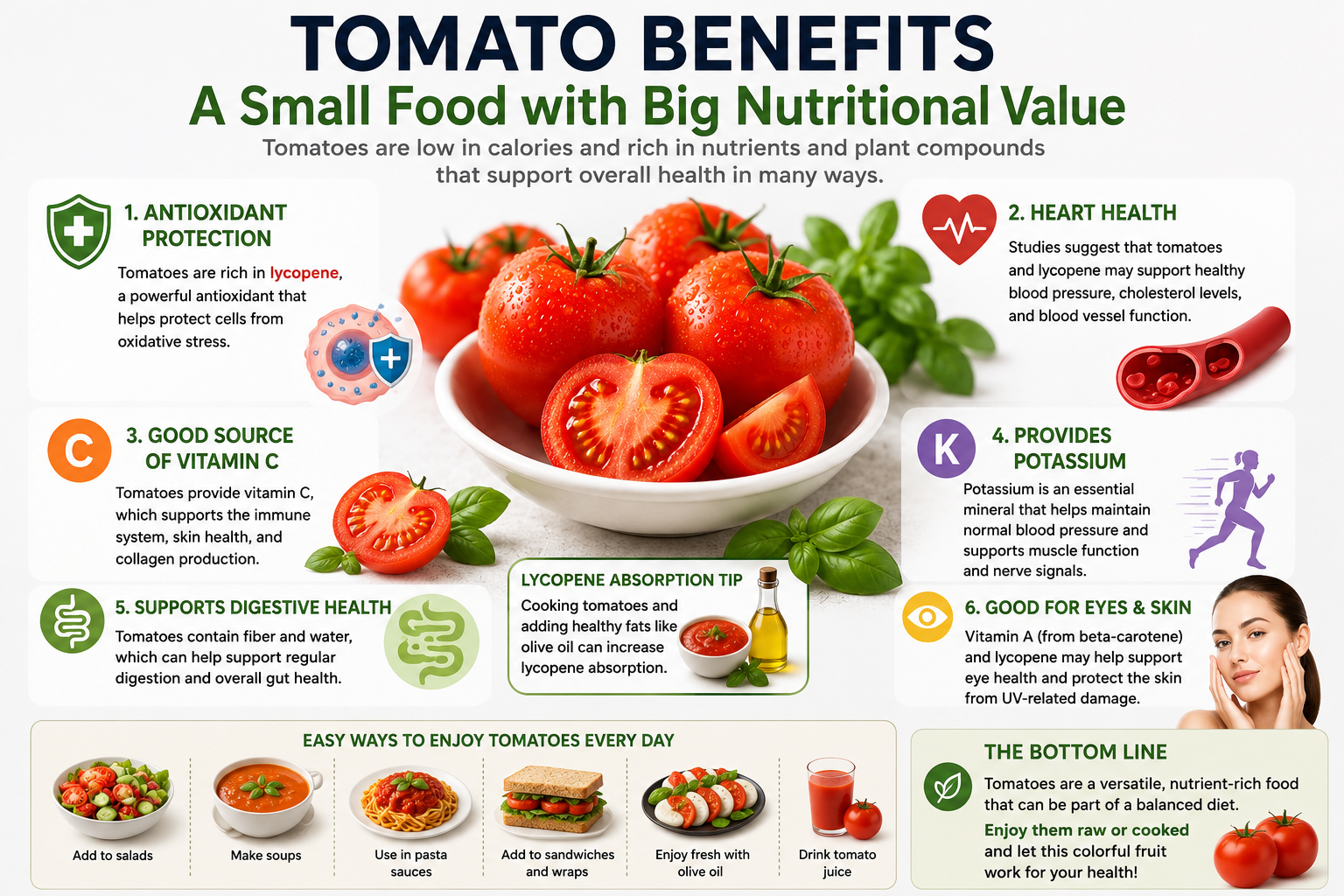
Are Tomatoes Good for Your Heart?
There is scientific interest in this question, particularly because of lycopene.
Research reviews have examined tomato-rich diets, tomato products, and lycopene in relation to cardiovascular risk factors.
Some studies have reported favorable associations with blood pressure, cholesterol, inflammation, and other cardiovascular markers.
But this needs to be interpreted carefully.
Research involving tomatoes does not prove that eating tomatoes alone prevents heart attacks or cardiovascular disease.
Your overall dietary pattern, physical activity, smoking status, body weight, genetics, medical conditions, and many other factors influence cardiovascular risk.
Tomatoes can fit comfortably within a balanced eating pattern rich in fruits, vegetables, legumes, whole grains, nuts, and other minimally processed foods.
What About Tomatoes and Cancer?
This is another area where headlines can easily become misleading.
Tomatoes and lycopene have been studied extensively in relation to several cancers.
Some observational research has found associations between higher tomato or lycopene intake and lower risk of certain cancers.
However, an association is not the same as proof that tomatoes prevent cancer.
Research findings vary according to cancer type, study design, population, dietary pattern, and the form and amount of tomato or lycopene consumed.
For that reason, it is inappropriate to describe tomatoes as a food that “prevents cancer.”
A more accurate conclusion is that tomatoes contain biologically active compounds that continue to be studied as part of the relationship between diet and long-term health.
Is It Healthy to Eat Tomatoes Every Day?
For most healthy people, tomatoes can be included regularly as part of a varied diet.
But there is no requirement to eat tomatoes every day.
Nutrition does not depend on a single “superfood.”
A diet containing a variety of vegetables, fruits, whole grains, legumes, nuts, seeds, and appropriate protein sources is much more important than eating one particular food every day.
If you enjoy tomatoes, rotating between fresh tomatoes, cherry tomatoes, cooked tomatoes, and minimally processed tomato products can provide variety.
Are Tomato Juice and Tomato Sauce Healthy Too?
They can be.
Processed tomato products can provide substantial amounts of lycopene, and processing may improve lycopene bioavailability.
But packaged tomato products are not nutritionally identical.
Tomato sauces, soups, juices, and other products may contain different amounts of sodium, added sugar, and other ingredients.
Checking the Nutrition Facts label and ingredient list can therefore be useful when comparing products.
The word “tomato” on the front of a package does not automatically make the entire product healthy.
So, Why Are Tomatoes Good for You?
The strongest reason to eat tomatoes is not because they perform one miraculous function.
It is because they are a nutrient-rich plant food that provides lycopene, vitamin C, potassium, fiber, folate, and other beneficial compounds while fitting easily into many different meals.
Research into tomatoes and lycopene is extensive, particularly in areas such as cardiovascular health and oxidative stress, but individual studies should not be interpreted as proof that tomatoes prevent or cure disease.
The practical takeaway is much simpler:
Eat tomatoes because they are one useful part of a varied, balanced diet—not because you expect one food to transform your health.
Fresh or cooked, tomatoes give you another easy way to add plant foods and nutritional variety to your everyday meals.
References
- Cleveland Clinic — What Are the Health Benefits of Tomatoes?
- USDA Agricultural Research Service — Tomato nutrient and bioactive compound research
- Ali MY et al. Nutritional Composition and Bioactive Compounds in Tomatoes and Their Impact on Human Health and Disease. Foods. 2021.
- Collins EJ et al. Tomatoes: An Extensive Review of the Associated Health Impacts of Tomatoes and Factors That Can Affect Their Cultivation. Biology. 2022.
This article is intended for general nutrition education and does not replace medical advice, diagnosis, or treatment. People with medical conditions or specific dietary restrictions should consult an appropriate healthcare professional.