Coffee and protein used to belong to two different parts of the morning.
Coffee helped people wake up.
Protein came from eggs, yogurt, milk, or maybe a shake after a workout.
Now they are increasingly showing up in the same cup.
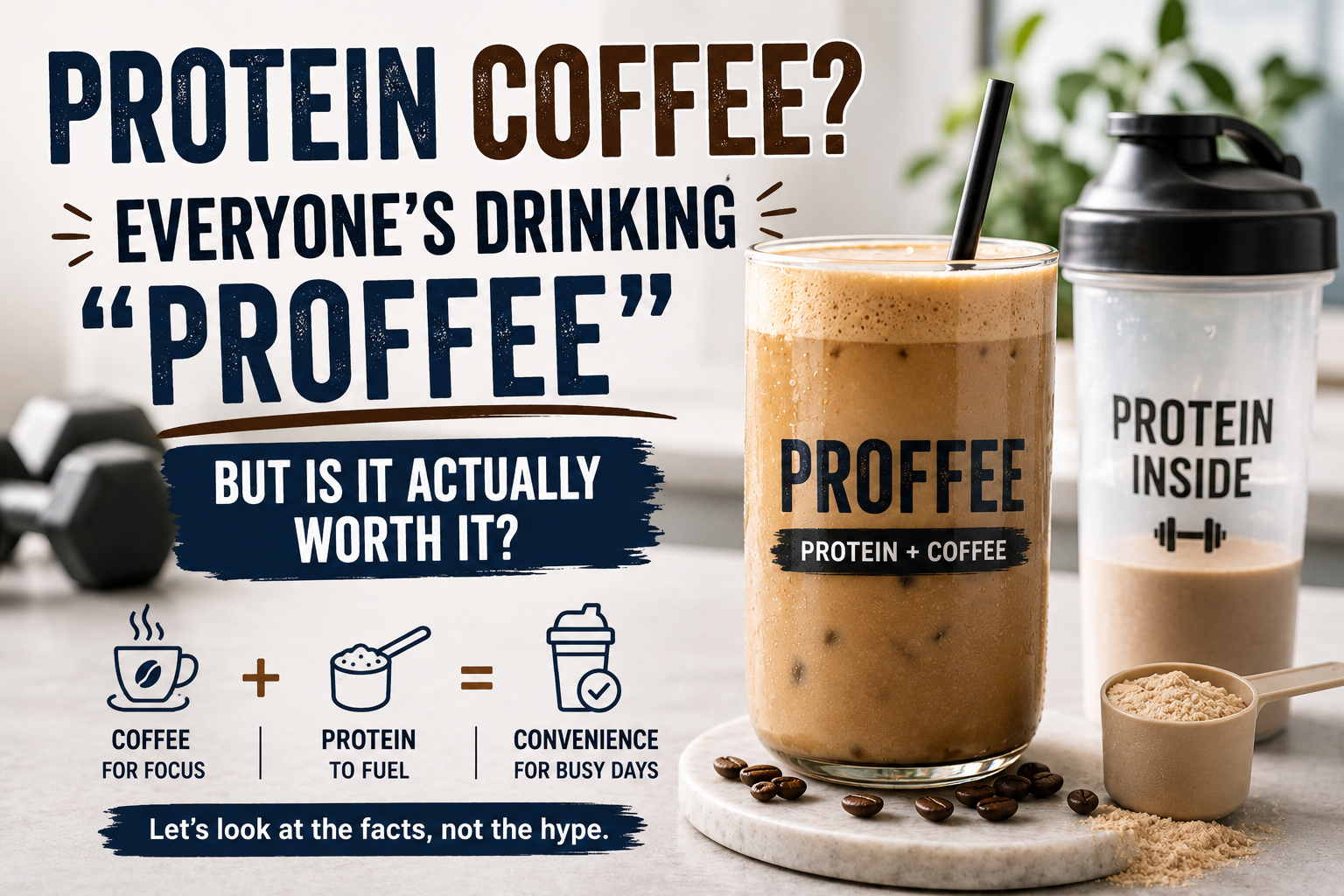
Protein coffee — often called “proffee” — has become a popular way to add protein to a morning routine.
Some people mix protein powder into coffee. Others use a ready-to-drink protein shake instead of creamer. And increasingly, protein coffee is appearing as a packaged beverage of its own.
It sounds convenient.
But does adding protein to coffee create some special nutritional advantage?
Or is it simply coffee + protein in a more convenient form?
Let’s look at what proffee can — and cannot — realistically do.
What Exactly Is Protein Coffee?
There is no single official recipe for proffee.
It might be:
- coffee mixed with protein powder,
- espresso poured over a protein shake,
- coffee with high-protein milk,
- or a bottled coffee drink with added protein.
That means two drinks called “protein coffee” can have completely different nutrition profiles.
One might provide coffee, milk, and a meaningful amount of protein with very little added sugar.
Another could contain a long ingredient list, added sweeteners, and considerably more caffeine.
So the name “protein coffee” tells you surprisingly little about the actual product.
The label matters.
Does Combining Coffee and Protein Create a Special Benefit?
This is where social-media nutrition can get ahead of the evidence.
Protein has well-established roles in the body. It provides amino acids needed for maintaining and repairing tissues and contributes to normal muscle maintenance.
Coffee contains caffeine, which can increase alertness and reduce feelings of fatigue.
But putting the two together does not automatically create a new nutritional effect.
In other words:
Coffee still acts like coffee.
Protein still acts like protein.
The main advantage of combining them is usually convenience, not nutritional magic.
For someone who already drinks coffee every morning but struggles to include protein at breakfast, adding an appropriate protein source may make it easier to increase protein intake.
That can be useful.
But useful and essential are not the same thing.
Could Proffee Be Useful at Breakfast?
This depends heavily on what breakfast normally looks like.
Imagine someone who regularly drinks only black coffee in the morning and does not eat until much later.
Adding protein would obviously provide more protein than coffee alone.
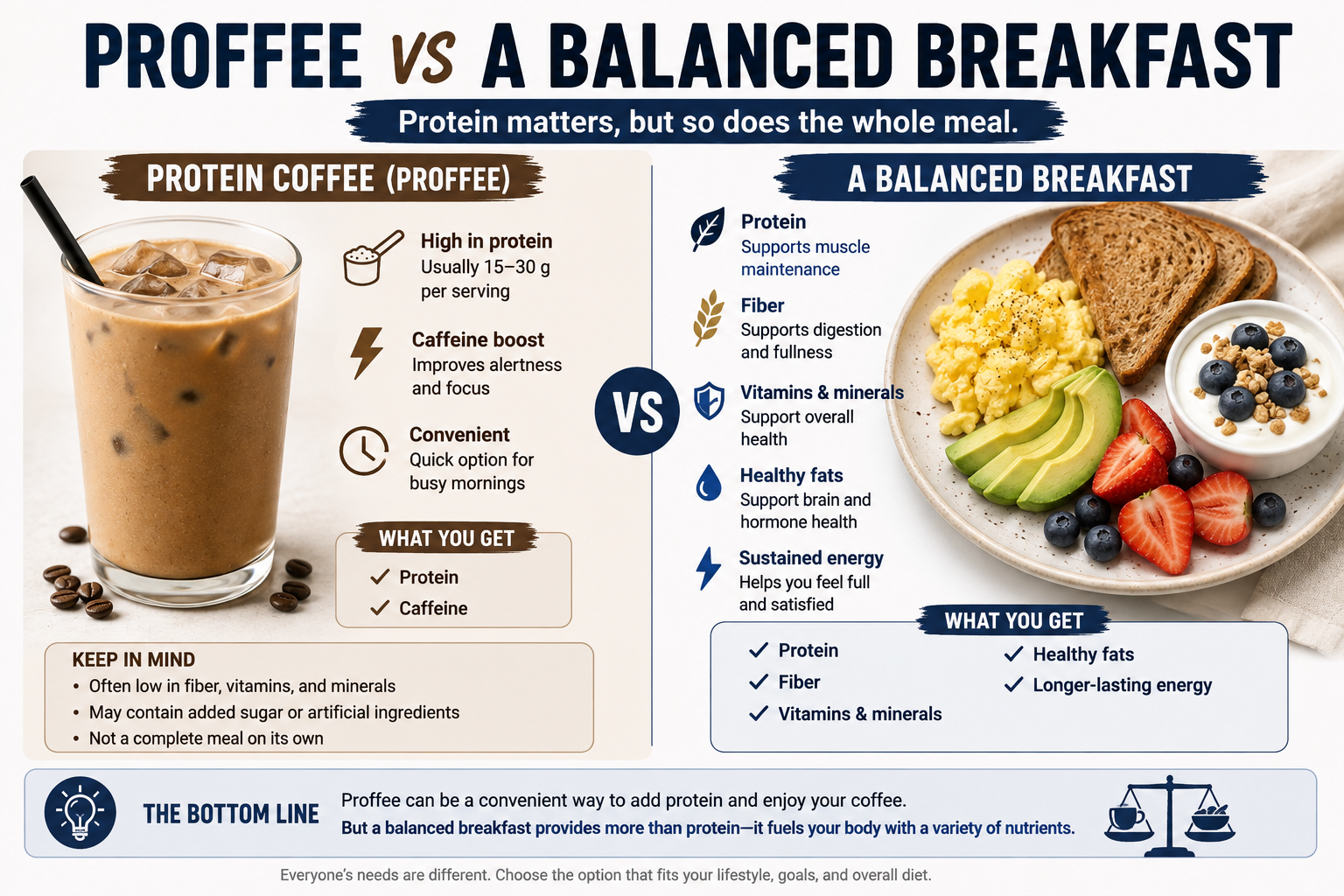
But compare proffee with a breakfast containing foods such as:
eggs + whole-grain toast + fruit
or
Greek yogurt + oats + berries + nuts.
Those meals provide more than protein.
They can also provide fiber, vitamins, minerals, fats, carbohydrates and a wider variety of nutrients.
This is why protein coffee should not automatically be treated as a nutritionally complete breakfast.
Cleveland Clinic similarly notes that protein coffee can be a convenient way to increase protein intake, but it should not be viewed as a replacement for nutrient-dense whole foods.
More Protein Is Not Automatically Better
Protein has become one of the biggest selling points in modern food marketing.
Protein cereal.
Protein bars.
Protein chips.
Protein water.
And now protein coffee.
But seeing the word “protein” on a package does not automatically make a food healthier.
Protein requirements vary according to factors such as body size, age, overall diet, physical activity and individual health circumstances.
Someone who already consumes enough protein throughout the day does not necessarily gain an additional benefit simply by adding more to every meal and beverage.
That makes a better question:
“How much protein am I already getting?”
rather than:
“How can I add protein to everything?”
What About Protein After Exercise?
Protein coffee is sometimes promoted as a fitness drink.
Protein can certainly be useful after exercise because dietary protein provides amino acids involved in muscle protein synthesis and recovery.
But again, the coffee itself does not make the protein uniquely effective.
You could obtain protein from many sources, including:
- dairy foods,
- eggs,
- soy foods,
- meat or fish,
- legumes,
- or a protein supplement when convenient.
For people who enjoy coffee after a workout, proffee may simply combine two things they would have consumed separately.
That is a practical advantage.
It is not evidence that everyone needs protein coffee after exercising.
Don’t Forget About the Caffeine
When people focus on the protein number, they can easily overlook the other half of the drink:
coffee.
Caffeine intake still matters.
The FDA states that for most healthy adults, 400 mg of caffeine per day is an amount not generally associated with negative effects, while sensitivity can vary substantially between individuals.
The amount in a protein coffee can vary depending on the coffee, number of espresso shots, serving size and whether other caffeine-containing ingredients are present.
This becomes particularly relevant when proffee is added on top of:
morning coffee,
pre-workout products,
energy drinks,
tea,
or other caffeinated beverages.
So checking only the grams of protein can give you an incomplete picture.
Sugar and Calories Can Vary Too
Protein coffee can be relatively simple.
Coffee + milk + protein.
But commercially prepared versions can be very different.
Depending on the recipe, a drink may contain flavored syrups, sweetened protein products, creamers or other added ingredients.
That does not automatically make the drink “bad.”
It simply means the word protein should not replace reading the rest of the nutrition information.
Before Buying Protein Coffee, Check These 5 Things
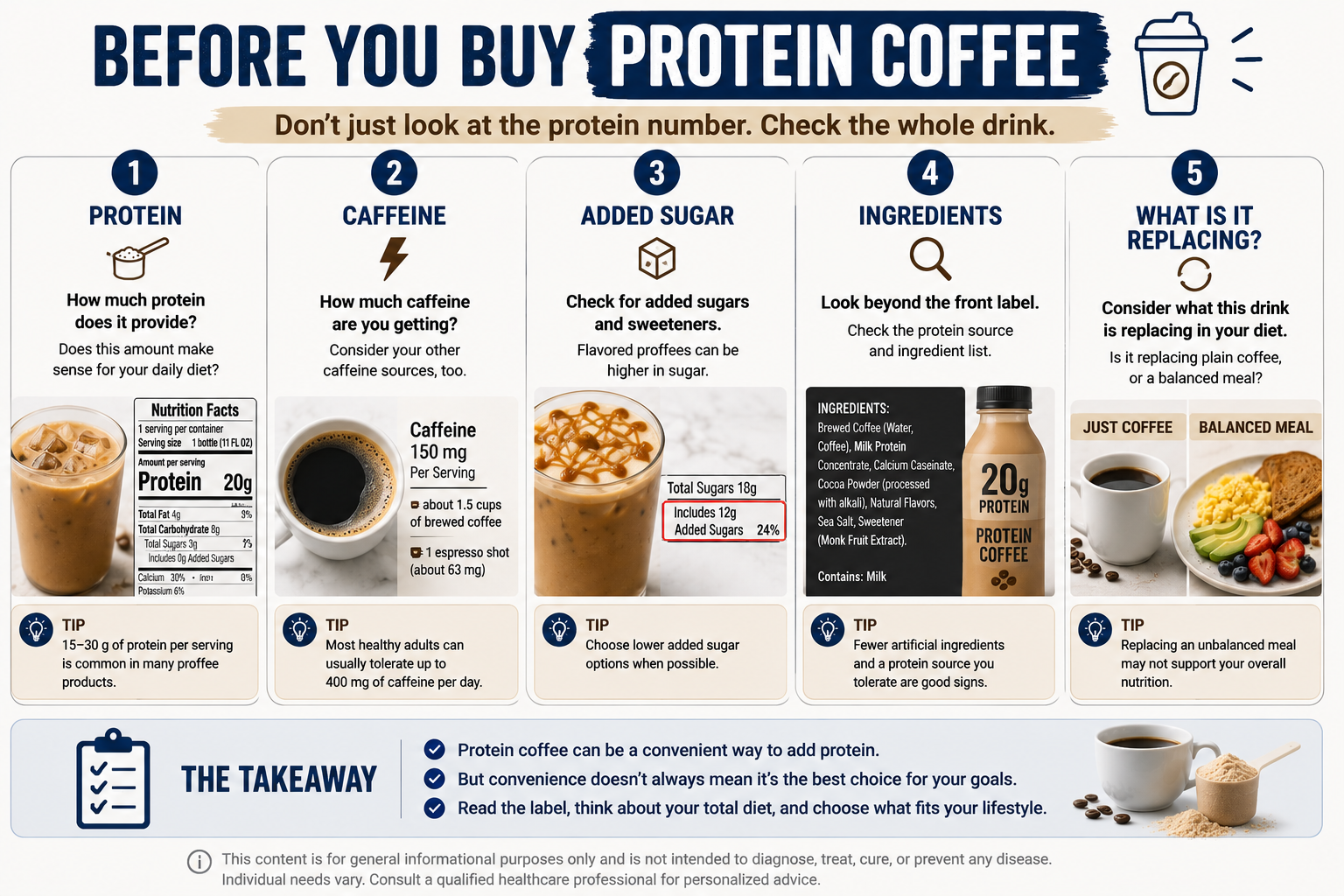
Instead of choosing the product with the biggest protein number, look at the entire drink.
1. Protein
How much does the drink actually provide?
And more importantly, does that amount make sense in the context of your total daily diet?
2. Caffeine
How much caffeine are you getting from the drink?
Remember to include your other caffeine sources during the day.
3. Added Sugar
Check whether sugar or syrups have been added, especially in flavored products.
4. Ingredients
Protein coffee can be made from dairy, whey, casein, soy, pea or other protein sources.
The ingredient list tells you much more than the phrase “high protein” on the front.
5. What Is It Replacing?
This might be the most useful question of all.
If proffee replaces plain coffee and helps you add some protein to an otherwise rushed morning, it may be useful.
If it replaces a balanced breakfast containing several food groups, the nutritional trade-off may be different.
You Don’t Need Protein Powder to Make Coffee Higher in Protein
Another misconception is that protein coffee automatically means protein powder.
It doesn’t.
Milk and some fortified dairy alternatives can contribute protein while also providing other nutrients.
A person could also simply drink normal coffee alongside a protein-containing breakfast.
The body does not require coffee and protein to arrive in the same cup.
Convenience is the main reason to combine them.
So, Is Proffee Actually Worth It?
For some people, yes.
For everyone, no.
Protein coffee may be convenient for someone who:
already enjoys coffee,
needs a practical way to increase protein intake,
and chooses a drink that fits their overall diet.
But it is not a shortcut that suddenly makes breakfast healthier.
And adding protein to coffee does not create a special metabolic combination that everyone needs.
The simplest way to think about it is:
Proffee is a convenient food choice, not a nutritional requirement.
Before buying it because it says “high protein,” look at the whole drink.
Protein.
Caffeine.
Sugar.
Ingredients.
And most importantly, what the drink is replacing in your diet.
Sometimes the best nutrition decision is not about adding another trendy ingredient.
It is about understanding what you already eat.
Health Information Notice
This article is for general educational purposes only and is not intended to diagnose, treat, cure or prevent any disease. Individual protein and caffeine needs and tolerances can vary according to age, health status, medications, physical activity and other factors.
People who are pregnant, sensitive to caffeine, have medical conditions that affect dietary protein or caffeine intake, or have been given specific dietary advice should follow guidance from an appropriate health professional.
References
- U.S. Food and Drug Administration (FDA). Spilling the Beans: How Much Caffeine is Too Much?
- Cleveland Clinic. Should You Drink Protein Coffee?
- National Institutes of Health, Office of Dietary Supplements. Dietary Supplements for Exercise and Athletic Performance – Health Professional Fact Sheet.
- International Society of Sports Nutrition. Position Stand: Protein and Exercise.