Electrolyte packets used to be something you associated mainly with endurance sports or illness.
Now they are everywhere.
People mix electrolyte powders into large water bottles before work, carry hydration sticks while traveling, and use them as part of everyday wellness routines.
That raises a simple question:
Do you actually need electrolytes every day?
Electrolytes are essential. But “essential nutrient” and “essential daily supplement” are not the same thing.
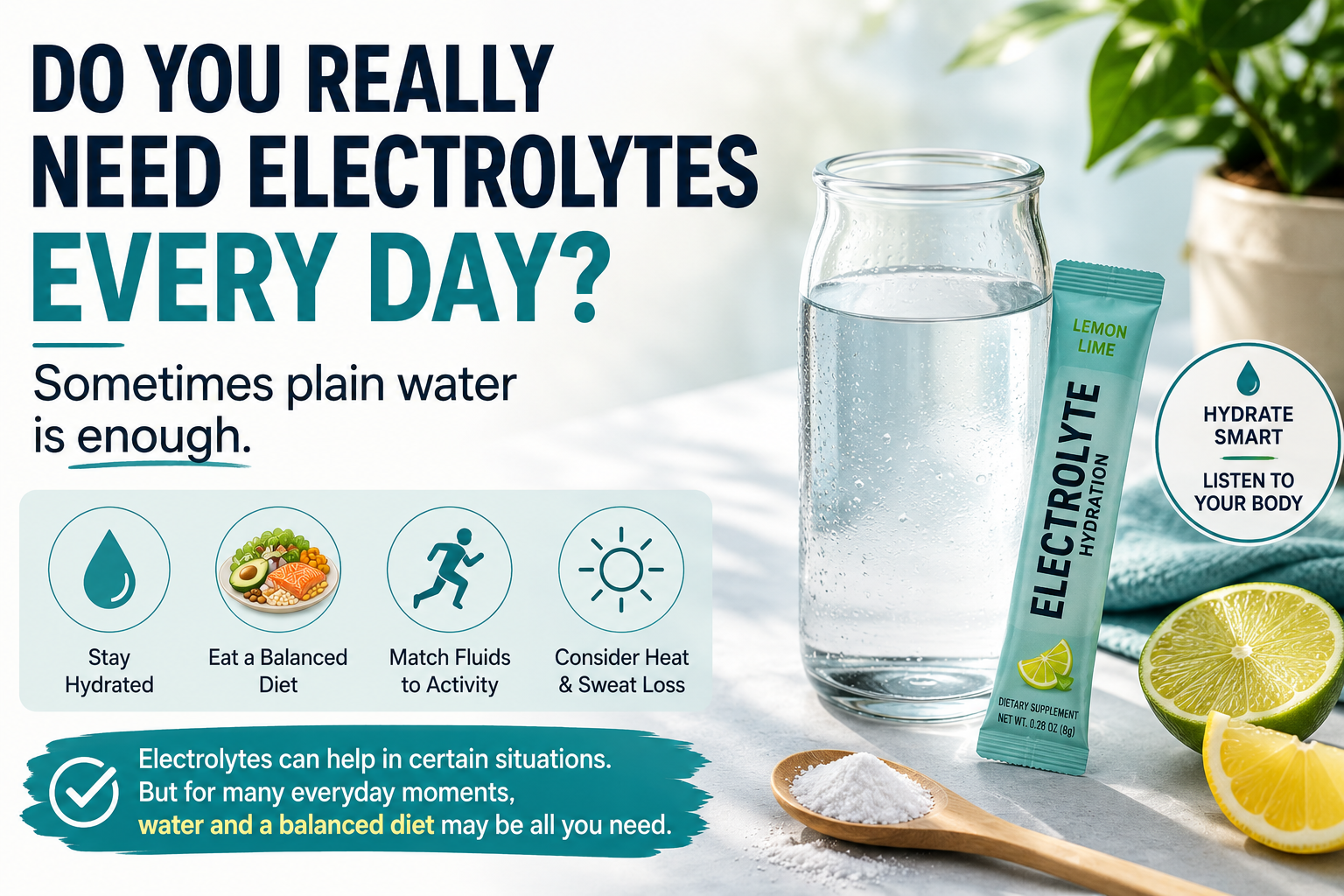
For many healthy people going through an ordinary day, water plus a varied diet may already be enough.
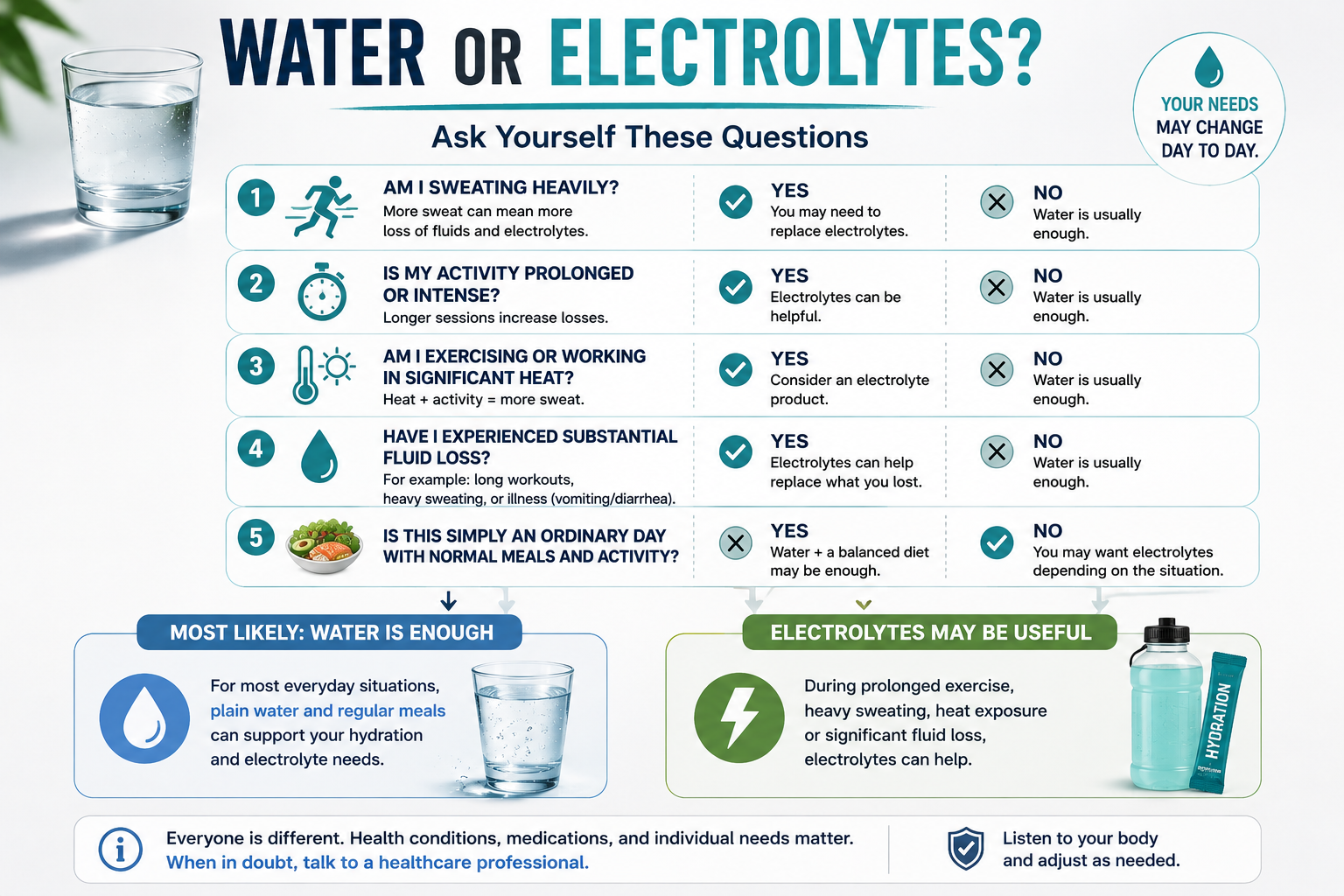
The situations where electrolyte products become more useful usually involve something else: significant sweating, prolonged physical activity, heat exposure, or substantial fluid loss.
So instead of asking which electrolyte powder is best, start with a different question:
What am I actually trying to replace?
What Are Electrolytes Actually Doing?
Electrolytes are minerals that carry an electrical charge when dissolved in body fluids.
They include minerals such as:
- sodium
- potassium
- chloride
- calcium
- magnesium
They are involved in fluid balance, nerve signaling, muscle function, and other physiological processes.
We obtain these minerals from food and beverages. We also lose some through body fluids, including sweat.
This explains why replacing electrolytes can be useful under certain conditions.
It does not, however, mean that everyone needs to add an electrolyte packet to water every morning.
Why Did Electrolytes Become an Everyday Wellness Trend?
Hydration has moved beyond simply “drink enough water.”
Electrolyte powders, tablets, drops, and ready-to-drink beverages are increasingly marketed around hydration, recovery, energy, performance, and general wellness.
There is a positive side to this trend: people are paying more attention to hydration.
But it can also create the impression that plain water is somehow incomplete.
That is where context becomes important.
A product that is useful after substantial fluid and electrolyte losses does not automatically become necessary during every ordinary day.
When Plain Water May Be Enough
Consider a typical day.
You eat regular meals, spend much of the day indoors, and are not sweating heavily for hours.
Perhaps you take a walk or complete a moderate workout.
In situations like these, automatically adding electrolytes to every bottle of water may provide little practical benefit for many healthy people.
Foods already contribute minerals such as sodium, potassium, calcium, and magnesium, while ordinary fluids contribute to hydration.
Water has not suddenly stopped working because electrolyte powders became popular.
The more useful approach is to match your hydration strategy to your actual activity, environment, diet, and fluid losses.
When Electrolytes May Make More Sense
Now change the circumstances.
Imagine prolonged exercise, heavy sweating, physical work in hot conditions, or another situation involving substantial fluid loss.
In these situations, you are losing more than water.
Sweat also contains electrolytes, particularly sodium.
As the duration and magnitude of fluid loss increase, replacing electrolytes may become more relevant.
That distinction matters.
Electrolytes can be useful in the right situation.
That is very different from saying:
Everyone needs electrolytes every day.
More Electrolytes Do Not Automatically Mean Better Hydration
Electrolytes are necessary for normal physiology, but adding more does not automatically improve hydration.
The body regulates fluid and electrolyte balance carefully.
Individual needs can also vary according to factors such as:
- diet
- activity level
- sweat losses
- environmental temperature
- health status
- medications
This is why the same hydration strategy does not make sense for everyone.
Someone completing prolonged outdoor exercise in summer and someone spending the day in an air-conditioned office are dealing with very different circumstances.
An Electrolyte Packet Is Not Just “Better Water”
Packaging can make electrolyte products look deceptively simple.
Add the packet. Add water. Drink.
But formulations can differ considerably.
One product may emphasize sodium. Another may contain several different minerals.
Some contain carbohydrates or added sugars. Others may contain sweeteners, vitamins, caffeine, or additional ingredients.
So the word “electrolytes” on the front of a package does not tell you everything you need to know.
You still need to turn the package around and read the label.
How to Read an Electrolyte Label
Before buying an electrolyte product, start with the serving size.
Is the entire packet one serving?
How much water is it intended to be mixed with?
Then look at what the product actually provides.
Sodium
Sodium is one of the major electrolytes lost through sweat.
That makes it relevant when sweat losses are substantial.
But a higher sodium number does not automatically make a product better for everyday hydration.
Your diet and circumstances matter too.
Potassium
Potassium is another important electrolyte, but it is also naturally present in many foods.
Fruits, vegetables, beans, dairy foods, and other foods can contribute potassium to the diet.
Magnesium and Calcium
Some electrolyte products include magnesium and calcium as well.
Their presence does not automatically make one product superior to another.
Look at the complete formulation rather than counting how many different minerals appear on the label.
Sugar and Carbohydrates
Some sports-oriented drinks contain carbohydrates because they are designed partly around fueling prolonged physical activity.
That can make sense in a particular athletic context.
It does not mean everyone needs sugar in a hydration drink.
Likewise, “zero sugar” does not automatically make a product the best option.
The formulation needs to fit its purpose.
Additional Ingredients
Check for caffeine, vitamins, sweeteners, flavorings, and other added ingredients.
A product marketed primarily for hydration may contain more than you expect.
Electrolyte Drinks, Sports Drinks, and Oral Rehydration Solutions Are Not the Same Thing
These terms are sometimes treated as though they are interchangeable.
They are not necessarily the same.
An everyday electrolyte powder may be marketed primarily as a hydration supplement.
A sports drink may provide fluid, electrolytes, and carbohydrates to support physical activity.
An oral rehydration solution is formulated for a specific purpose, such as replacing fluids and electrolytes during certain situations involving dehydration.
This distinction becomes especially important during illness.
A commercial wellness or sports product should not automatically be assumed to serve the same purpose as an appropriate oral rehydration solution.
What About Electrolytes During Hot Weather?
Heat makes the electrolyte conversation more relevant because sweating can increase substantially.
But individual exposure still matters.
Spending most of a hot day indoors is very different from performing physical labor outside for several hours.
Likewise, a short indoor workout is different from prolonged exercise in hot and humid conditions.
Instead of automatically thinking:
“It’s hot, so I need electrolytes.”
ask:
“How much heat, activity, sweating, and fluid loss am I actually experiencing?”
That question provides much more useful context.
Don’t Forget That Food Contains Electrolytes Too
Electrolytes are nutrients, not ingredients invented for supplement packets.
A varied diet supplies them through many everyday foods.
Depending on the mineral, sources can include:
- fruits and vegetables
- beans and lentils
- dairy foods
- nuts and seeds
- whole grains
- other everyday foods
Sodium is also plentiful in many people’s diets.
This is another reason electrolyte intake should be considered alongside your overall diet rather than treating a hydration packet as an isolated nutrition decision.
Before Buying an Electrolyte Powder, Ask Five Questions
1. Why do I think I need it?
Are you dealing with heavy sweating, prolonged exercise, significant heat exposure, or substantial fluid loss?
Or are you considering it simply because electrolyte powders are popular?
2. Would water and normal meals already be enough today?
For many ordinary days, they may be.
3. What does the product actually contain?
Check the serving size, sodium, other minerals, carbohydrates, and additional ingredients.
4. Does the product match what I am doing?
A formulation designed around prolonged exercise may not be necessary for casual everyday hydration.
5. Do medications or health conditions matter?
Certain health conditions and medications can affect fluid or electrolyte balance.
In those situations, individualized guidance from a qualified healthcare professional is more appropriate than following a general hydration trend.
The Best Hydration Strategy Depends on the Situation
Electrolyte powders are neither miracle hydration products nor automatically unnecessary products.
They are tools.
And like most nutrition tools, their usefulness depends on when and why they are being used.
For prolonged activity, substantial sweating, heat exposure, or certain situations involving significant fluid loss, electrolyte replacement may be useful.
For an ordinary day with normal meals and routine activity, plain water may already do the job perfectly well.
So instead of asking:
“Which electrolyte powder should I drink every day?”
start with:
“Do I actually need extra electrolytes today?”
That small change puts your actual needs ahead of the trend.
Health Information Notice
This article is intended for general nutrition and educational purposes only and is not a substitute for individualized medical advice, diagnosis, or treatment.
Fluid and electrolyte needs can vary according to age, diet, activity level, environmental conditions, health status, medications, and individual fluid losses.
People with kidney, heart, or other medical conditions, those taking medications that affect fluid or electrolyte balance, and anyone experiencing significant dehydration or illness should seek appropriate guidance from a qualified healthcare professional rather than relying solely on a commercial electrolyte product.