Walk through the supplement aisle and healthy-looking skin can seem surprisingly simple.
Take collagen. Add vitamin C. Choose an antioxidant formula. Wait for smoother, younger-looking skin.
Human biology is not quite that straightforward.
Nutrition absolutely matters for normal skin structure and function. Skin requires amino acids, vitamins, minerals, fatty acids, and adequate energy just like every other living tissue.
But there is an important distinction:
A nutrient being necessary for healthy skin does not mean taking more of that nutrient will prevent skin aging.
That distinction is easy to lose when nutrition science becomes supplement marketing.
To understand what diet can realistically do for skin, it helps to start with the biology of skin aging rather than with a bottle of supplements.
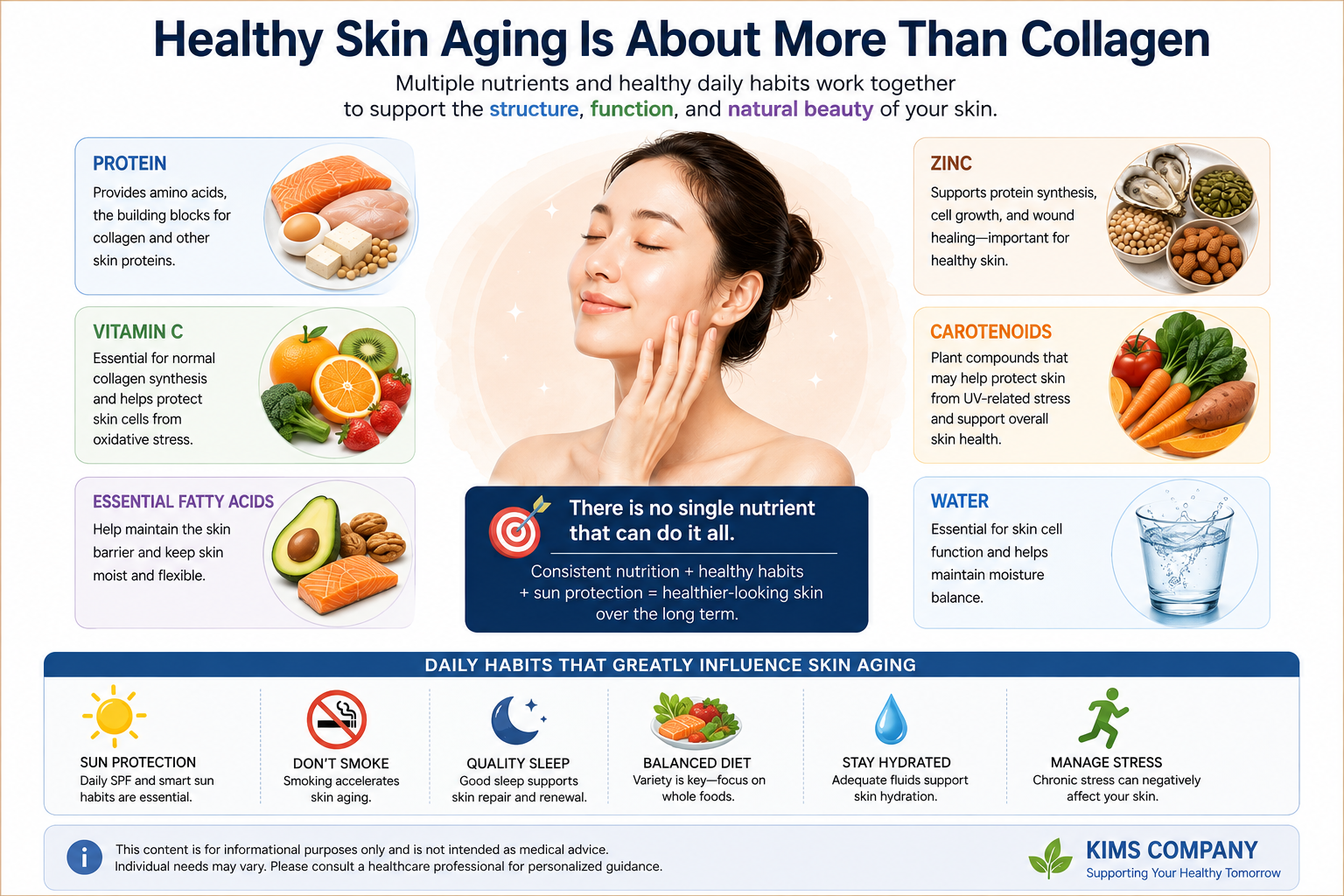
Skin Aging Is More Than a Collagen Problem
Skin changes throughout life for several reasons.
Some changes occur as part of intrinsic aging—the biological processes associated with getting older.
Others are influenced by external exposures.
One of the most important is ultraviolet radiation.
Repeated UV exposure contributes to photoaging, which can affect skin texture, pigmentation, elasticity, and the extracellular matrix that contains structural proteins such as collagen.
Smoking is another established contributor to premature skin aging.
Nutrition, environmental exposures, genetics, and everyday behaviors interact over many years.
This is why the idea that skin aging can be “stopped” by replacing one nutrient is biologically implausible.
A more useful question is:
Does the body have the nutritional resources it needs to maintain normal skin structure and function?
Before Collagen Supplements, Think About Protein
Collagen is the most abundant protein in the human body and an important structural component of the skin.
That does not mean dietary collagen travels directly from a capsule to your face.
Proteins consumed in food are processed during digestion. They are broken down into amino acids and peptides, absorbed through the gastrointestinal tract, and subsequently used throughout the body.
Collagen peptides may have somewhat different digestive and metabolic characteristics from ordinary dietary proteins, and researchers continue to investigate whether particular peptides have biological effects.
Still, basic nutrition matters.
If overall protein intake is inadequate, focusing exclusively on a specialized collagen product misses a more fundamental part of the picture.
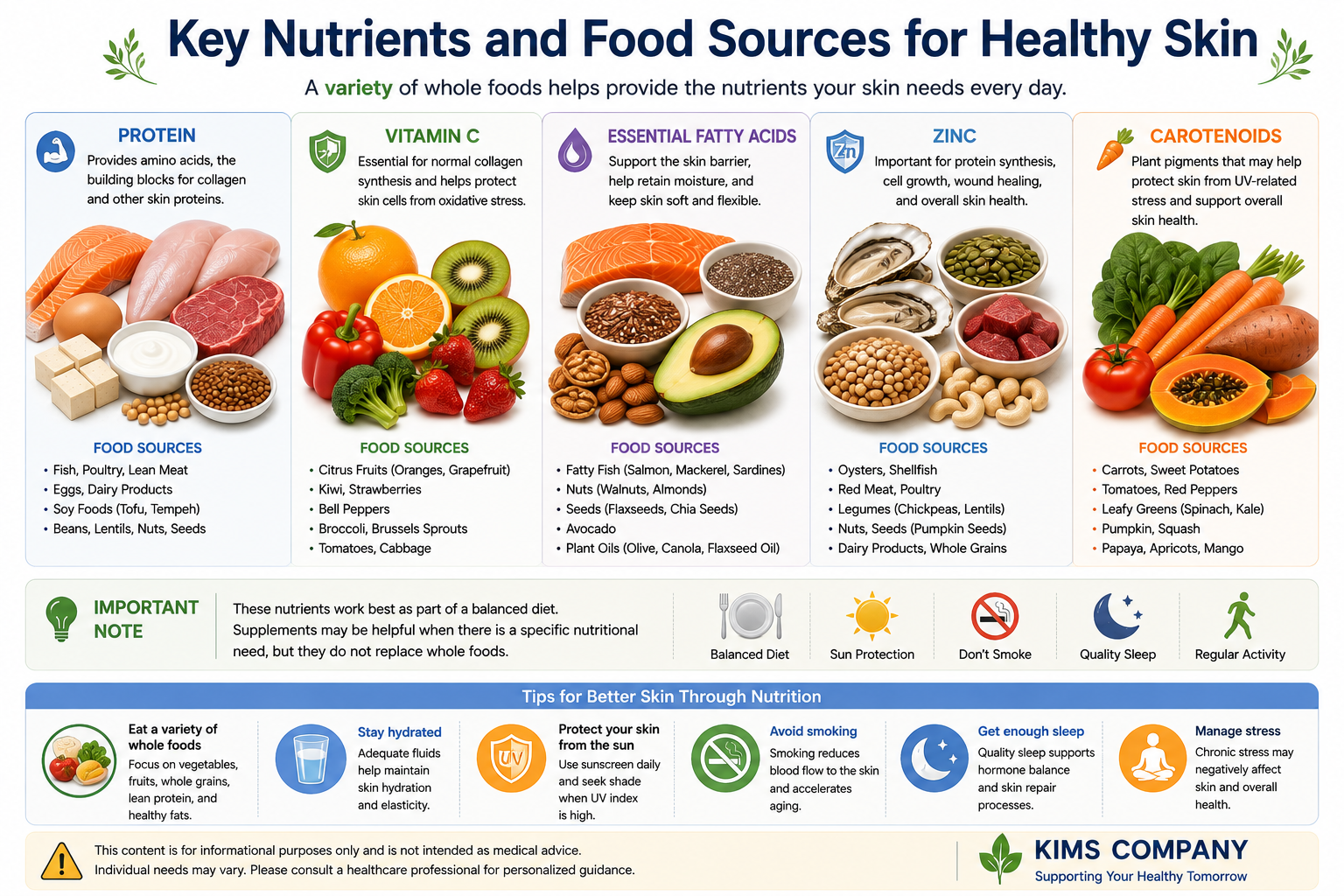
Protein can be obtained from many foods, including:
- fish
- poultry and meat
- eggs
- dairy products
- soy foods
- beans and lentils
- nuts and seeds
The goal is not to find one “skin protein.”
It is to provide the body with adequate nutrition as part of an overall balanced diet.
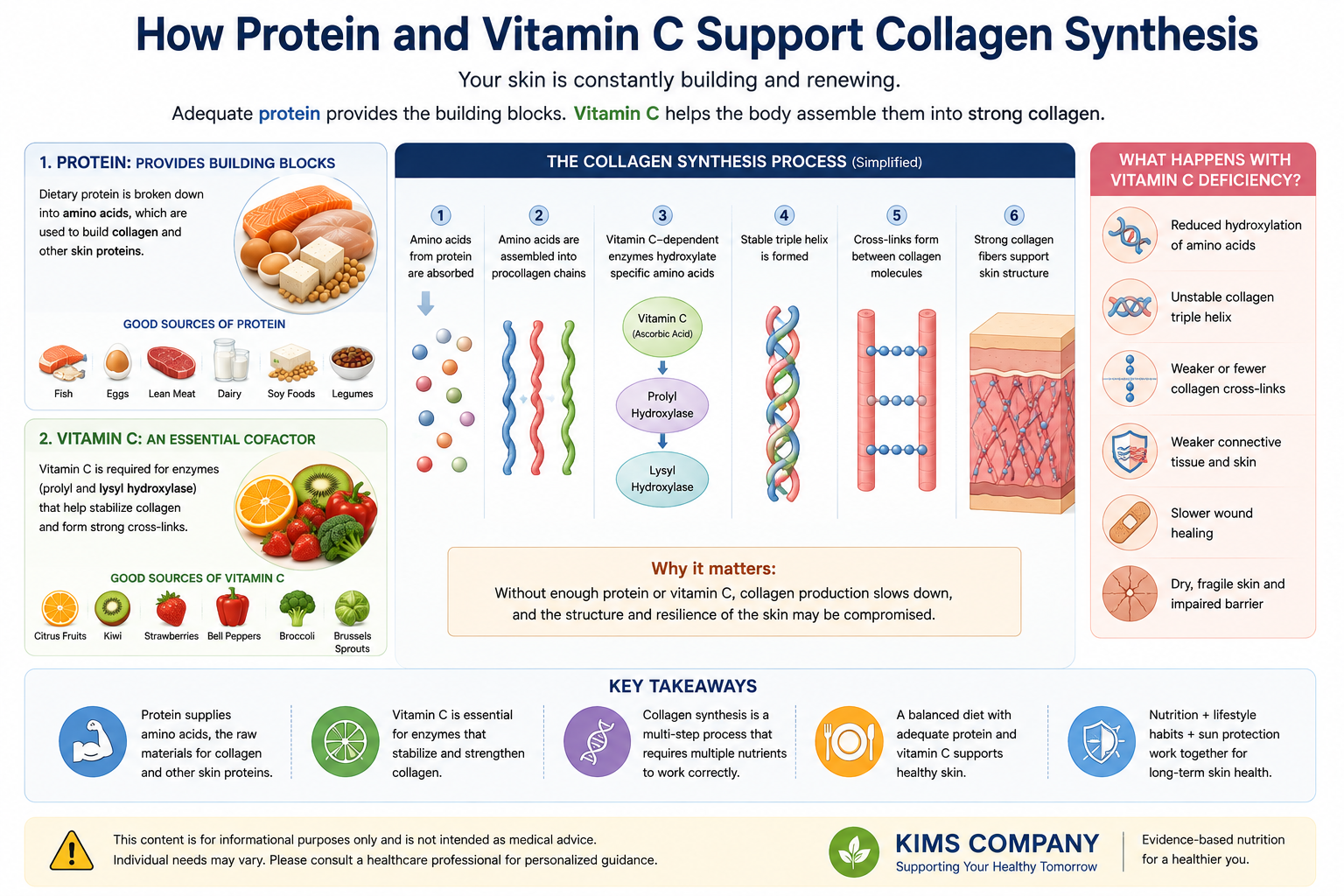
Vitamin C Has a Real Role in Collagen Synthesis
Vitamin C deserves special attention because its relationship with collagen is well established.
The body requires vitamin C as a cofactor for enzymes involved in normal collagen synthesis.
Severe vitamin C deficiency interferes with connective tissue integrity and wound healing, which illustrates how important the nutrient is.
But this biological requirement is sometimes transformed into an exaggerated claim:
If vitamin C is required for collagen production, more vitamin C must create more collagen.
That conclusion does not automatically follow.
Once nutritional requirements are met, taking progressively larger amounts does not mean collagen production will continue increasing in direct proportion to the dose.
Vitamin C is widely available in foods such as citrus fruits, strawberries, kiwi, bell peppers, broccoli, and other fruits and vegetables.
For many people, the first question should therefore be whether their regular diet provides adequate vitamin C—not whether they need a high-dose “skin” supplement.
Healthy Skin Also Needs Lipids
Skin is often discussed in terms of collagen and elasticity, but the skin barrier is equally important.
The outermost portion of the epidermis helps limit excessive water loss and provides protection from the external environment.
Lipids—including ceramides, cholesterol, and fatty acids—are important components of this barrier.
Essential fatty acids must be obtained through the diet because the body cannot synthesize them in sufficient amounts.
Foods such as fish, nuts, seeds, and plant oils can contribute different types of dietary fats.
This does not establish any particular fatty-acid supplement as an anti-aging treatment.
Instead, it reinforces a broader point:
Extremely restrictive or nutritionally inadequate diets can affect tissues that depend on a continuous supply of nutrients.
Healthy skin is built within the context of overall nutrition.
Zinc: Essential Does Not Mean “More Is Better”
Zinc participates in numerous biological processes, including enzyme activity, protein synthesis, cell division, and normal wound healing.
Significant zinc deficiency can produce skin-related manifestations.
Again, however, deficiency biology should not be confused with supplementation benefits in people who already consume enough zinc.
If a person has adequate zinc status, taking progressively larger doses does not necessarily improve skin appearance.
Excessive supplemental zinc can also create problems, including interference with copper status when high intakes are maintained over time.
Food sources of zinc include meat, shellfish, dairy foods, legumes, nuts, seeds, and fortified foods.
Supplements may have a role when there is a specific nutritional need, but “important for skin biology” should never automatically be translated into “everyone needs a supplement.”
What About Carotenoids and Other Plant Compounds?
Colorful fruits and vegetables contain numerous compounds beyond essential vitamins and minerals.
Carotenoids are one example.
Beta-carotene, lycopene, lutein, and related compounds have been studied in connection with skin physiology and responses to UV exposure.
Human dietary studies have investigated foods rich in carotenoids as well as isolated compounds.
These studies are interesting because they suggest that diet can influence measurable characteristics of the skin.
But they also create an opportunity for misleading marketing.
A nutritional intervention associated with a change in the skin's response to UV exposure is not equivalent to sunscreen.
Food and supplements should not be presented as substitutes for established sun-protection practices.
Do Oral Collagen Supplements Actually Work?
This question deserves more nuance than either “yes” or “no.”
Randomized controlled trials have investigated oral collagen peptides and outcomes such as skin hydration and elasticity.
Systematic reviews and meta-analyses have also pooled results from multiple trials, and some have reported improvements in these measurements following oral collagen supplementation.
So it would be inaccurate to say there is no human evidence.
However, there are several reasons to interpret the findings carefully.
Different studies use different products
“Collagen” is not one standardized intervention.
Studies may use different sources, peptide compositions, doses, accompanying ingredients, and manufacturing processes.
Trials are often relatively short
Skin aging occurs over decades.
A study lasting several weeks or months can investigate changes in selected skin measurements, but it cannot necessarily tell us what happens after years of use.
Participant populations differ
Age, baseline skin condition, diet, sun exposure, smoking, and other characteristics may affect results.
Study size matters
A statistically significant result from a small trial does not carry the same evidentiary weight as consistent findings from several large, independent trials.
Funding and conflicts of interest deserve attention
Industry involvement does not automatically make a study invalid.
However, funding sources and author conflicts of interest are useful information when evaluating a body of supplement research.
“Statistically Significant” Does Not Mean “Reversed Skin Aging”
Suppose a clinical trial reports a statistically significant improvement in skin elasticity.
That sounds impressive.
But there are at least two separate questions:
Was the change statistically unlikely to be due to chance under the study's assumptions?
and
Was the change large enough to matter meaningfully to the person?
Those are not identical questions.
This is why effect size, confidence intervals, study design, sample size, and the actual measurement used are important.
A small measurable improvement in an instrument-based skin parameter should not automatically become a headline claiming that a supplement “reverses aging.”
Scientific evidence should be communicated at approximately the same strength at which it was observed.
Deficiency Prevention and Optimization Are Different Questions
This principle applies far beyond skin health.
If severe deficiency of nutrient X causes a health problem, correcting that deficiency can be extremely important.
But it does not logically follow that people with adequate nutritional status will receive additional benefits by consuming progressively larger amounts.
This distinction matters for:
Vitamin C: required for normal collagen synthesis.
Zinc: required for many normal cellular processes.
Essential fatty acids: required for normal physiology.
All are nutritionally important.
None of those facts alone proves that high-dose supplementation prevents normal skin aging.
Food and Supplements Are Not Nutritionally Equivalent
A red bell pepper is not a vitamin C tablet.
Salmon is not a fatty-acid capsule.
An orange is not an isolated flavonoid extract.
Foods contain nutrients within a complex food matrix that includes water, protein, carbohydrates, fats, fiber, minerals, vitamins, and numerous other compounds.
Supplements can provide concentrated doses of individual nutrients or bioactive substances.
That can be useful in appropriate situations, but it also makes supplements biologically different from the foods from which their ingredients may originate.
For general nutrition, a varied diet remains the foundation.
Supplements should be considered according to nutritional need rather than as a replacement for dietary quality.
The Biggest Skin-Aging Factor May Not Be in Your Supplement Cabinet
Someone could spend considerable money on collagen, antioxidants, and “beauty from within” supplements while overlooking one of the best-established external contributors to premature skin aging:
UV exposure.
Nutrition and sun protection address different biological issues.
One cannot simply compensate for the other.
Practical skin-health priorities include avoiding excessive UV exposure, using appropriate sun-protection strategies, not smoking, maintaining adequate nutrition, and managing overall health.
No supplement can reasonably be expected to cancel out every unfavorable lifestyle or environmental exposure.
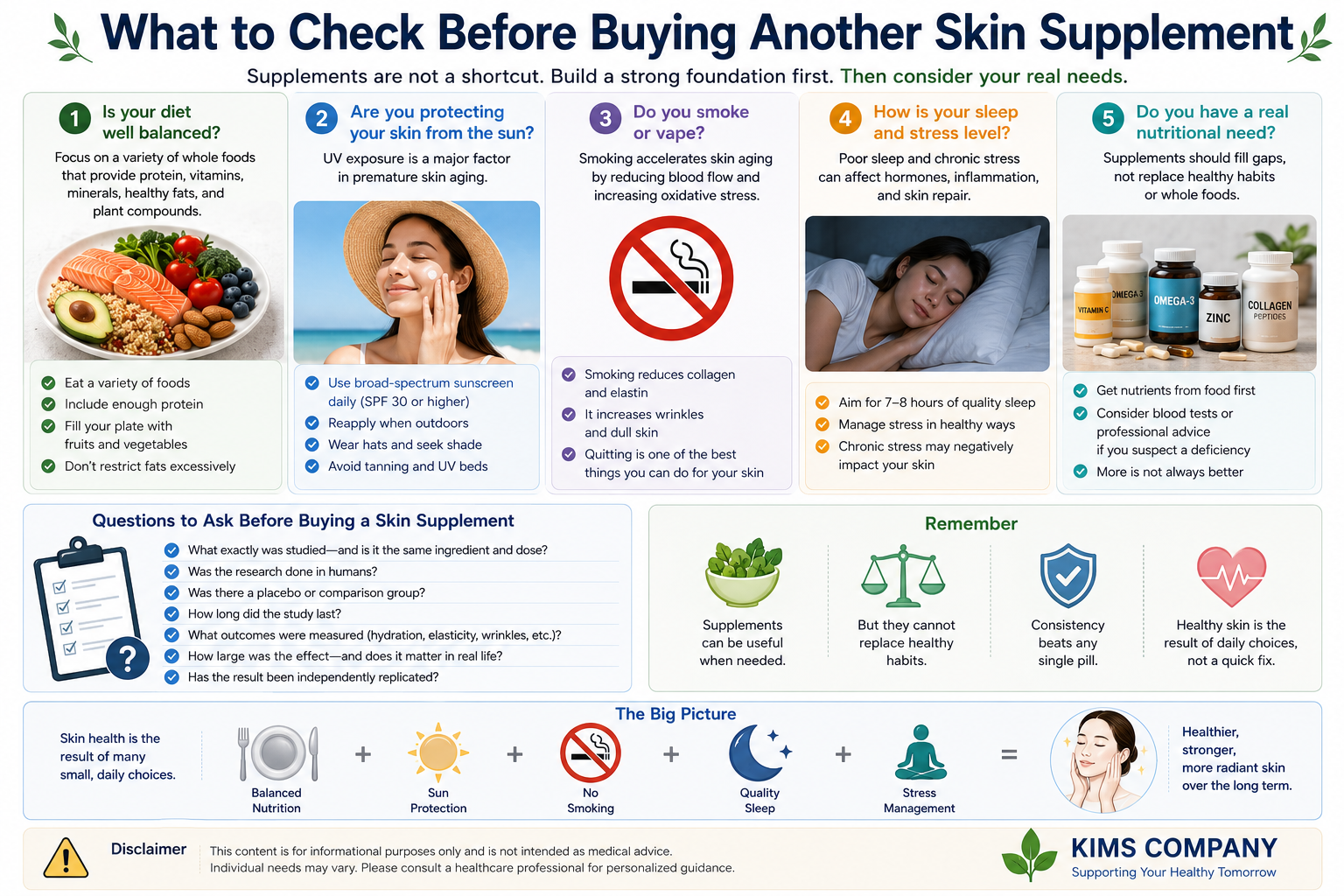
A Better Way to Evaluate a “Skin Supplement”
Before buying a supplement marketed for skin aging, ask a few questions.
What exactly was studied?
Was it the same ingredient and formulation being sold?
Was the research conducted in humans?
Cell and animal experiments are useful for understanding mechanisms but cannot establish clinical benefits in people.
Was there a comparison group?
A randomized controlled trial generally provides more useful evidence about an intervention than uncontrolled before-and-after observations.
How long did the study last?
Short-term changes should not automatically be interpreted as evidence about long-term skin aging.
What was the actual outcome?
Hydration? Elasticity? Wrinkle depth? A laboratory biomarker? Participant perception?
These outcomes answer different questions.
How large was the effect?
A statistically significant difference can still be small.
Has the result been independently replicated?
One trial rarely settles a nutrition question.
Frequently Asked Questions
What is the best vitamin for aging skin?
There is no single “anti-aging vitamin.” Several nutrients are required for normal skin structure and physiology. A nutritionally adequate diet is more important than trying to identify one universal skin nutrient.
Should I take vitamin C with collagen?
Vitamin C is required for normal collagen synthesis, but that does not mean every person using collagen must also take a separate vitamin C supplement. Dietary intake and individual nutritional needs should be considered first.
Are collagen peptides better than dietary protein?
They are different nutritional products. Some clinical trials have specifically investigated collagen peptides and skin-related outcomes, but collagen supplements do not replace the need for adequate overall dietary protein.
Can antioxidants prevent skin aging?
That claim is too broad. Oxidative processes are involved in skin biology, and antioxidant-related nutrients and plant compounds are actively researched. However, high-dose antioxidant supplementation has not been established as a universal method for preventing skin aging.
Can supplements replace sunscreen?
No. Nutrition should not be used as a substitute for appropriate UV protection.
The Bottom Line
Nutrition matters for healthy skin.
Protein provides amino acids used throughout the body. Vitamin C participates in normal collagen synthesis. Essential fatty acids contribute to normal physiology, and zinc is required for numerous cellular processes. Plant foods also provide carotenoids and many other compounds being investigated in skin research.
Oral collagen supplements have human clinical research behind them, including randomized trials and meta-analyses examining outcomes such as hydration and elasticity.
But none of this supports the idea that skin aging can be reduced to a single ingredient.
The more useful approach is to separate three questions:
What does the body require for normal skin function?
What happens when a nutrient is deficient?
Does taking additional amounts produce a meaningful benefit in people who are already adequately nourished?
Those questions may sound similar, but scientifically they are very different.
For healthy skin aging, the foundation remains broader than any supplement bottle: adequate nutrition, sensible UV protection, avoidance of smoking, and sustainable health habits.
References and Further Reading
- National Institutes of Health, Office of Dietary Supplements. Vitamin C Fact Sheet for Health Professionals.
- National Institutes of Health, Office of Dietary Supplements. Zinc Fact Sheet for Health Professionals.
- Peer-reviewed dermatology literature examining intrinsic skin aging, photoaging, nutrition, and lifestyle factors.
- Randomized controlled trials and systematic reviews evaluating oral collagen peptides and measures such as skin hydration and elasticity.
- Human dietary research investigating carotenoids and skin responses associated with ultraviolet exposure.
Medical disclaimer: This article is intended for general educational purposes only and is not medical advice or a recommendation to diagnose, treat, cure, or prevent any disease. Persistent skin changes, unexplained rashes, wounds, or other concerning symptoms should be evaluated by an appropriate healthcare professional. Dietary supplement needs can vary according to diet, health status, medications, pregnancy, and other individual factors.