“Backed by science.”
“Clinically studied.”
“Research shows significant benefits.”
These phrases appear everywhere in the supplement and wellness world. They sound reassuring, especially when a product page mentions a published paper or displays impressive-looking statistics.
But there is an important question that often gets skipped:
What did the research actually demonstrate?
A study performed in cultured cells is not equivalent to a randomized trial in humans. A statistically significant change in a laboratory marker does not automatically mean people will feel better or experience a meaningful health benefit.
Even human trials can differ dramatically in quality.
A two-week study involving 20 participants tells us something very different from a well-designed trial involving hundreds of participants followed for months or years.
Understanding these differences does not require becoming a scientist.
A handful of practical questions can help you tell the difference between interesting preliminary evidence and findings that are much more relevant to real people.
Start With the Most Basic Question: What Was Actually Studied?
Before focusing on percentages, graphs, or impressive conclusions, identify the type of study.
Health and nutrition research commonly includes:
- laboratory or cell studies;
- animal experiments;
- observational studies in humans;
- controlled clinical trials;
- systematic reviews and meta-analyses.
Each can contribute useful information.
The mistake is assuming they all answer the same question.
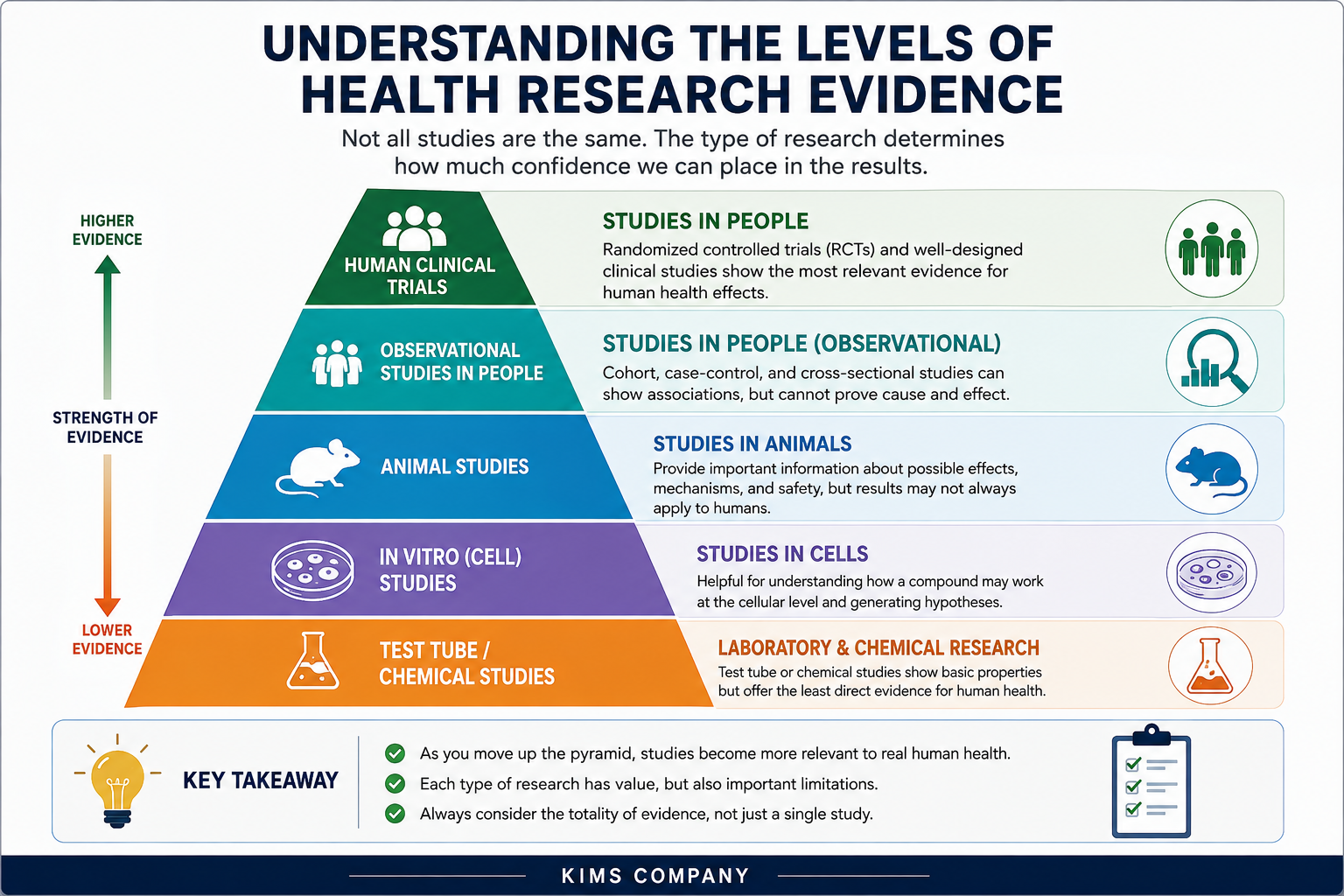
For example, researchers might expose cultured cells to a plant compound and observe changes in a biological pathway associated with inflammation.
That finding may be scientifically interesting.
But it does not establish that taking a capsule containing the compound will reduce inflammation in humans.
There are several steps between those two conclusions.
Why Cell Studies Matter — and Why They Have Limits
Laboratory studies using cells are often described as in vitro research.
These experiments allow researchers to investigate biological mechanisms under carefully controlled conditions.
They can help answer questions such as:
- Does a compound interact with a particular enzyme?
- Does it influence a cellular signaling pathway?
- Does it alter oxidative processes under experimental conditions?
- Is there enough biological plausibility to justify further research?
This makes in vitro research extremely valuable during the early stages of scientific investigation.
But a human body is not a Petri dish.
When you consume a nutrient or supplement, it must pass through the digestive system. It may be absorbed poorly, transformed by gut microbes, metabolized by the liver, bound to proteins, converted into other compounds, or eliminated before meaningful amounts reach a particular tissue.
Another issue is concentration.
Researchers may expose cells to concentrations that are difficult or impossible to achieve in humans through normal dietary or supplemental intake.
So when you encounter a headline saying:
“Compound X destroyed harmful cells in a laboratory study,”
the appropriate conclusion is not necessarily:
“Taking Compound X will produce the same effect in humans.”
A more accurate interpretation is:
This laboratory result may justify additional research.
Animal Research Adds Complexity, but Humans Are Still Different
Animal models allow researchers to examine processes that cannot be studied using isolated cells alone.
They can provide information about:
- absorption;
- metabolism;
- distribution throughout the body;
- organ responses;
- potential toxicity;
- possible biological mechanisms.
This makes animal research an important bridge between basic laboratory science and human research.
However, mice, rats, and other laboratory animals are not miniature humans.
Species differ in metabolism, physiology, lifespan, gut microbiota, and many other biological characteristics.
Dose is another major consideration.
An amount given to an animal in an experiment may not correspond directly to a realistic human dose.
Therefore:
“Effective in mice” does not mean “proven effective in people.”
It means researchers have another piece of evidence that may support further investigation.
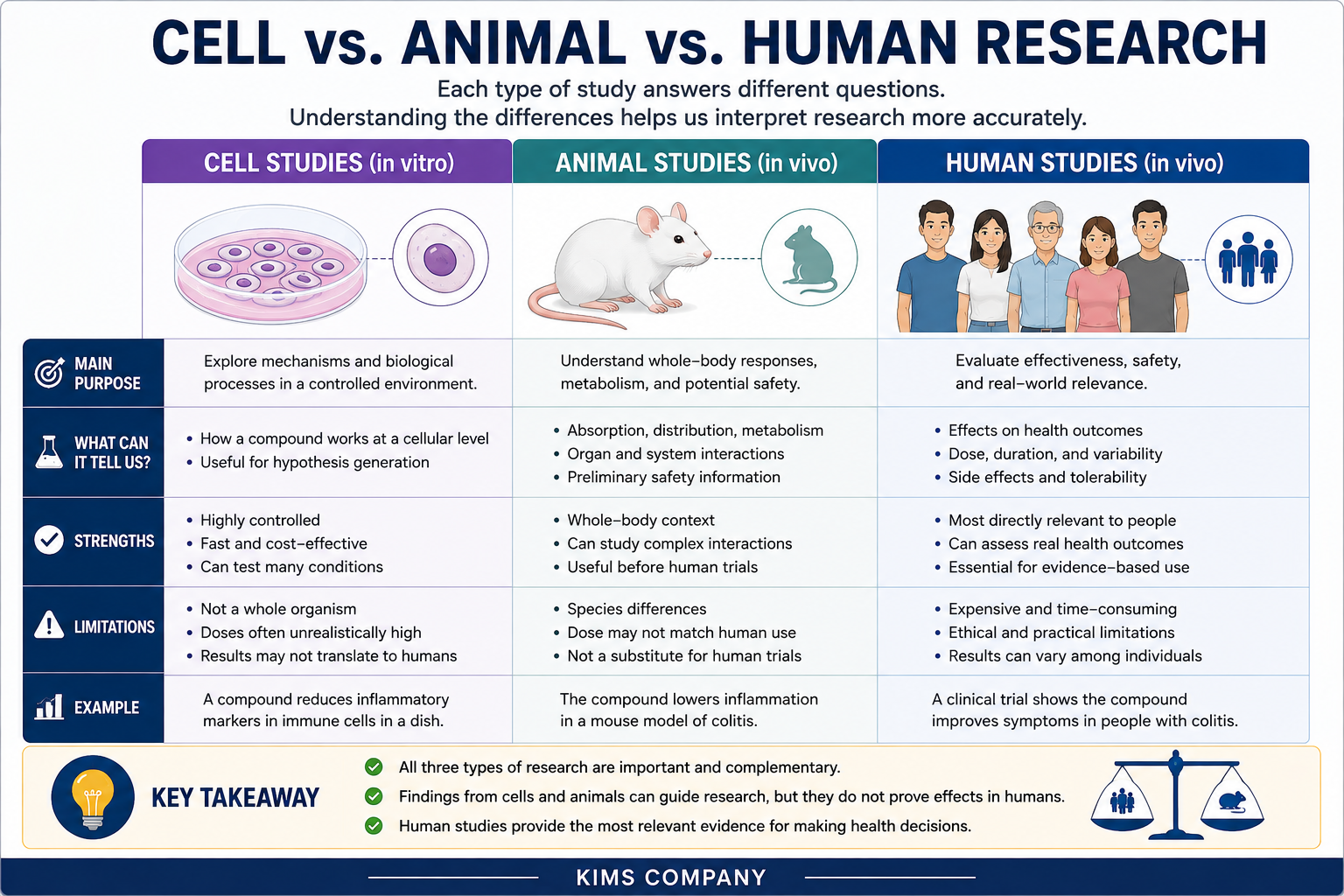
This distinction is particularly important when evaluating supplement marketing because preliminary animal findings can sometimes be presented in language that sounds much more definitive than the underlying evidence warrants.
Human Study Does Not Automatically Mean High-Quality Evidence
Suppose a supplement company says its ingredient has been tested in humans.
That is certainly more relevant than cell research alone.
But the phrase “human study” still tells you very little about study quality.
Consider two hypothetical trials.
The first enrolls 18 people, lasts 10 days, has no placebo group, and measures several laboratory markers.
The second enrolls several hundred participants, randomly assigns them to intervention and placebo groups, follows them for six months, and uses predefined outcomes.
Both technically involve humans.
They do not provide equally strong evidence.
When evaluating a human study, ask:
Who participated?
Healthy young adults may respond differently from older adults or people with a particular medical condition.
How many people participated?
Small studies can provide useful early evidence, but estimates are often less precise.
How long did the study last?
A short-term biochemical change does not necessarily predict a long-term health outcome.
Was there an appropriate comparison group?
Without one, it may be difficult to know whether the observed change resulted from the intervention itself.
Why Randomized Controlled Trials Receive So Much Attention
A randomized controlled trial, or RCT, is one of the most important study designs for evaluating whether an intervention actually causes a particular outcome.
Participants are randomly assigned to different groups.
In a supplement trial, one group might receive the ingredient being investigated while another receives a placebo.
Randomization helps distribute characteristics that could influence the outcome—such as age, baseline health, diet, or physical activity—more evenly between groups.
Researchers may also use blinding.
In a double-blind trial, for example, participants and investigators may not know who is receiving the active intervention during the study.
This can reduce certain forms of bias.
RCTs are therefore valuable for assessing causality.
But an RCT is not automatically flawless.
A trial may still have:
- too few participants;
- a short duration;
- high dropout rates;
- inadequate blinding;
- selective reporting;
- poorly chosen outcomes;
- limited applicability to the broader population.
The study design matters, but so does how well the study was actually conducted.
Observational Studies Answer a Different Kind of Question
Nutrition research frequently relies on observational studies.
Researchers may follow thousands of people over many years and compare dietary patterns with health outcomes.
Suppose researchers observe that people who consume more of a certain food tend to have a lower rate of a particular disease.
That association can be valuable.
But it does not necessarily prove the food caused the lower risk.
People who frequently eat that food may differ in many other ways.
They might:
- exercise more;
- smoke less;
- consume more vegetables overall;
- have different income or education levels;
- use healthcare differently;
- have other lifestyle habits associated with better health.
These additional factors are often called confounders.
Researchers use statistical methods to adjust for known confounders, but no observational study can perfectly account for every difference between groups.
This is why the distinction between association and causation matters so much.
“People who consumed more X had lower rates of Y” is not automatically equivalent to “X prevents Y.”
“Statistically Significant” Does Not Mean “Large Benefit”
This may be one of the most misunderstood phrases in health reporting.
A paper might report that a result was statistically significant, often accompanied by a p-value such as p < 0.05.
People sometimes interpret this as:
“The treatment had an important effect.”
That is not what statistical significance alone tells us.
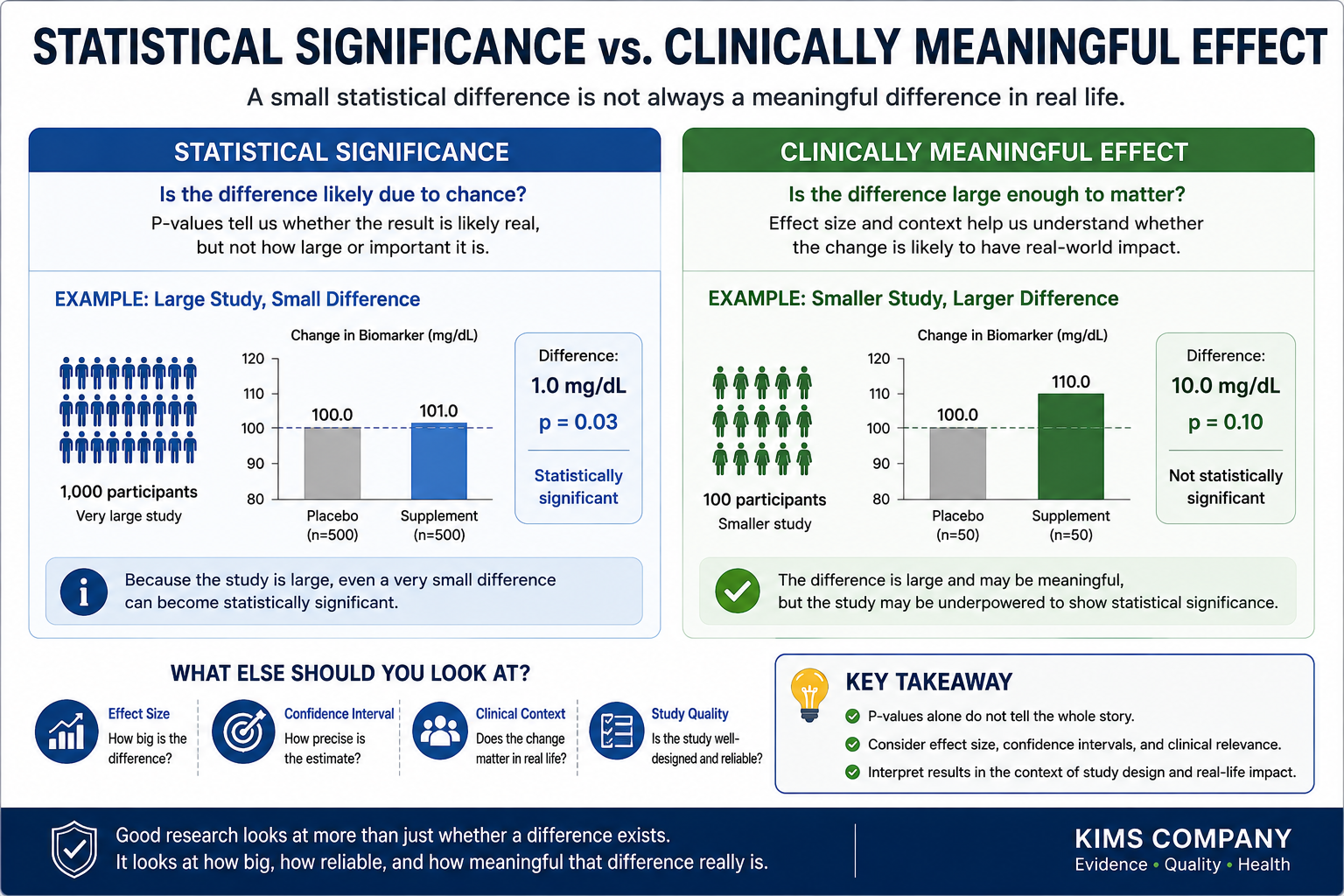
Imagine that a large study finds a very small difference between two groups.
Because thousands of people participated, that small difference might meet the study's threshold for statistical significance.
But the actual magnitude of the difference may be too small to matter much in everyday life.
This is why effect size deserves attention.
Effect size helps describe how large the observed difference actually was.
Another useful concept is the confidence interval, which provides information about the precision and plausible range of an estimated effect.
Instead of asking only:
“Was the result statistically significant?”
a better set of questions is:
How large was the effect?
How precise was the estimate?
Would that difference actually matter to a person?
Check What the Researchers Actually Measured
Imagine reading this statement:
“The supplement significantly improved health outcomes.”
It sounds impressive.
Now imagine discovering that the researchers actually measured only a small change in one blood biomarker.
Those are very different claims.
Clinical research can measure several kinds of outcomes.
Some are directly meaningful to patients, such as:
- symptoms;
- physical function;
- quality of life;
- disease events;
- hospitalization;
- mortality.
Other studies use surrogate endpoints, such as laboratory values believed to be associated with health outcomes.
Surrogate markers can be scientifically useful and sometimes extremely important.
But improving a surrogate marker does not automatically prove that an intervention prevents disease or extends life.
This is a common place where health claims become exaggerated.
Always ask:
What outcome did the study actually measure?
Then compare that with what the article, advertisement, or influencer is claiming.
If the claim goes substantially beyond the measured outcome, caution is warranted.
One Positive Study Is Rarely the End of the Story
Scientific evidence develops over time.
An early trial may report an encouraging result. A later study may find a smaller effect. Another may find no meaningful difference.
That does not necessarily mean science is failing.
Different studies may involve different:
- populations;
- doses;
- formulations;
- study durations;
- baseline nutritional status;
- outcome measures;
- statistical methods.
This is why researchers look at the total body of evidence, not just one favorable paper.
Systematic reviews attempt to identify and evaluate relevant studies using predefined methods.
When appropriate, a meta-analysis may statistically combine results from multiple studies.
These approaches can provide a broader picture than a single trial.
However, there is another important principle:
A meta-analysis cannot automatically turn poor studies into strong evidence.
If the underlying studies are small, biased, highly inconsistent, or poorly designed, the combined conclusion may still be uncertain.
What Does “Clinically Studied Ingredient” Actually Tell You?
This phrase deserves special attention because it appears frequently in supplement marketing.
A product may contain an ingredient that has indeed been used in clinical research.
But that does not necessarily mean the product itself was tested.
Consider the questions that remain:
Was the exact ingredient formulation studied?
Was the same dose used?
Was the manufacturing process comparable?
Was the study population relevant to the people buying the product?
Did the trial investigate the same benefit being advertised?
These distinctions matter.
For example, research involving a specific standardized extract at 500 mg per day does not automatically validate every product containing a small amount of the same plant.
Similarly, evidence for one chemical form of a nutrient may not necessarily apply equally to every formulation.
The phrase “clinically studied” should be the beginning of your investigation, not the end of it.
Five Questions to Ask Before Trusting a Research-Based Health Claim
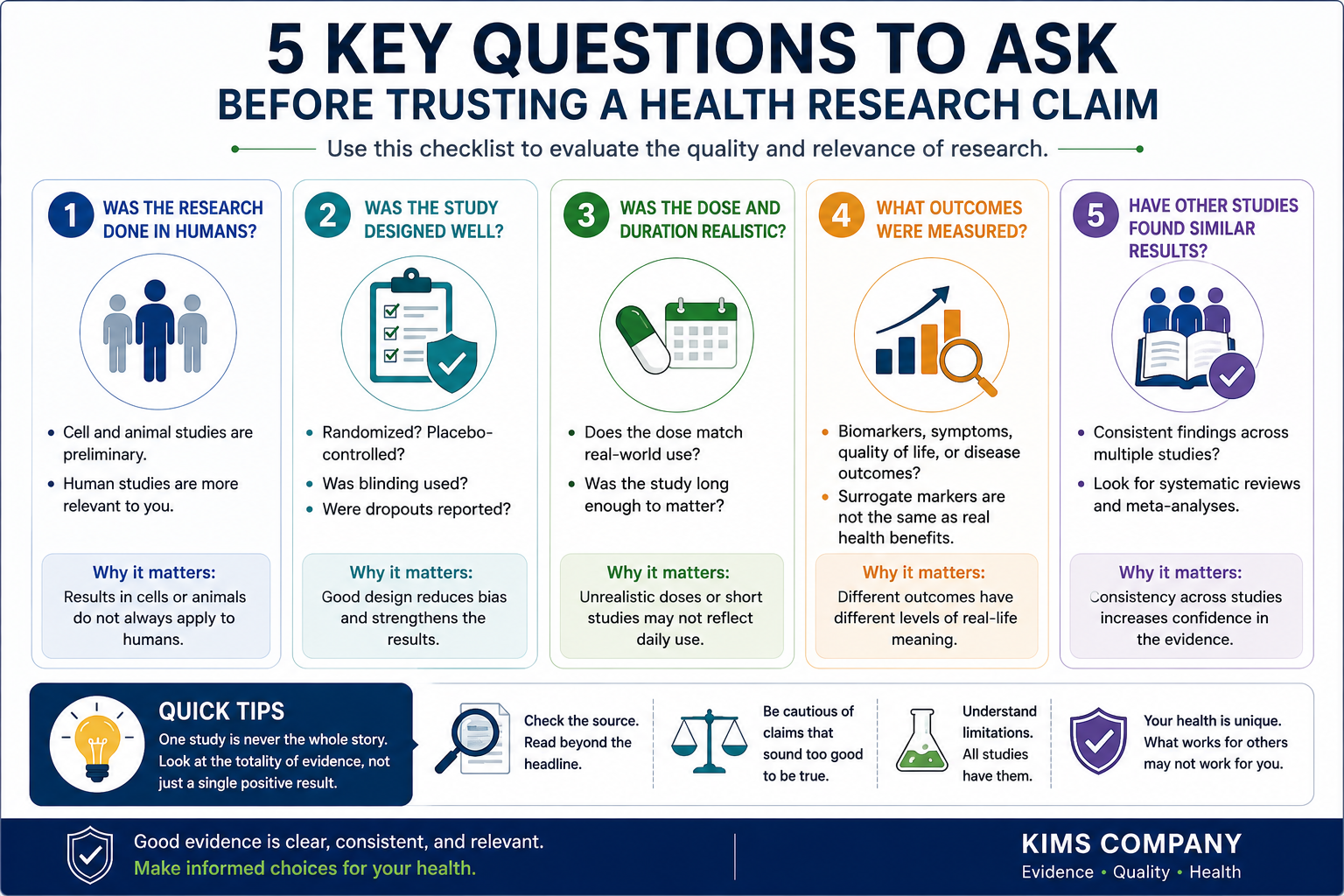
1. Was the research performed in humans?
Cell and animal research can be valuable, but human health claims ultimately require relevant human evidence.
2. Was the study designed appropriately?
Look for information about sample size, control groups, randomization, placebo use, and blinding when applicable.
3. Were the dose and study duration realistic?
A result obtained with an unusually high dose or extremely short intervention may have limited relevance to everyday use.
4. What actually changed?
Was it a laboratory marker, a subjective symptom score, physical function, disease incidence, or another outcome?
5. Have other studies found similar results?
Replication and consistency across multiple high-quality studies strengthen confidence in a finding.
These questions will not turn a reader into a clinical researcher.
They do something more practical: they make it harder for a vague scientific claim to sound stronger than the evidence actually is.
Who Paid for the Study?
Funding deserves consideration, but it also requires nuance.
Some supplement studies are funded by manufacturers or companies that have a financial interest in the outcome.
That fact alone does not prove that a study is unreliable.
Industry-funded research can be rigorous and scientifically useful.
Instead of automatically dismissing it, look for transparency.
Did the authors disclose funding sources?
Were potential conflicts of interest reported?
Was the study protocol registered in advance?
Are the methods described clearly enough to evaluate?
Do independent studies point in a similar direction?
Transparency allows readers and other researchers to evaluate potential sources of bias.
Red Flags in “Science-Backed” Supplement Claims
Scientific language can sometimes be used more as a marketing tool than as an explanation of evidence.
Be cautious when you encounter claims that:
- cite only cell or animal research for a human benefit;
- mention “clinical studies” without identifying what was measured;
- highlight percentages without providing context;
- rely heavily on one small positive study;
- imply disease prevention from changes in biomarkers;
- use a study of one specific formulation to promote a substantially different product;
- discuss benefits while ignoring important limitations or conflicting evidence.
Good health communication should make uncertainty visible.
A credible explanation does not need to pretend every scientific question has already been settled.
Frequently Asked Questions
Does a published study prove that a supplement works?
No single publication automatically proves effectiveness. Study design, participant characteristics, sample size, duration, outcomes, effect size, potential bias, and replication all matter.
Are animal studies useless when choosing supplements?
No. Animal research can provide valuable information about biological mechanisms, metabolism, and safety. The limitation is that animal findings cannot automatically be assumed to produce the same outcomes in humans.
Is an RCT always reliable?
RCTs can provide strong evidence for causal effects, but quality varies. A poorly designed or very small RCT may provide less useful information than the label “randomized trial” suggests.
Is a meta-analysis always the strongest evidence?
Not necessarily. A well-conducted meta-analysis of high-quality studies can be extremely informative, but its conclusions depend heavily on the studies included and the methods used.
Does “clinically studied” mean the supplement itself was tested?
Not always. Sometimes the claim refers to an ingredient or formulation used in research rather than the exact commercial product being sold.
The Most Useful Question Is Not “Is There a Study?”
Published research is essential for evidence-based health information.
But the existence of a paper does not automatically establish that a claim is true.
The more useful question is:
What does the study actually allow us to conclude?
Was the research conducted in cells, animals, or humans?
Was there an appropriate control group?
Was the study long enough?
How large was the effect?
Was the outcome clinically meaningful?
Have independent researchers found similar results?
Those questions provide far more information than the phrase “scientifically proven.”
This is especially important with dietary supplements because research findings can easily become simplified as they move from scientific papers to news stories, social media posts, and product advertising.
A useful rule is therefore simple:
Do not judge evidence by how scientific the claim sounds. Judge it by what the research actually measured, how the study was designed, and how consistently the finding has been reproduced.
References
- National Center for Complementary and Integrative Health (NCCIH), Know the Science
- Cochrane, information on systematic reviews and evidence synthesis
- U.S. National Library of Medicine, ClinicalTrials.gov, information about clinical studies
- U.S. Food and Drug Administration (FDA), information on clinical trials and human subject protection
- CONSORT, reporting guidance for randomized controlled trials
- EQUATOR Network, reporting guidelines for health research
Medical Disclaimer
This article is intended for general educational and informational purposes only. It does not establish that any dietary supplement, nutrient, or health intervention is effective, safe, or appropriate for a particular individual, and it is not intended to diagnose, treat, cure, or prevent any disease.
Research findings may differ according to study design, population, dose, formulation, duration, and individual health circumstances. Decisions about supplements or medical care should be discussed with an appropriately qualified healthcare professional when individual guidance is needed.