Ergothioneine has started appearing more often in conversations about antioxidants, mushrooms, healthy aging, and nutritional supplements.
That attention can make it sound like the newest must-have antioxidant. The science, however, is more nuanced.
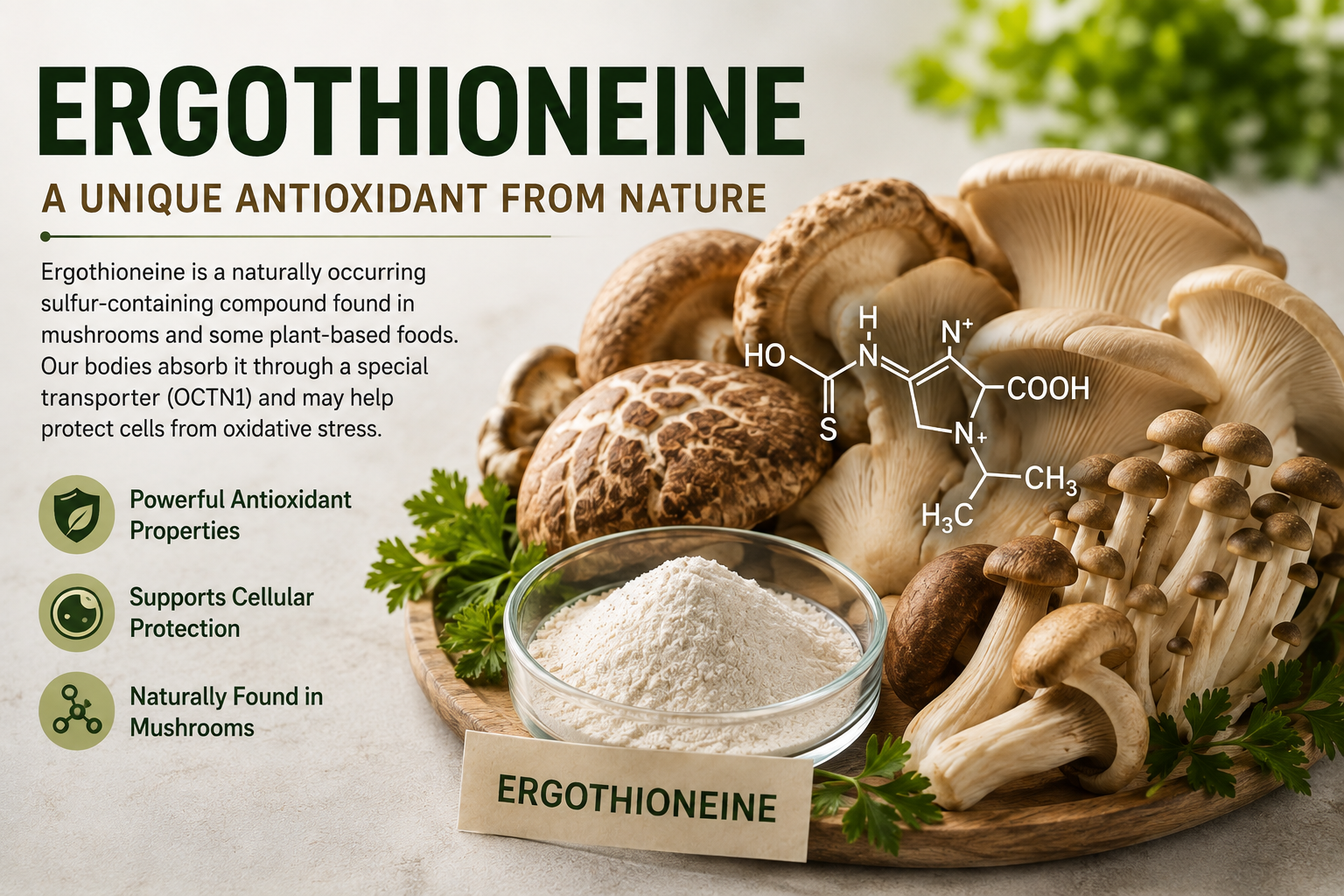
Ergothioneine is a naturally occurring sulfur-containing amino acid derivative found in the human body but obtained largely through the diet. Mushrooms are particularly notable dietary sources.
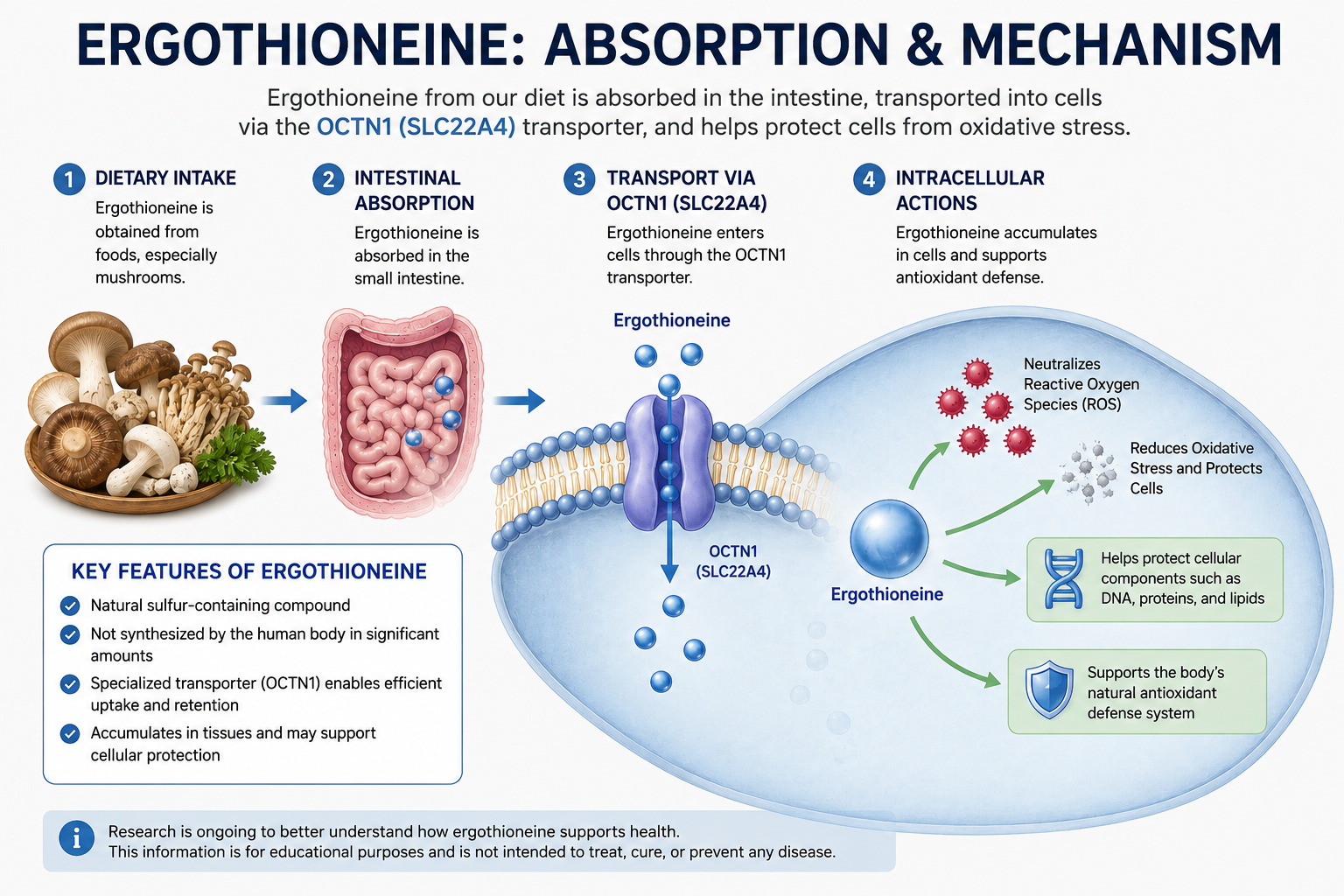
What makes ergothioneine scientifically interesting is not simply its antioxidant activity. Humans also have a specialized transporter, known as OCTN1 or SLC22A4, that efficiently transports ergothioneine into cells.
Researchers are investigating whether this unusual combination — dietary exposure, specialized transport, tissue accumulation, and antioxidant properties — could have broader implications for human health.
There are promising findings, but there are also important gaps in the evidence.
What Is Ergothioneine?
Ergothioneine is a naturally occurring compound derived from the amino acid histidine.
Unlike many familiar nutrients, humans do not appear to synthesize meaningful amounts of ergothioneine themselves. Instead, it enters the body primarily through food.
Certain fungi and microorganisms can produce it, which helps explain why mushrooms are among the most important dietary sources.
Once consumed, ergothioneine does not simply pass through the digestive system unnoticed.
The human body has a transporter with a particularly strong affinity for it.
That transporter is OCTN1, encoded by the SLC22A4 gene.
Its existence is one reason researchers have become so interested in understanding what ergothioneine does after it enters the body.
How Does the Body Handle Ergothioneine?
After dietary ergothioneine reaches the digestive tract, it can be absorbed and transported into different tissues.
OCTN1 plays a central role in this process.
The transporter helps move ergothioneine across cell membranes and is also involved in retaining the compound within the body.
This differs from the way some dietary compounds are rapidly metabolized or eliminated.
Researchers have detected ergothioneine in several human tissues and biological fluids. Its distribution and retention have raised questions about whether the body may actively conserve it for specific physiological purposes.
That possibility is scientifically intriguing, but the presence of a dedicated transporter does not automatically prove that ergothioneine is an essential nutrient or that supplementation improves health.
Why Is Ergothioneine Studied as an Antioxidant?
Cells continuously generate reactive oxygen species as part of normal metabolism.
These molecules are not inherently harmful. At appropriate levels, they participate in normal cell signaling and other biological processes.
Problems can arise when the balance between oxidants and antioxidant defenses is disrupted, creating what researchers describe as oxidative stress.
Ergothioneine has attracted attention because laboratory research suggests that it can interact with several reactive species and may help protect cellular components under certain experimental conditions.
Research has examined potential effects involving:
- oxidative stress
- cellular antioxidant defenses
- inflammatory signaling
- mitochondrial function
- lipid oxidation
- cellular stress responses
These findings provide useful clues about possible mechanisms.
They do not, however, mean that taking ergothioneine supplements has been proven to prevent diseases caused by oxidative stress.
Laboratory mechanisms and clinical outcomes are two very different levels of evidence.
What Does Human Research Show?
This is where careful interpretation becomes especially important.
A growing body of observational research has examined relationships between circulating ergothioneine levels, dietary patterns, aging, cognitive health, cardiovascular health, and other outcomes.
Some studies have reported associations between higher ergothioneine status and favorable health measures.
Associations can generate valuable hypotheses, but they cannot establish cause and effect.
For example, someone with higher ergothioneine levels may also consume more mushrooms or follow a broader dietary pattern associated with better health.
Researchers therefore need controlled human trials to determine whether ergothioneine itself produces meaningful clinical benefits.
Recent scientific reviews continue to describe ergothioneine as a promising bioactive compound while also emphasizing the need for additional human research.
That distinction matters.
The evidence is interesting enough to justify continued research, but not strong enough to treat ergothioneine as a proven anti-aging therapy.
Is Ergothioneine Really a “Longevity Vitamin”?
One of the most eye-catching descriptions of ergothioneine is the term “longevity vitamin.”
It sounds definitive.
It isn't.
The concept was proposed as part of a scientific hypothesis suggesting that certain dietary compounds might support long-term health even though they are not traditionally classified as vitamins.
Ergothioneine has been discussed within that framework.
However, it is not currently classified as an essential vitamin in standard nutritional guidelines.
The phrase should therefore be understood as a scientific hypothesis rather than evidence that consuming ergothioneine will extend human lifespan.
This is particularly important when evaluating supplement marketing.
A phrase originating in scientific discussion can easily become much stronger once it appears in advertising.
Which Foods Contain Ergothioneine?
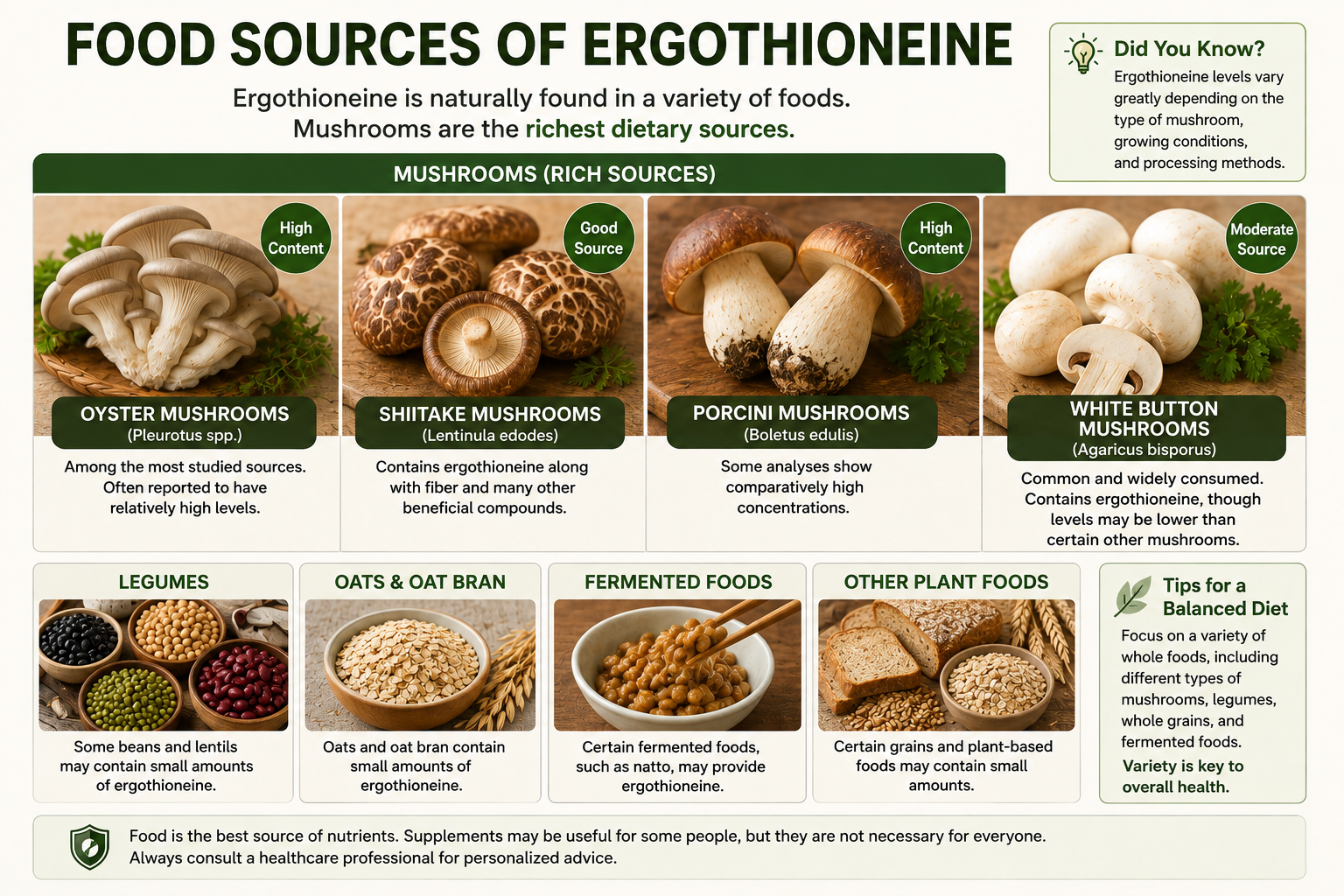
Mushrooms stand out among dietary sources of ergothioneine.
Concentrations vary substantially depending on mushroom species, cultivation conditions, processing, and analytical methods.
Frequently discussed sources include:
Oyster Mushrooms
Oyster mushrooms are often reported as relatively rich sources of ergothioneine and are widely available as everyday foods.
Shiitake Mushrooms
Shiitake mushrooms also provide ergothioneine along with fiber and numerous other naturally occurring compounds.
Porcini Mushrooms
Some analyses have found comparatively high concentrations in porcini and certain other specialty mushrooms.
White Button Mushrooms
Common white button mushrooms also contain ergothioneine, although reported concentrations may differ from those found in other species.
Smaller amounts have been reported in several other foods, including certain beans, grains, and fermented foods.
The important takeaway is not that everyone needs to seek out the mushroom with the highest laboratory value.
Eating a variety of whole foods remains more meaningful nutritionally than building an entire diet around one bioactive compound.
Does Cooking Destroy Ergothioneine?
Cooking is an important question because mushrooms are usually consumed cooked rather than raw.
Food preparation can influence the concentrations of many nutrients and bioactive compounds.
For ergothioneine, the final amount available from a meal may depend on factors including mushroom variety, temperature, cooking duration, and preparation method.
Some ergothioneine may also move into cooking liquid.
That means a mushroom soup, for example, is nutritionally different from boiling mushrooms and discarding the water.
There is no practical reason for most people to avoid cooking mushrooms simply to maximize one compound.
Food safety, palatability, the overall meal, and dietary variety matter as well.
Ergothioneine vs. Glutathione
Ergothioneine and glutathione are sometimes placed in the same category because both are discussed in antioxidant research.
They should not be treated as interchangeable.
Glutathione is an antioxidant that human cells synthesize and use extensively in cellular redox systems.
Ergothioneine, by contrast, is primarily acquired through the diet and relies heavily on the OCTN1 transport system for its distribution.
Both compounds may participate in cellular protection, but they have different chemistry, metabolism, and biological roles.
There is currently no meaningful basis for declaring one universally “better” than the other.
What About Ergothioneine Supplements?
Supplement availability creates another question:
If ergothioneine occurs naturally in mushrooms, is there an advantage to taking a concentrated supplement?
At present, there is no universal recommendation that healthy adults need supplemental ergothioneine.
That does not mean supplements have no research value. Human studies investigating supplementation are important for determining safety, pharmacokinetics, and possible biological effects.
It simply means that research interest should not be confused with established dietary necessity.
For someone interested primarily in nutrition rather than supplementation, mushrooms provide a practical food-based source.
How to Evaluate an Ergothioneine Supplement
Anyone considering a supplement should look beyond front-label claims.
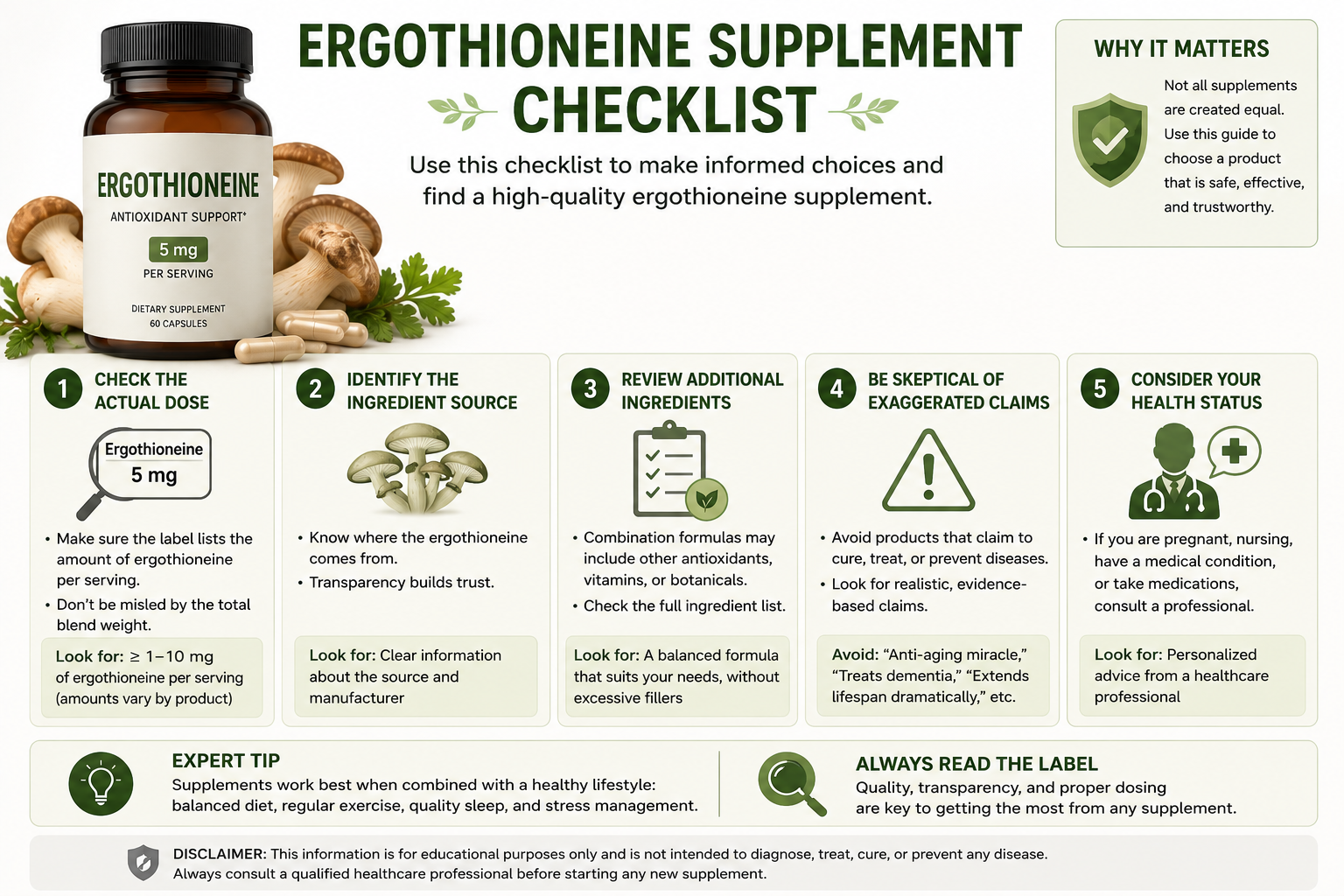
Check the Actual Dose
Look for the amount of ergothioneine provided per serving rather than relying on the total weight of a proprietary blend.
Identify the Ingredient Source
A transparent label should make it possible to understand what ingredient is being supplied and who manufactures it.
Review Additional Ingredients
Combination formulas may contain several antioxidants, vitamins, botanical extracts, or other compounds.
Check the entire ingredient list rather than evaluating ergothioneine in isolation.
Be Skeptical of Disease Claims
Statements suggesting that a supplement can prevent dementia, reverse aging, treat cardiovascular disease, or dramatically extend lifespan go well beyond the current evidence.
Consider Your Medical Situation
People who are pregnant or breastfeeding, managing a medical condition, taking prescription medication, or using multiple supplements should discuss new supplements with an appropriate healthcare professional.
Frequently Asked Questions
Is ergothioneine an essential nutrient?
It is not currently classified as an essential vitamin or amino acid. Its specialized transport and accumulation in the body have nevertheless led researchers to investigate whether it has important physiological functions.
Are mushrooms the best dietary source?
Mushrooms are generally considered major dietary sources, although concentrations vary significantly between species and growing conditions.
Can ergothioneine prevent aging?
There is currently no convincing clinical evidence showing that ergothioneine supplementation prevents human aging or extends lifespan.
Research involving oxidative stress and age-related biological processes is ongoing.
Is ergothioneine the same as glutathione?
No. Both are studied in relation to oxidative stress, but they are chemically and biologically distinct compounds.
Do I need an ergothioneine supplement?
There is currently no established recommendation that healthy people need to supplement with ergothioneine.
Individual nutritional and medical circumstances should be considered before adding any supplement.
The Bottom Line
Ergothioneine is a fascinating example of why nutrition science is often more complicated than supplement marketing suggests.
Humans obtain it primarily from food. Mushrooms are particularly notable sources. The body has a specialized transporter that efficiently handles the compound, and laboratory research provides plausible mechanisms through which ergothioneine could participate in cellular protection.
Those facts make it worth studying.
They do not yet prove that an ergothioneine supplement prevents disease, slows human aging, or increases lifespan.
For now, one of the most practical ways to think about ergothioneine is as another reason to appreciate dietary diversity — particularly foods such as mushrooms — while researchers continue investigating whether this unusual compound has clinically meaningful effects in humans.
Good nutrition rarely comes down to maximizing a single molecule.
The overall dietary pattern still matters more.
References
- Zheng J, Gong M, Meng X, Hou Z. Ergothioneine: An updated review on preparation strategies, biological activity and mechanisms, health and functional applications. Food Chemistry. 2026.
- Halliwell B, Cheah IK, Tang RMY. Ergothioneine – a diet-derived antioxidant with therapeutic potential. FEBS Letters. 2018.
- Beelman RB, Kalaras MD, Phillips AT, Richie JP Jr. Is ergothioneine a “longevity vitamin” limited in the American diet? Journal of Nutritional Science. 2020.
- Kalaras MD, Richie JP Jr, Calcagnotto A, Beelman RB. Mushrooms: A rich source of the antioxidants ergothioneine and glutathione. Food Chemistry. 2017.
- Cheah IK, Halliwell B. Ergothioneine, recent developments. Redox Biology. 2021.
Medical Disclaimer
This article is provided for general educational and informational purposes only. It is not intended to diagnose, treat, cure, or prevent any disease and should not be considered a substitute for professional medical advice.
Research on ergothioneine is continuing, and findings from laboratory, animal, or observational studies do not necessarily establish clinical benefits in humans.
If you have a medical condition, take prescription medications, are pregnant or breastfeeding, or are considering adding a dietary supplement to your routine, consult a qualified healthcare professional for advice appropriate to your individual circumstances.