Protein has dominated nutrition conversations for years.
Now fiber is having its moment.
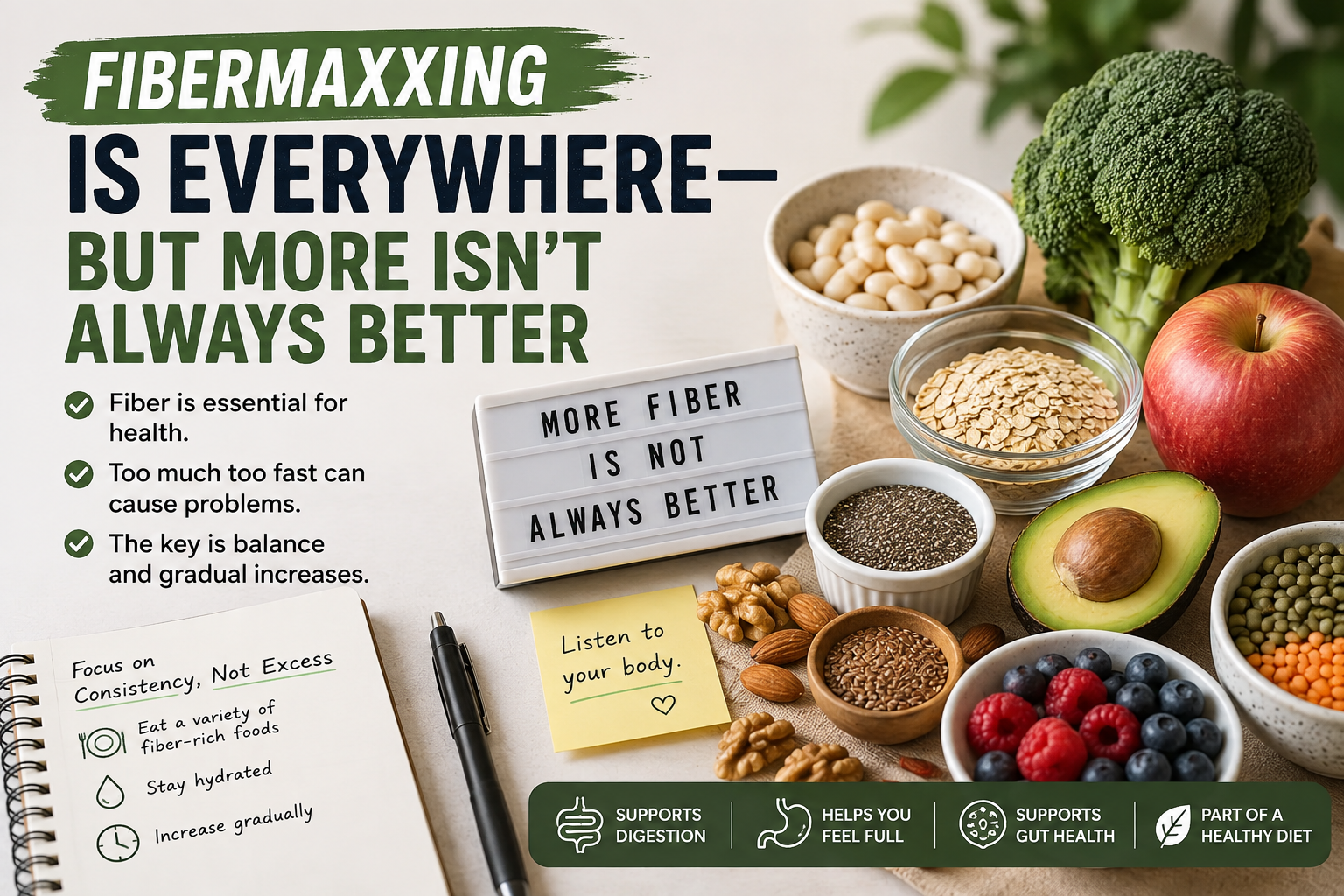
Social media posts about “fibermaxxing” encourage people to add beans, chia seeds, high-fiber cereals, prebiotic foods, and fiber supplements to their daily routines.
The basic idea makes sense: fiber is an important part of a healthy diet, and many people could benefit from paying more attention to it.
But there is an important distinction between getting enough fiber and simply trying to get as much fiber as possible.
Increasing fiber too quickly can leave some people with bloating, gas, abdominal discomfort, diarrhea, or constipation.
So instead of asking:
“How can I maximize my fiber intake?”
a better question may be:
“How can I increase fiber in a way my diet and digestive system can actually handle?”
Why is everyone suddenly talking about fiber?
Fiber itself is not new.
What has changed is the way people are talking about it.
Gut health has become a mainstream wellness topic, while consumers are increasingly interested in foods that support fullness, digestive regularity, and overall diet quality.
That has helped move fiber beyond its old reputation as something people mainly associated with constipation.
Fiber is now appearing in:
- high-fiber snacks
- cereals
- protein products
- functional drinks
- prebiotic products
- powders
- gummies
- psyllium supplements
The renewed attention can be useful if it encourages people to improve the overall quality of their diets.
The problem begins when “eat more fiber” turns into “more fiber is always better.”
It isn't that simple.
Fiber isn't one single thing
The word “fiber” describes a broad group of carbohydrates that are not fully digested in the small intestine.
Different fibers behave differently.
You may have heard fiber divided into soluble and insoluble categories.
That distinction can be useful, but real foods often contain mixtures of different fibers, and individual fibers can differ in properties such as fermentability and viscosity.
That matters because two foods that contain the same number of grams of fiber do not necessarily behave identically in the digestive tract.
This is one reason why judging a diet only by a single “fiber grams” number can oversimplify the picture.
Food first: where fiber normally comes from
Before buying a fiber powder or gummy, look at what is already on your plate.
Common fiber-rich foods include:
- beans and lentils
- vegetables
- fruits
- whole grains
- nuts
- seeds
These foods provide more than isolated fiber.
Depending on the food, they can also provide vitamins, minerals, protein, unsaturated fats, and other components of a varied diet.
For someone whose diet contains very few plant foods, improving meals may therefore accomplish more than simply adding a scoop of fiber powder to an otherwise unchanged diet.

What about psyllium and other fiber supplements?
Fiber supplements can have a place.
Psyllium, for example, is a fiber commonly sold as a powder, capsule, or other supplement format.
A supplement may be convenient for someone who has difficulty meeting an appropriate fiber intake through food alone.
But convenience does not make food and supplements nutritionally identical.
A fiber supplement generally provides a concentrated source of a particular fiber, while whole foods contribute fiber as part of a broader nutrient package.
That makes the question less about:
food OR supplements
and more about:
What is missing from the current diet, and what is the most practical way to address it?
For many people, food remains the logical starting point.
The biggest fibermaxxing mistake: increasing too much, too quickly
Imagine someone eating a relatively low-fiber diet.
Then overnight they add:
chia seeds at breakfast,
a high-fiber bar in the afternoon,
beans at dinner,
and a psyllium supplement before bed.
On paper, the new diet may look impressive.
The digestive system may have a different opinion.
A rapid increase in fiber can cause symptoms such as:
- gas
- bloating
- cramping
- changes in bowel habits
Some fibers are fermented by gut microbes, which can contribute to gas production.
Individual tolerance also varies.
This does not mean fiber is unhealthy.
It means the speed of the change matters.
More fiber also changes the hydration equation
When increasing fiber intake, fluid intake deserves attention too.
Certain fibers interact with water in the digestive tract, and concentrated fiber products can come with specific mixing and fluid instructions.
This is particularly important with products such as psyllium.
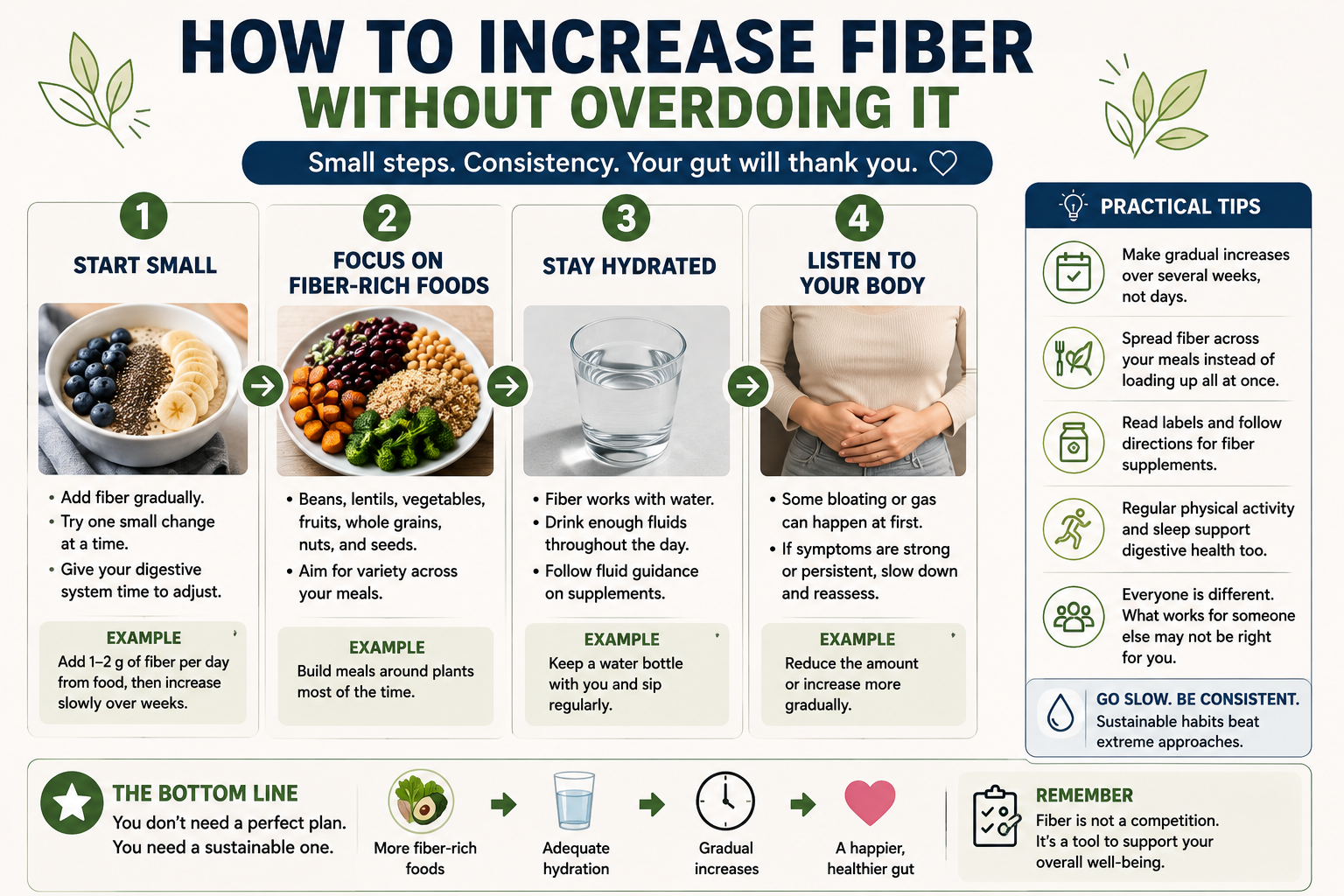
Instead of adding multiple high-fiber products at once, a more practical strategy is to increase fiber gradually while paying attention to hydration and digestive tolerance.
That approach also makes it easier to identify which dietary change may be causing discomfort.
“High fiber” doesn't automatically mean “healthy”
The fiber trend has created another interesting problem.
Fiber is now being added to many packaged foods.
A product may advertise:
5 g fiber
prebiotic fiber
or
high fiber
prominently on the package.
Those claims can provide useful information, but they do not tell you everything about the food.
A better label check asks:
- What is the serving size?
- How much fiber does one serving provide?
- What are the main ingredients?
- What else does the product contribute to the diet?
- Am I getting most of my fiber from varied foods or relying heavily on fortified products?
Fiber content is one part of nutritional quality, not a complete score.
How to increase fiber without turning it into a competition
You do not need to transform your diet overnight.
A more sustainable approach can be surprisingly ordinary.
Add beans or lentils to a meal.
Choose a whole-grain option you actually enjoy.
Keep the edible skin on appropriate fruits or vegetables.
Add nuts or seeds where they fit naturally.
Increase plant foods across several meals instead of concentrating a huge amount of fiber into one sitting.
Then give your digestive system time to adjust.
Do you need a fiber supplement?
Not everyone does.
Before buying one, ask:
How much fiber-rich food do I currently eat?
If fruits, vegetables, legumes, whole grains, nuts, and seeds rarely appear in your diet, the first opportunity may be improving food choices.
A supplement may be useful in certain situations, but it should solve a specific problem rather than simply follow a trend.
If you choose a fiber supplement, read the label carefully.
Look at:
- the type of fiber
- fiber amount per serving
- serving size
- directions for use
- fluid instructions
- warnings
- other added ingredients
If you take medications or have a gastrointestinal condition, discussing significant dietary changes or fiber supplements with a qualified healthcare professional is sensible.
Fibermaxxing gets one big thing right
For all the hype surrounding the trend, fibermaxxing highlights something useful:
fiber deserves more attention.
But nutrition rarely improves by turning one nutrient into a contest.
Protein did not become better because people tried to consume unlimited amounts of it.
Fiber is no different.
The goal is not to win at fiber.
The goal is to build a diet that provides an appropriate amount from a variety of foods, increase intake at a tolerable pace, and use supplements when they have a clear purpose.
So before adding another fiber gummy, powder, or “gut health” product, take a look at your meals.
The most useful upgrade may already be waiting in the produce aisle, the bean aisle, or the whole-grain section.
Health Information Notice
This article is intended for general nutrition and educational purposes only and is not a substitute for individualized medical advice, diagnosis, or treatment.
Fiber needs and tolerance can vary based on age, diet, health status, gastrointestinal conditions, medications, and other factors. People with digestive disorders, swallowing difficulties, or other medical conditions, and those taking medications, should consult an appropriate healthcare professional before making major dietary changes or starting a fiber supplement.