Seed oils have become one of the most debated ingredients in nutrition.
Canola oil, soybean oil, sunflower oil, corn oil, and similar oils are often grouped together under the label “seed oils.” On social media, they are sometimes described as inflammatory, toxic, or something that should be removed from the diet entirely.
That creates a simple question:
Are seed oils actually unhealthy, or is the issue more complicated than the headlines suggest?
The answer depends on what we mean by “unhealthy.” Seed oils are important sources of unsaturated fats, including the omega-6 fatty acid linoleic acid. Current evidence does not support the idea that normal dietary intake of omega-6 fats automatically causes harmful inflammation.
At the same time, that does not mean every food containing seed oil is equally nutritious.
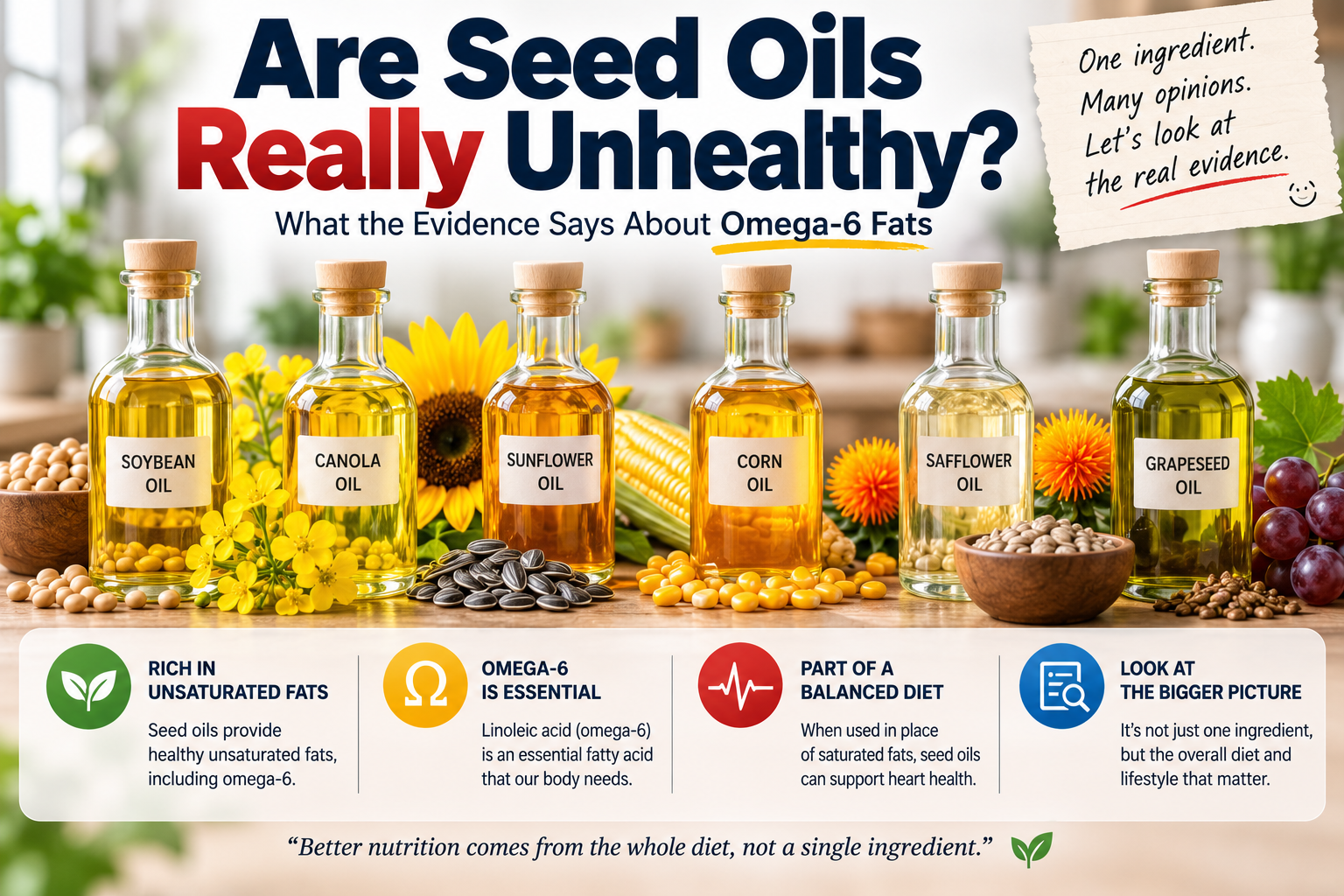
What Are Seed Oils?
“Seed oil” is not one specific type of fat.
The term is commonly used for oils extracted from seeds or certain crops, including:
- soybean oil
- sunflower oil
- corn oil
- safflower oil
- canola oil
- grapeseed oil
Their fatty-acid composition differs, but many provide substantial amounts of polyunsaturated fat, particularly linoleic acid.
Linoleic acid is an omega-6 fatty acid that the human body cannot make in sufficient amounts on its own, so it must be obtained from food. For that reason, it is classified as an essential fatty acid.
The fact that something contains omega-6, therefore, does not automatically make it harmful.
Why Do Seed Oils Have Such a Bad Reputation?
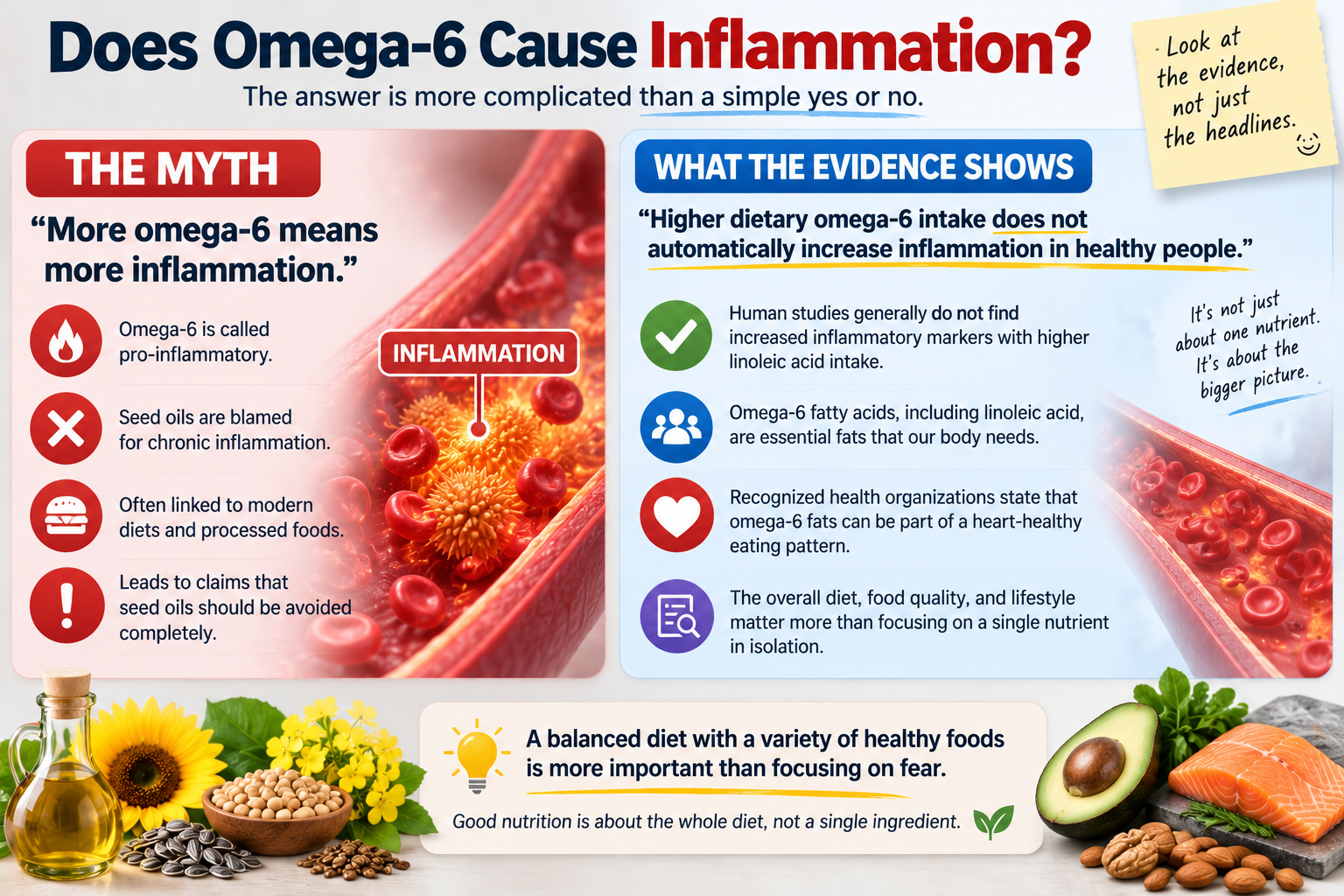
Much of the controversy centers on omega-6 fatty acids.
Linoleic acid can be converted through several metabolic pathways, and some compounds involved in these pathways participate in inflammatory processes.
This has led to a popular claim that:
more omega-6 → more inflammation → worse health.
Human nutrition, however, is not that simple.
A fatty acid participating in biochemical pathways associated with inflammation does not mean that eating foods containing that fatty acid necessarily causes chronic harmful inflammation.
Reviews of controlled feeding trials have generally not found that increasing dietary linoleic acid increases commonly measured inflammatory markers in healthy adults.
Does Omega-6 Cause Inflammation?
This is where the distinction between biological mechanisms and actual human outcomes becomes important.
Laboratory pathways can help researchers understand how nutrients work, but they cannot by themselves tell us what happens when people eat those nutrients as part of a normal diet.
A systematic review of randomized controlled trials published in the Journal of the Academy of Nutrition and Dietetics found no evidence that increasing linoleic acid intake increased concentrations of common inflammatory markers in healthy people.
The American Heart Association has also concluded that omega-6 polyunsaturated fatty acids can form part of a heart-healthy eating pattern.
So the statement “omega-6 foods cause inflammation” is too broad to accurately describe the evidence.
What About the Omega-6 to Omega-3 Ratio?
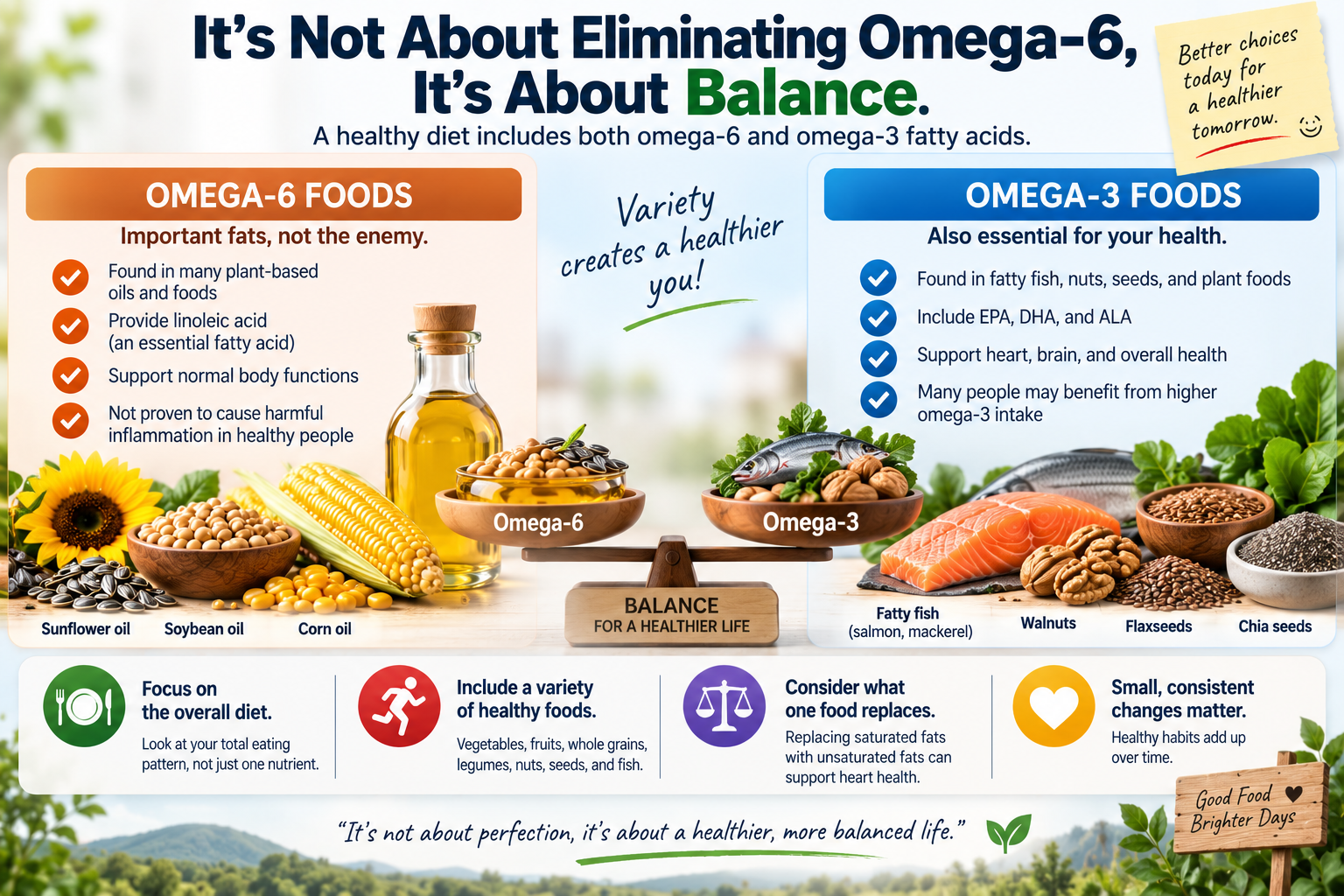
Another common argument is that modern diets contain “too much omega-6 and too little omega-3.”
Omega-3 fatty acids are certainly important, and many people may benefit from eating more omega-3-rich foods such as fatty fish, depending on their overall diet.
But this does not necessarily mean the solution is to eliminate omega-6.
Focusing only on a specific omega-6-to-omega-3 ratio can oversimplify nutrition. It may be more useful to ensure adequate intake of omega-3 fats while considering the quality of the overall diet.
In other words, adding beneficial foods can be just as important as deciding which foods to reduce.
Are Seed Oils Better Than Butter?
The answer depends partly on what they replace.
This is an important concept that is often missing from online discussions.
If a person replaces a source high in saturated fat, such as butter, with an oil rich in unsaturated fats, the nutritional effect is different from simply adding extra oil and calories to an existing diet.
Evidence summarized by major cardiovascular-health organizations supports replacing saturated fats with unsaturated fats, particularly polyunsaturated fats, as part of dietary strategies to lower cardiovascular risk.
That does not make every vegetable oil a “health food.”
It means the replacement matters.
Nutrition research rarely comes down to whether one isolated ingredient is universally good or bad.
If Seed Oils Aren't the Problem, Why Are They Found in So Much Junk Food?
This is another source of confusion.
Seed oils are frequently used in chips, fried foods, cookies, fast food, packaged snacks, and other highly processed products.
But those foods may also contain:
- refined carbohydrates
- added sugars
- large amounts of sodium
- high calorie density
- relatively little fiber or other nutrient-dense ingredients
Seeing soybean or sunflower oil on the ingredient list does not prove that the oil itself explains all of the health effects associated with a diet high in ultra-processed foods.
The food containing the oil and the overall dietary pattern matter.
Does Heating Seed Oil Make It Toxic?
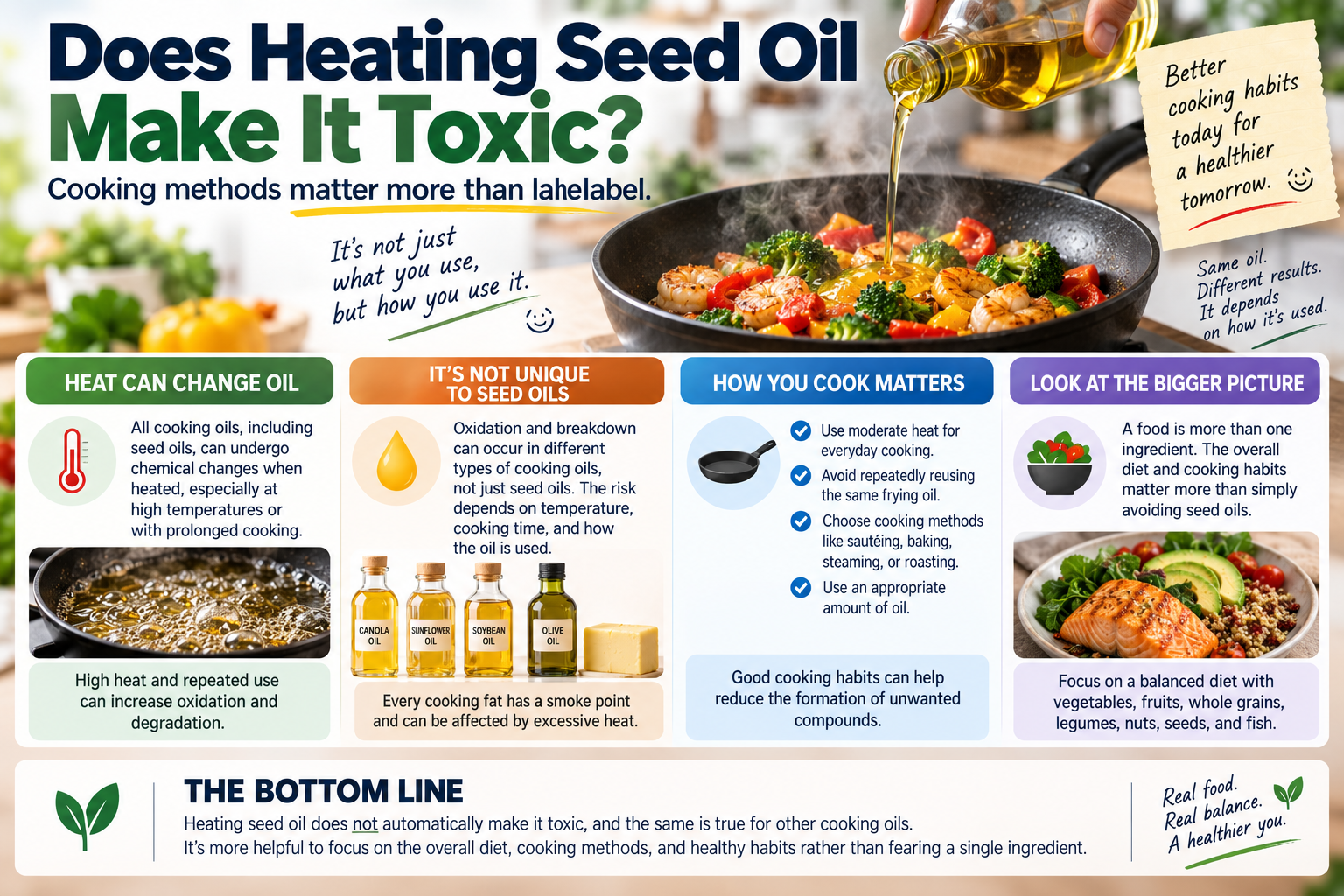
Cooking oils can undergo chemical changes when exposed to heat, especially during prolonged heating or repeated high-temperature frying.
This is not unique to seed oils.
Oxidation and degradation can occur in different cooking fats depending on temperature, cooking time, fatty-acid composition, and whether the oil is repeatedly reused.
For everyday home cooking, the practical question is therefore not simply:
“Is this a seed oil?”
It is also worth considering how the oil is being used.
Repeatedly reusing degraded frying oil is a different situation from using an appropriate amount of cooking oil during ordinary food preparation.
Do You Need to Avoid Seed Oils?
For most people, there is little reason to treat all seed oils as a single toxic category.
A more useful approach is to look at the entire diet.
Consider whether most of your food comes from vegetables, fruits, whole grains, legumes, nuts, seeds, fish and other nutrient-dense foods. Consider how much saturated fat you consume and whether most fried and highly processed foods are occasional foods or dietary staples.
Seed oils can fit within a balanced diet, particularly when they replace fats higher in saturated fat.
That is very different from saying that unlimited amounts of oil or highly processed foods are beneficial.
The Bottom Line
The claim that seed oils are inherently toxic or that omega-6 fats automatically cause chronic inflammation is not supported by the current body of human evidence.
Linoleic acid is an essential omega-6 fatty acid, and unsaturated fats can play a useful role in a balanced diet.
At the same time, nutrition should not be reduced to defending or attacking one ingredient.
What you eat overall, what one food replaces, how foods are prepared, and the broader dietary pattern are more informative than the words “seed oil” on an ingredient label.
Health Information Notice
This article provides general nutrition and health information and is not intended to diagnose, treat, or prevent any medical condition. Individual dietary needs may vary depending on health conditions, medications, allergies, and other factors. Consult a qualified healthcare professional when personalized dietary advice is needed.
Sources
- American Heart Association. Omega-6 Fatty Acids and Risk for Cardiovascular Disease
- American Heart Association. Saturated Fat
- National Institutes of Health, Office of Dietary Supplements. Omega-3 Fatty Acids – Health Professional Fact Sheet
- Johnson GH, Fritsche K. Effect of dietary linoleic acid on markers of inflammation in healthy persons: a systematic review of randomized controlled trials. Journal of the Academy of Nutrition and Dietetics.
- Harvard T.H. Chan School of Public Health, The Nutrition Source. Types of Fat