Fiber has a reputation for being one of those nutrients we should simply eat more of.
Whole grains, beans, vegetables, fruits, nuts, and seeds are regularly recommended as part of a healthy diet, and many people actively look for ways to increase their fiber intake.
But that raises an important question:
Can you actually eat too much fiber?
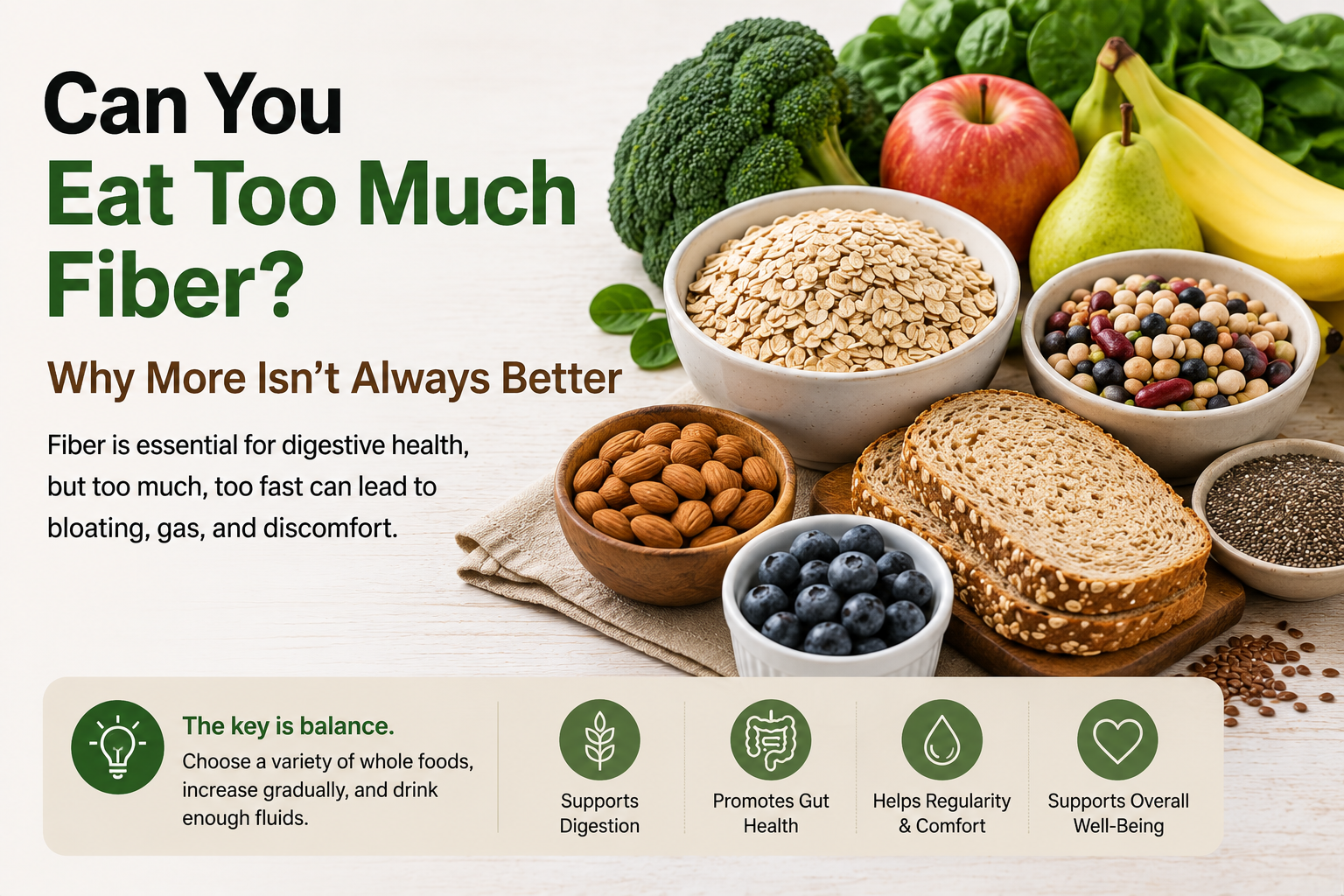
The short answer is yes—especially if you increase your intake too quickly.
Fiber is an important part of a balanced diet, but suddenly adding a large amount can cause gas, bloating, and abdominal cramps. The better approach is usually to increase fiber gradually and pay attention to your overall diet and fluid intake.
Here’s what happens when fiber intake rises, how much adults generally need, and why “more” is not automatically “better.”
What Exactly Is Dietary Fiber?
Dietary fiber is a type of carbohydrate found primarily in plant foods.
Unlike many other carbohydrates, fiber is not fully broken down and absorbed in the small intestine.
Fiber is commonly discussed in two broad categories: soluble and insoluble fiber.
Soluble fiber is found in foods such as beans, fruit, and oats. It interacts with water and can form a gel-like material.
Insoluble fiber is common in whole grains and vegetables and contributes bulk to stool.
Both can be part of a healthy diet, which is one reason eating a variety of plant foods is generally more useful than focusing on a single “high-fiber” ingredient.
How Much Fiber Do Adults Need?
There is no single fiber target that applies equally to every adult.
According to the National Institute of Diabetes and Digestive and Kidney Diseases (NIDDK), adults should generally get about 22 to 34 grams of fiber per day, depending on age and sex.
However, knowing the target does not mean you need to reach it overnight.
Someone eating relatively little fiber may respond differently to a sudden jump in intake than someone who already eats plenty of whole grains, beans, vegetables, and fruit.
That is where the speed of the change becomes important.

What Happens If You Increase Fiber Too Quickly?
One of the most common mistakes is trying to transform a low-fiber diet in a single day.
For example, someone might suddenly replace refined grains with whole grains, add a large serving of beans, eat several extra portions of vegetables, and start a fiber supplement at the same time.
Those foods may be nutritious, but the sudden increase can be uncomfortable.
MedlinePlus notes that consuming a large amount of fiber over a short period can cause intestinal gas, bloating, and abdominal cramps. Adding fiber gradually can help reduce these problems.
One reason involves what happens in the large intestine.
Some carbohydrates that are not fully digested earlier in the digestive tract reach the large intestine, where bacteria break them down. Gas is produced during this process.
This does not mean fiber is unhealthy.
It means your digestive system may need time to adjust to a substantial dietary change.
Does More Fiber Always Mean Better Health?
Not necessarily.
The goal is not to consume the largest amount of fiber possible.
Fiber needs vary, and individual tolerance matters. Certain people with gastrointestinal conditions may also respond differently to different types and amounts of fiber.
For example, NIDDK notes that dietary changes for irritable bowel syndrome can vary from person to person, and research suggests soluble fiber may be more helpful for IBS symptoms than insoluble fiber.
So a high number on a nutrition tracker does not automatically mean a better diet.
The source of the fiber, the rest of your diet, and how your body responds all matter.
Why Fluids Matter When You Increase Fiber
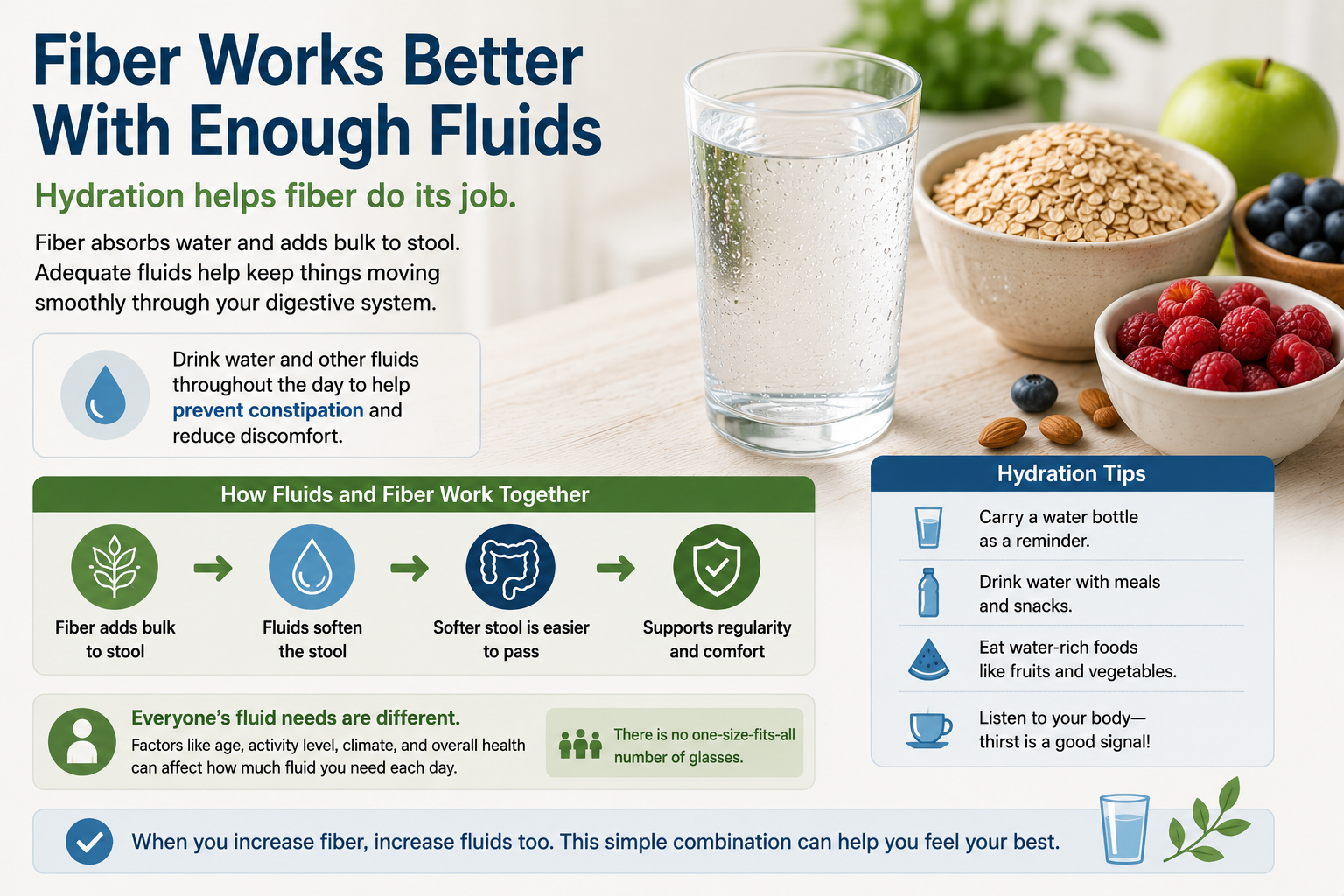
Fiber intake should not be considered in isolation from hydration.
NIDDK recommends drinking water and other liquids to help fiber work better and help make stools softer and easier to pass.
MedlinePlus similarly advises getting enough fluids when increasing dietary fiber and notes that inadequate fluid intake can make constipation worse rather than better.
There is no need to turn this into another rigid rule such as “everyone must drink exactly eight glasses.”
Fluid needs vary with factors such as body size, activity level, climate, diet, and health status.
The practical point is simpler:
If you are significantly increasing fiber, don't ignore your fluid intake.
What Are the Best Food Sources of Fiber?
You do not necessarily need a specialty product to increase your fiber intake.
Fiber occurs naturally in many everyday foods, including:
- Whole grains such as oatmeal and whole-wheat products
- Legumes such as lentils, black beans, chickpeas, and soybeans
- Fruits such as berries, apples, oranges, and pears
- Vegetables such as carrots, broccoli, peas, and leafy greens
- Nuts such as almonds, peanuts, and pecans
These are among the fiber-rich foods highlighted by NIDDK.
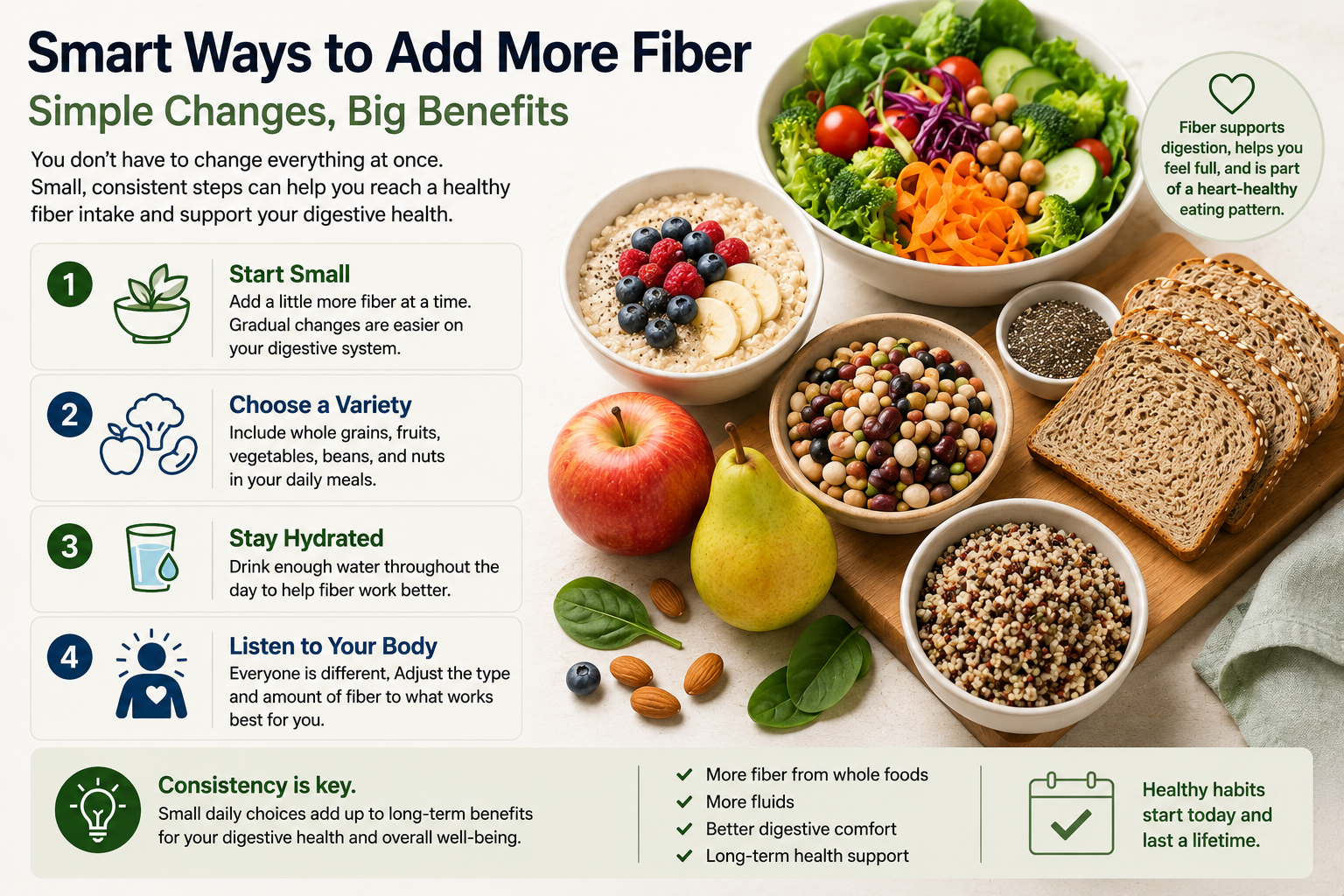
Instead of dramatically changing every meal, you might replace one refined-grain food with a whole-grain option, add a serving of vegetables to one meal, or include beans more regularly.
Small changes can add up.
Do You Need a Fiber Supplement?
Fiber supplements can be useful in certain situations, but they are not automatically necessary just because fiber is important.
Whole foods provide more than isolated fiber. Fruits, vegetables, legumes, nuts, and whole grains also provide various vitamins, minerals, and other food components.
MedlinePlus notes that people eating a balanced diet may not need a fiber supplement and recommends choosing foods naturally rich in fiber.
That doesn't make supplements inherently bad.
It simply means that “contains fiber” and “nutritionally identical to a fiber-rich whole food” are not the same claim.
If you use a fiber supplement because of a medical condition or persistent digestive symptoms, discussing the type and amount with a healthcare professional can be useful.
A Smarter Way to Increase Fiber
If your current diet is low in fiber, there is usually no reason to race toward a target.
Start with manageable changes.
Add fiber-rich foods gradually rather than dramatically increasing several sources at once. Include different foods rather than relying on one product, and remember to pay attention to fluids.
If increasing fiber consistently causes significant bloating, pain, diarrhea, constipation, or other persistent digestive symptoms, simply adding even more fiber may not be the answer.
Individual digestive conditions can change what type and amount of fiber is appropriate.
The Bottom Line: Aim for Enough, Not as Much as Possible
Fiber deserves its healthy reputation—but that reputation can create the mistaken idea that more must always be better.
It isn't.
Adults generally need roughly 22 to 34 grams per day depending on age and sex, but rapidly increasing fiber can cause gas, bloating, and abdominal discomfort.
A more practical approach is to get fiber from a variety of whole foods, increase it gradually if your current intake is low, and pay attention to fluids and your body's response.
With fiber, the goal isn't to win a numbers contest.
It's to build an eating pattern you can comfortably maintain.
Health Information Notice
This article provides general nutrition and health information and is not a substitute for individualized medical advice. Fiber needs and tolerance can vary depending on age, health status, medications, and gastrointestinal conditions. Seek advice from a qualified healthcare professional if you have persistent abdominal pain, severe bloating, ongoing constipation or diarrhea, rectal bleeding, unexplained weight loss, or other concerning digestive symptoms.
Sources
- National Institute of Diabetes and Digestive and Kidney Diseases (NIDDK), Eating, Diet, & Nutrition for Constipation
- NIDDK, Eating, Diet, & Nutrition for Irritable Bowel Syndrome
- NIDDK, Symptoms & Causes of Gas in the Digestive Tract
- MedlinePlus Medical Encyclopedia, Fiber
- MedlinePlus Medical Encyclopedia, High-fiber foods