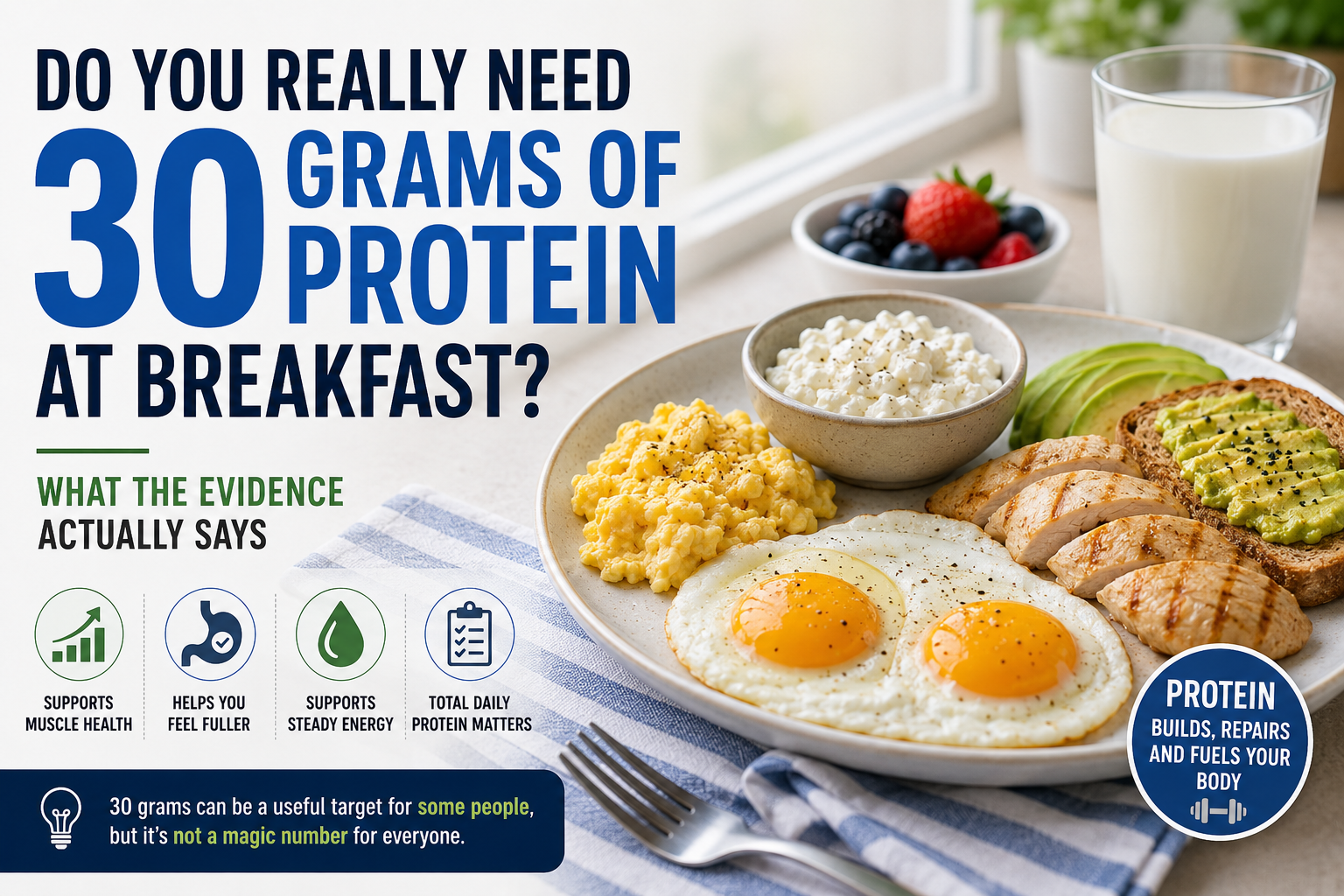
Protein has become one of the biggest nutrition topics online, and breakfast is now getting special attention.
A common recommendation on social media is simple: eat 30 grams of protein at breakfast. Some posts suggest that hitting this number can improve fullness, support muscle, stabilize energy, and even make weight management easier.
But why exactly 30 grams?
Is 30 grams a scientifically established target for everyone? Is a breakfast with 20 grams of protein not enough? And what happens if you eat more than 30 grams at one meal?
The short answer is that 30 grams can be a practical target for some people, but it is not a universal requirement or a magic threshold.
Your total daily protein intake, body size, age, activity level, overall diet, and how protein is distributed across meals all matter.
Today, let's look at where the 30-gram breakfast idea comes from, what research actually tells us, and how to think about protein at breakfast without becoming obsessed with a single number.
Why Is Everyone Talking About 30 Grams of Protein at Breakfast?
The popularity of high-protein breakfasts is partly connected to a broader shift in how people think about protein.
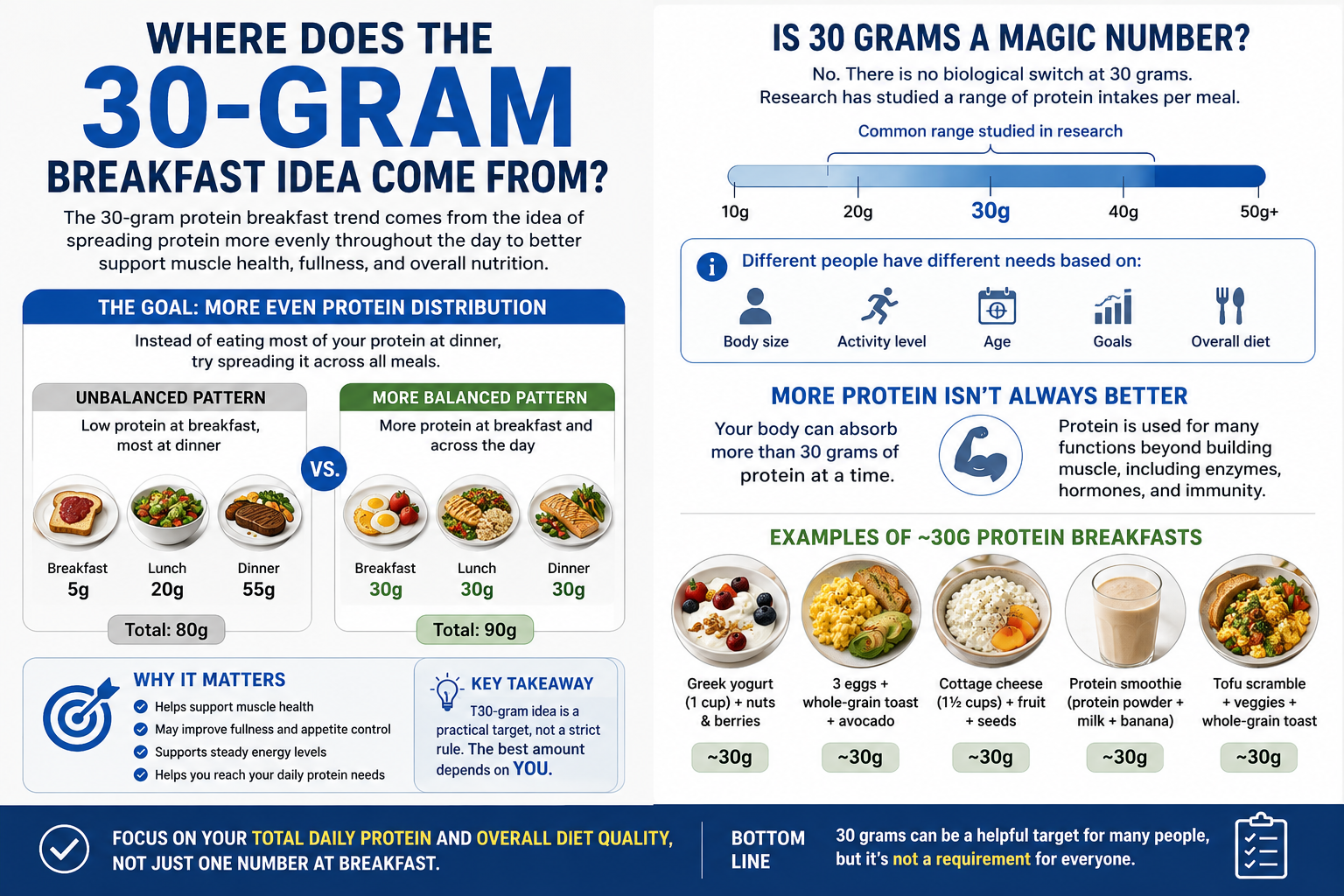
Instead of eating relatively little protein at breakfast and much more at dinner, nutrition researchers have examined whether spreading protein more evenly across the day may be useful.
This makes sense from a practical perspective.
A breakfast consisting mostly of refined carbohydrates may contain relatively little protein, while dinner can easily contain a large serving of meat, fish, dairy, beans, or other protein-rich foods.
Adding more protein earlier in the day can therefore help some people distribute their daily intake more evenly.
But this does not mean that 30 grams is a mandatory breakfast dose.
Is There Anything Special About Exactly 30 Grams?
Not really.
There is no biological switch that suddenly turns on when breakfast reaches exactly 30 grams of protein.
Research on protein and muscle protein synthesis has often examined moderate servings of high-quality protein in the range of roughly 20–40 grams, depending on the population, meal, type of protein, body size, and exercise conditions.
This has helped popularize numbers such as 20, 25, or 30 grams per meal.
But these numbers should be understood as useful reference points rather than rigid rules.
A smaller person with relatively low protein needs and a larger athlete training regularly do not necessarily need the same amount at breakfast.
What Matters More: Breakfast Protein or Total Daily Protein?
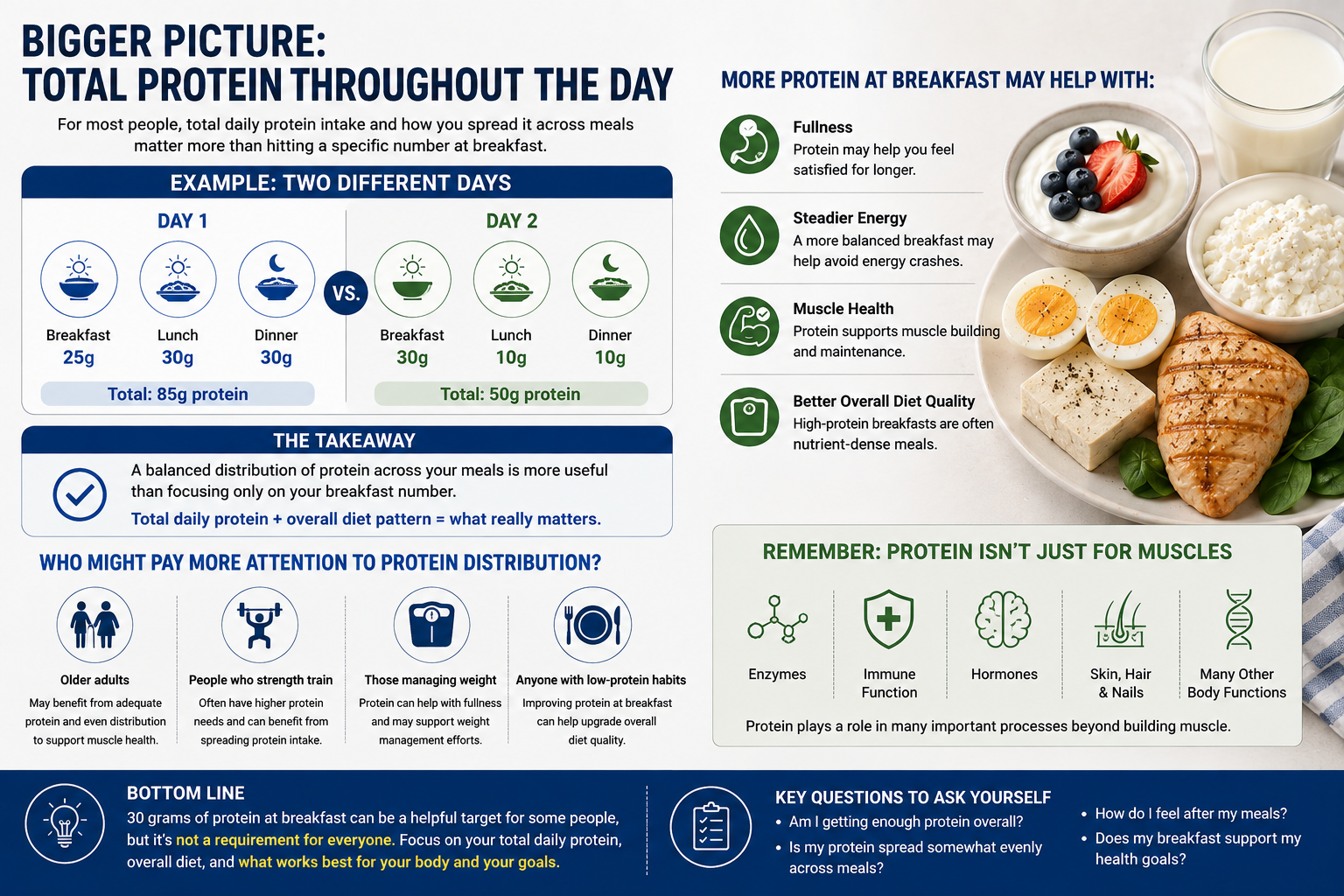
For most people, the bigger picture matters more.
Protein requirements are usually considered across the entire day, not breakfast alone.
The Recommended Dietary Allowance (RDA) for protein for generally healthy adults is 0.8 grams per kilogram of body weight per day. However, individual needs can be higher depending on factors such as age, physical activity and training goals.
This means that focusing exclusively on whether breakfast contains exactly 30 grams can distract from a more important question:
Are you getting enough protein overall?
For example, someone who eats 25 grams at breakfast, 30 grams at lunch and 30 grams at dinner may have a very different dietary pattern from someone who eats 30 grams at breakfast but very little protein during the rest of the day.
The breakfast number alone cannot tell us whether either diet is appropriate.
Does Eating Protein at Breakfast Help You Feel Full?
It can.
Protein generally has a stronger satiating effect than many carbohydrate-rich foods, which is one reason higher-protein meals may help some people feel satisfied for longer.
A breakfast containing eggs, Greek yogurt, cottage cheese, milk, tofu, beans or other protein-rich foods may therefore feel more filling than a breakfast built primarily around sugary cereal or pastries.
But once again, more is not automatically better.
Fiber, total calories, food volume, fat, meal composition and individual appetite responses also influence how full you feel.
A balanced breakfast should not become a contest to fit as much protein as possible onto the plate.
Is Protein Above 30 Grams at One Meal Wasted?
This is another common misconception.
You may have heard that the body can absorb only 20 or 30 grams of protein at a time and that anything above that amount is wasted.
That is an oversimplification.
The digestive system can absorb considerably more protein than that. The confusion comes partly from studies examining how much protein may maximally stimulate muscle protein synthesis during a particular period, which is not the same thing as how much protein the body can absorb.
Amino acids from dietary protein have many functions beyond building skeletal muscle. They are involved in producing enzymes, hormones and other proteins throughout the body.
So eating 35 or 40 grams of protein at dinner does not mean everything above 30 grams simply disappears.
Who Might Benefit From Paying More Attention to Breakfast Protein?
Some people may have a stronger reason to think about protein distribution throughout the day.
Older adults, for example, may benefit from paying attention to both total protein intake and how protein is distributed across meals as part of maintaining muscle health.
People who regularly perform resistance training may also have higher protein requirements than sedentary adults.
Someone trying to improve the overall quality of a breakfast that currently contains very little protein could also benefit from adding a meaningful protein source.
However, that still does not require everyone to chase exactly 30 grams.
For one person, adding Greek yogurt to breakfast may be enough to improve the meal. Another person may prefer eggs, tofu, beans, cottage cheese, milk, nuts, seeds, or a combination of foods.
A Better Way to Build a High-Protein Breakfast
Rather than starting with the question "How do I reach exactly 30 grams?", start with the meal itself.
Include a substantial protein source and then build the rest of the breakfast around foods that contribute other nutrients.
For example, a breakfast might combine:
- Greek yogurt with fruit, oats and nuts
- Eggs with whole-grain toast and vegetables
- Tofu with vegetables and whole grains
- Cottage cheese with fruit and seeds
- Milk or fortified soy beverage with oats and other whole foods
The goal is not simply to maximize protein.
Fiber-rich carbohydrates, fruits or vegetables, healthy fats and overall dietary variety still matter.

So, Do You Need 30 Grams of Protein at Breakfast?
For most healthy adults, there is no universal rule requiring exactly 30 grams of protein at breakfast.
Thirty grams can be a useful and convenient target for certain people, especially if it helps them meet their daily protein needs and distribute protein more evenly throughout the day.
But 27 grams is not a failure, and 20 grams does not suddenly become nutritionally meaningless.
Likewise, eating more than 30 grams does not automatically mean the extra protein is wasted.
The better approach is to consider your total daily protein intake, body size, age, activity level, dietary pattern and personal goals rather than treating one popular number as a nutrition law.
Nutrition rarely works through one magic number.
A breakfast that fits your overall diet is more important than whether your plate happens to contain exactly 30 grams of protein.
Health Information Notice
This article provides general nutrition and health information and is not intended to diagnose, treat, cure, or prevent any medical condition. Individual protein needs can vary based on age, body size, activity level, health status, pregnancy, and other factors. People with kidney disease or other medical conditions that may require dietary protein management should consult a qualified healthcare professional for individualized advice.
Sources
- Harvard T.H. Chan School of Public Health, The Nutrition Source: Protein
- Harvard Health Publishing, information on dietary protein intake and distribution
- Mayo Clinic Press, discussion of the 30-30-30 diet and the evidence behind the 30-gram protein claim
- Cleveland Clinic, guidance on building a high-protein breakfast
- National Academies of Sciences, Engineering, and Medicine, Dietary Reference Intakes for Energy, Carbohydrate, Fiber, Fat, Fatty Acids, Cholesterol, Protein, and Amino Acids