Fresh fruit often has a healthier image than frozen fruit.
A basket of fresh berries or mangoes looks natural and nutritious, while a bag of frozen fruit can feel more processed. This leads to a common question:
Is frozen fruit actually as healthy as fresh fruit?
In many cases, frozen fruit can still be a nutritious choice. Freezing does not suddenly remove all of the vitamins, minerals, fiber, and plant compounds found in fruit.
However, fresh and frozen fruit are not always nutritionally identical. The time between harvest and eating, processing before freezing, storage conditions, and added ingredients can all make a difference.
Here is what is worth checking before deciding that fresh fruit is automatically better.

Why Frozen Fruit Can Still Be Nutritious
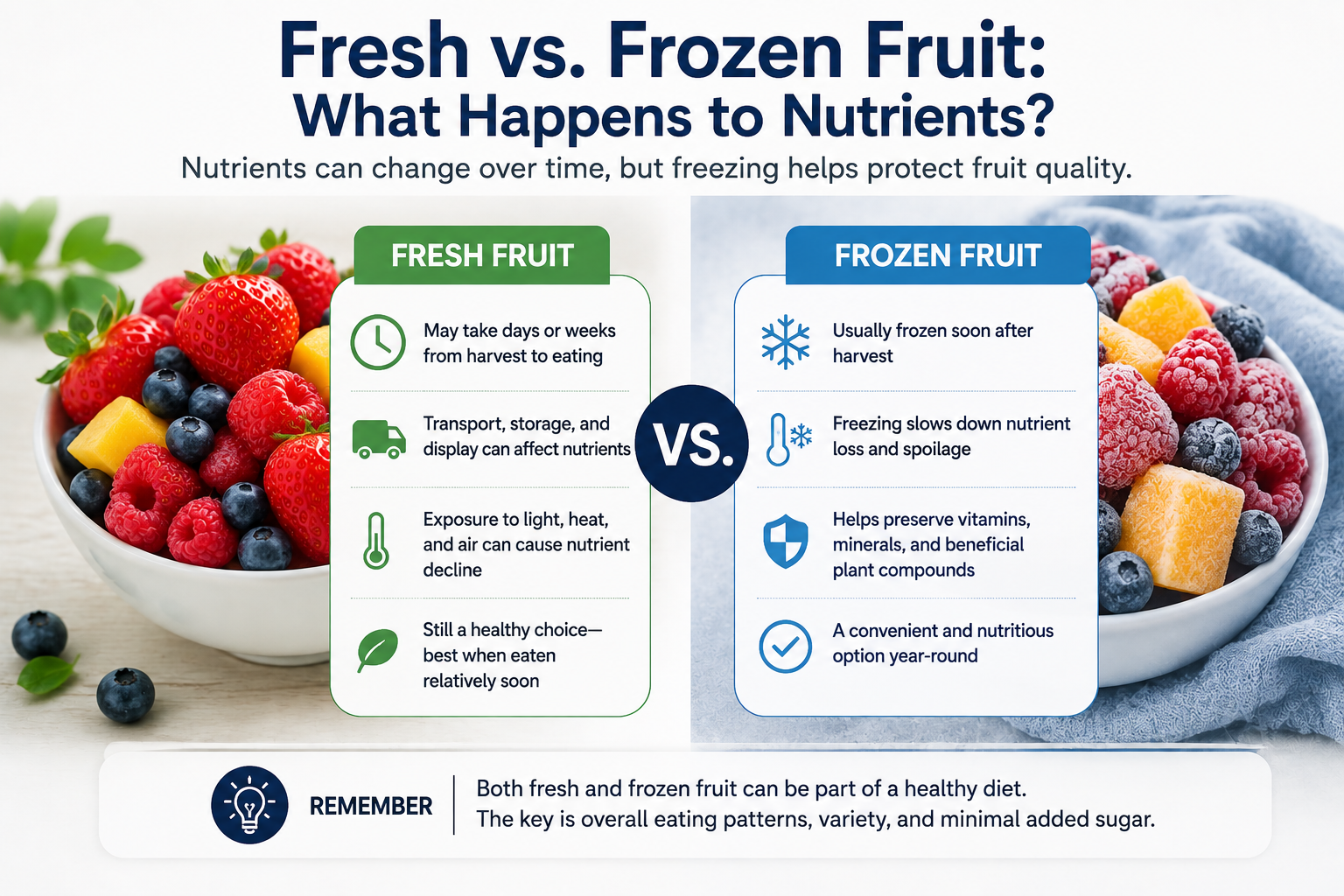
Fruit intended for freezing is typically processed relatively soon after harvest.
Freezing slows many of the chemical and biological processes that cause food to deteriorate. This allows frozen fruit to remain usable for much longer than fresh fruit stored in a refrigerator.
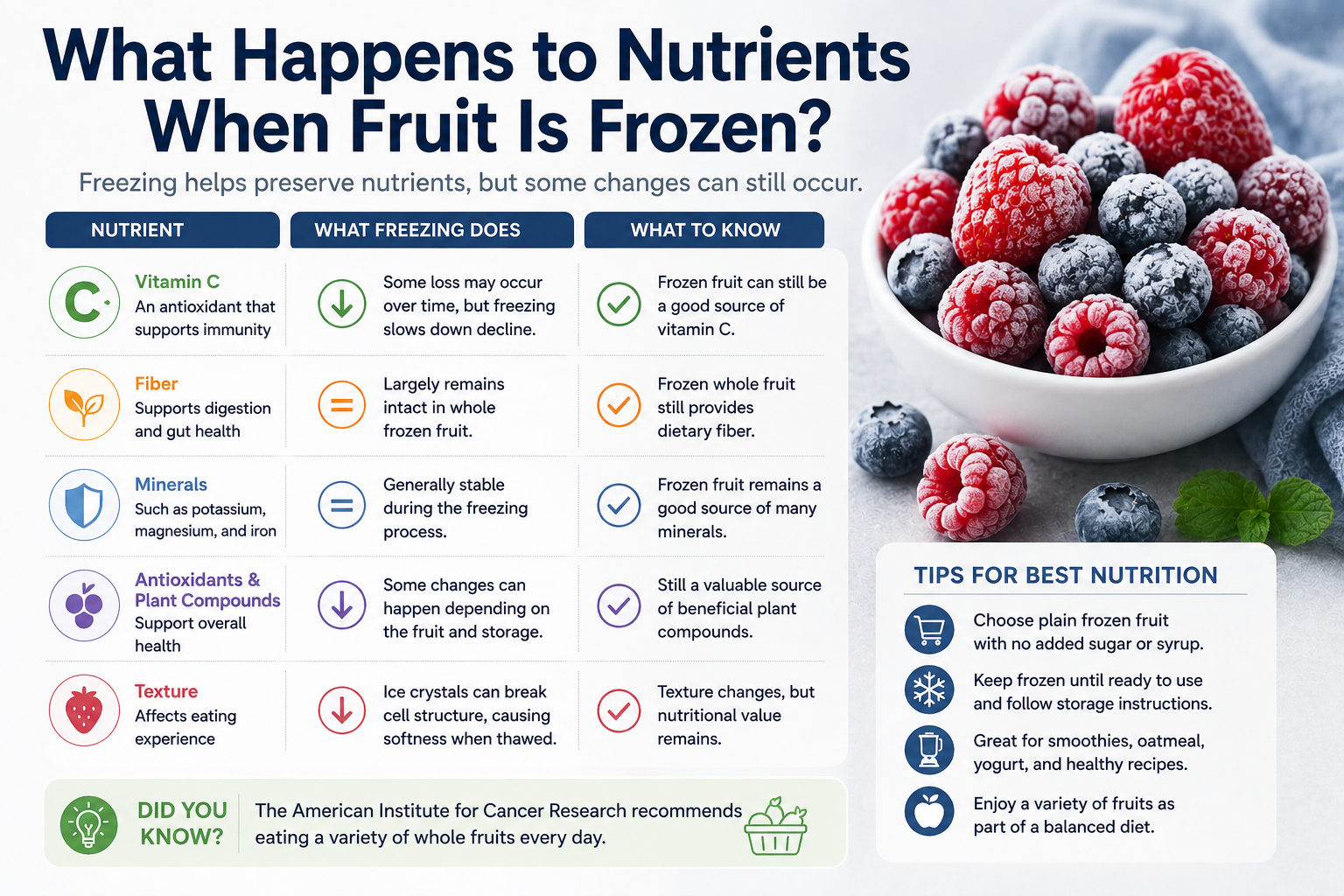
Importantly, freezing does not remove dietary fiber from whole fruit.
Frozen strawberries, blueberries, peaches, or mangoes still contain the structural components of the original fruit, although their texture may change after thawing.
Minerals are also generally stable during freezing.
The bigger question involves certain vitamins and plant compounds, which can change depending on the fruit, processing method, and length of storage.
Does Fresh Fruit Always Have More Vitamins?
Not necessarily.
“Fresh” describes how the fruit is sold, but it does not tell you exactly when it was harvested.
Fresh produce may spend time being transported, stored, displayed at a supermarket, and then stored again at home before it is eaten.
During that period, levels of some nutrients can gradually change.
Frozen fruit follows a different path. It is preserved by low temperatures, which substantially slows deterioration.
This means nutritional differences between fresh and frozen fruit are more complicated than simply assuming:
fresh = nutritious
frozen = less nutritious
The specific fruit and how it has been handled matter.
What Happens to Vitamin C During Storage?
Vitamin C deserves special attention because it can be affected by processing and storage.
Its concentration can decline over time depending on factors such as temperature, oxygen exposure, processing, and storage duration.
Freezing can help slow deterioration, but it does not mean vitamin C will remain completely unchanged forever.
Fresh fruit can also lose some vitamin C while being stored.
For this reason, comparing a freshly picked strawberry with a frozen strawberry is different from comparing frozen strawberries with fresh strawberries that have spent days in transportation, a supermarket, and your refrigerator.
This is one reason why there is no universal rule that one form always contains more vitamin C than the other.
Does Frozen Fruit Still Have Fiber?
Yes, if you are eating the fruit itself.
Dietary fiber is not simply destroyed because fruit is frozen.
This distinction becomes especially useful when comparing frozen whole fruit with fruit juice.
A bowl of frozen berries still contains the edible structure and fiber of the berries. Juice removes or greatly reduces much of that structure depending on how it is produced.
Blending frozen fruit into a smoothie is also different from extracting only the juice because the blended drink can retain the fruit's fiber.
However, smoothies can make it easier to consume a larger amount of fruit quickly, so portion size can still matter.
Why Does Thawed Fruit Become Soft?
Anyone who has thawed frozen strawberries has probably noticed that they rarely have the same texture as fresh strawberries.
Freezing creates ice crystals inside plant tissues. These crystals can damage cell structures.
When the fruit thaws, water can escape from the damaged cells, leaving the fruit softer or more watery.
That change can affect texture considerably.
But softer texture does not mean that the fruit has suddenly lost all of its nutritional value.
It simply means that freezing and thawing have altered its physical structure.
The Bigger Issue May Be Added Ingredients
A package labeled “frozen fruit” can contain only fruit — but that should not be assumed without checking.
Some frozen fruit products may include added sugar, syrups, sweetened sauces, or other ingredients.
This changes the nutritional picture.
When buying frozen fruit, check the ingredient list.
For a simple frozen fruit product, you may see something as straightforward as:
Ingredients: Blueberries
or
Ingredients: Strawberries
If sugar or syrup appears among the ingredients, you are no longer comparing plain frozen fruit with plain fresh fruit.
You are comparing two different food products.
Fresh vs. Frozen Fruit: Which Should You Choose?
There does not have to be one winner.
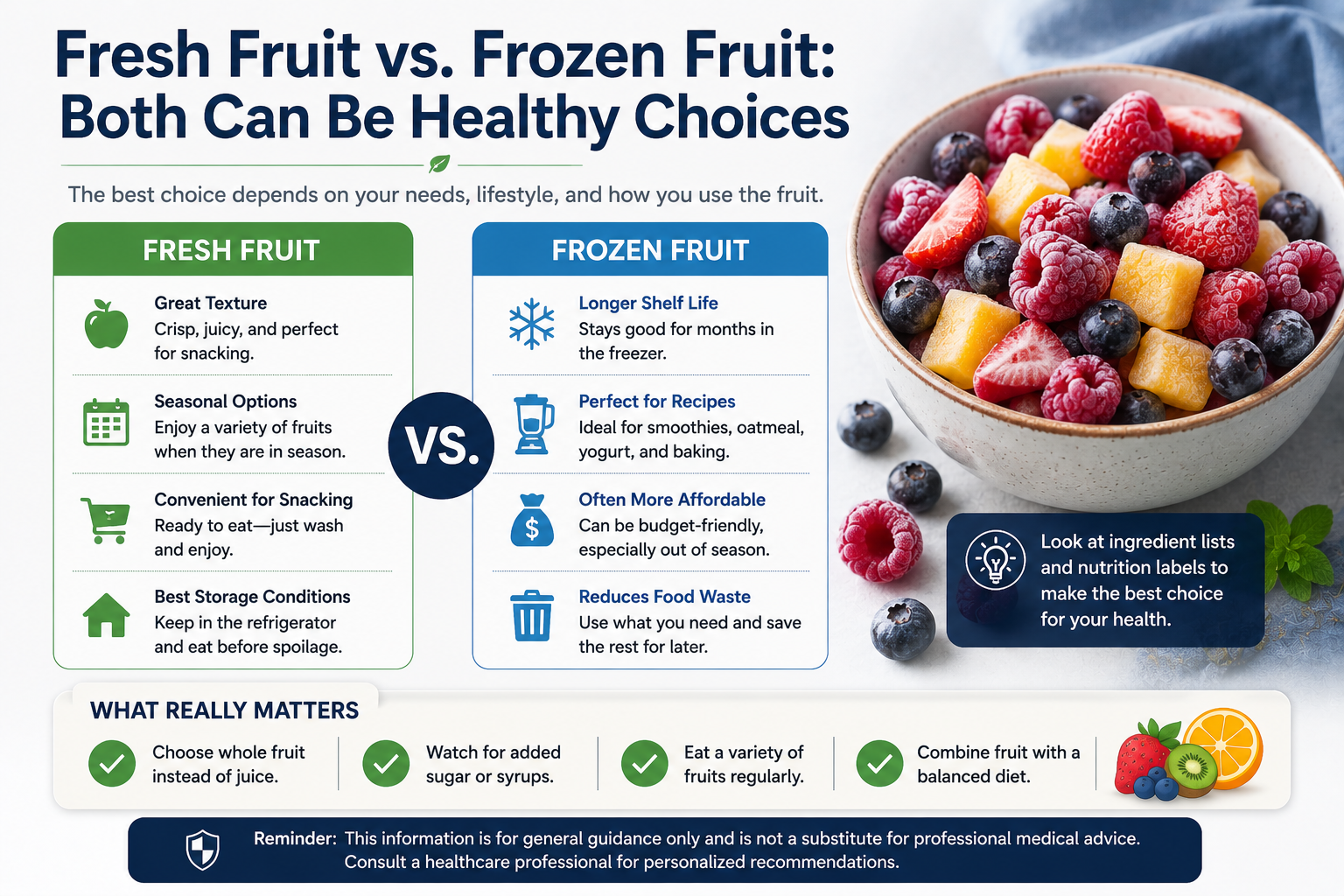
Fresh fruit can be convenient when you want crisp texture, easy snacking, or fruit that is currently in season.
Frozen fruit can be particularly useful for smoothies, oatmeal, yogurt, cooking, and keeping fruit available when fresh produce spoils quickly.
Frozen berries can also reduce food waste because you can use only the amount you need and return the rest to the freezer.
The better choice often depends on availability, price, storage, how you plan to use the fruit, and whether anything has been added to it.
What to Check When Buying Frozen Fruit
Instead of judging a product simply because it comes from the freezer aisle, check a few practical details.
1. Read the ingredient list
Plain fruit should ideally have a simple ingredient list without unnecessary added sugars or syrups.
2. Check the Nutrition Facts label
The label helps you compare calories, carbohydrates, added sugars, fiber, and other nutrients between products.
3. Consider how you will use it
Frozen fruit works particularly well when texture after thawing is not important, such as in oatmeal or smoothies.
4. Store it properly
Follow the storage instructions on the package and keep frozen products appropriately frozen until use.
Fresh and Frozen Fruit Can Both Fit Into a Healthy Diet
The idea that frozen fruit is automatically inferior because it has been processed is too simplistic.
Freezing changes fruit, especially its texture, and some nutrient levels can change during processing and storage. But fresh fruit also changes nutritionally while it is transported and stored.
More importantly, frozen whole fruit can still provide fiber, vitamins, minerals, and plant compounds.
Rather than asking only whether fresh or frozen fruit is “healthier,” a more useful question may be:
Which option helps you eat fruit regularly without unnecessary added ingredients?
For many people, the answer can be both.
Health Information Notice
This article is provided for general educational and informational purposes only and is not intended to diagnose, treat, cure, or prevent any disease. Individual nutritional needs can vary according to health status, age, diet, and other factors. Consult an appropriate healthcare professional for advice specific to your circumstances.
Sources
- U.S. Department of Agriculture (USDA) — FoodData Central
- U.S. Food and Drug Administration (FDA) — Nutrition Facts Label guidance
- MedlinePlus — Fruits and Vegetables
- National Center for Home Food Preservation — Freezing Fruits