An eyelid starts twitching for no obvious reason. A calf suddenly cramps in the middle of the night.
For many people, the first explanation that comes to mind is magnesium deficiency.
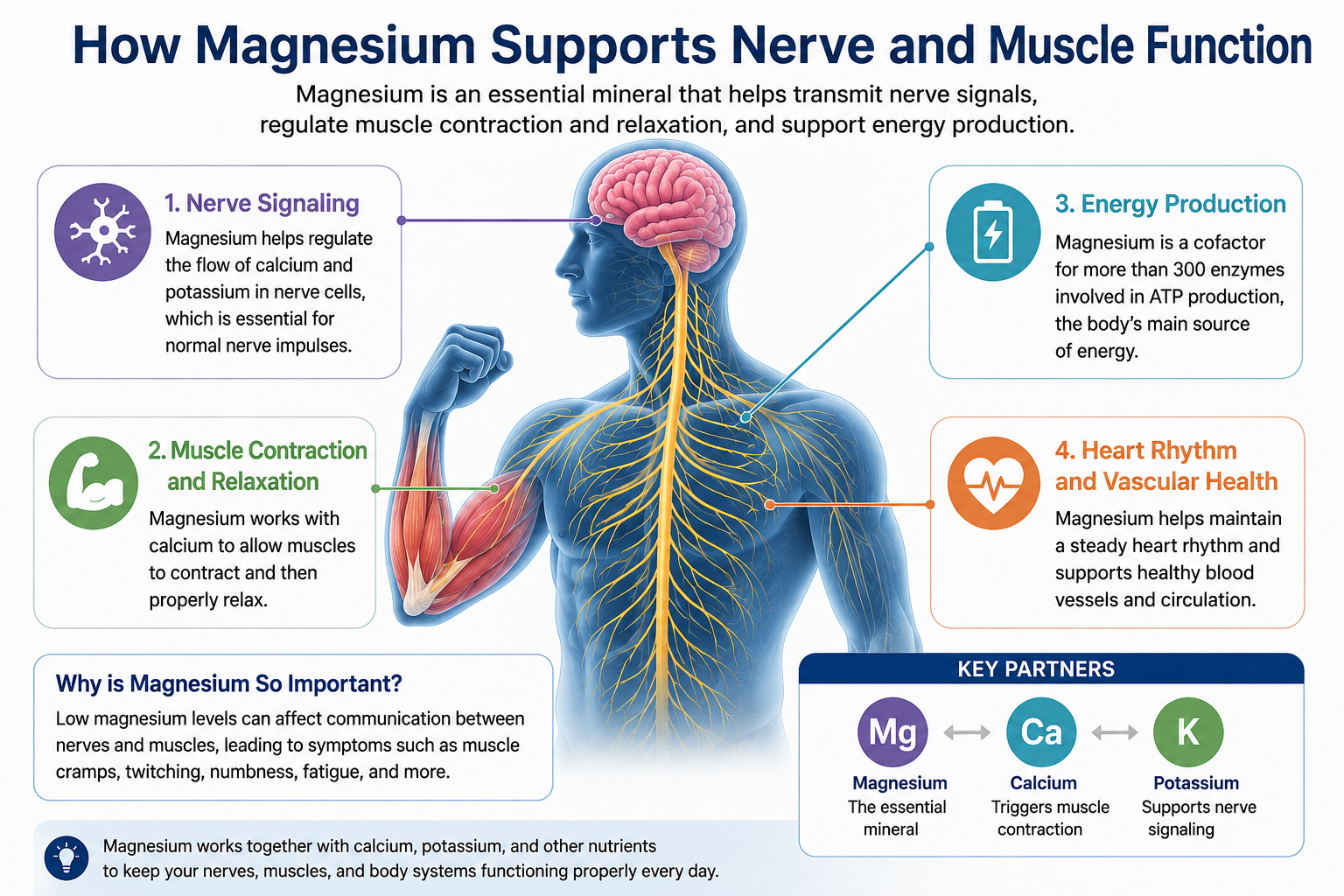
There is a logical reason for that association. Magnesium is an essential mineral involved in normal nerve signaling, muscle function, energy metabolism, and many enzymatic reactions throughout the body. Severe magnesium deficiency can also produce neuromuscular symptoms, including muscle cramps.
But that does not mean every twitch or cramp is evidence that your body needs more magnesium.
The more useful question is:
Can symptoms alone tell us whether someone is actually magnesium deficient?
Usually, they cannot.
Why Magnesium Matters for Nerves and Muscles
Magnesium participates in hundreds of enzymatic reactions and is important for processes ranging from protein synthesis and energy production to nerve and muscle function.
Muscle contraction and relaxation depend on coordinated electrical and chemical signaling. Magnesium works within this larger system alongside other electrolytes and minerals, including calcium and potassium.
When magnesium deficiency becomes significant, neuromuscular symptoms can occur. These may include weakness, numbness, tingling, muscle contractions, and cramps.
This explains why magnesium is frequently mentioned when muscle symptoms appear.
However, there is an important distinction:
A deficiency can cause a symptom, but the presence of that symptom does not prove a deficiency exists.
Muscle Cramps Have More Than One Possible Cause
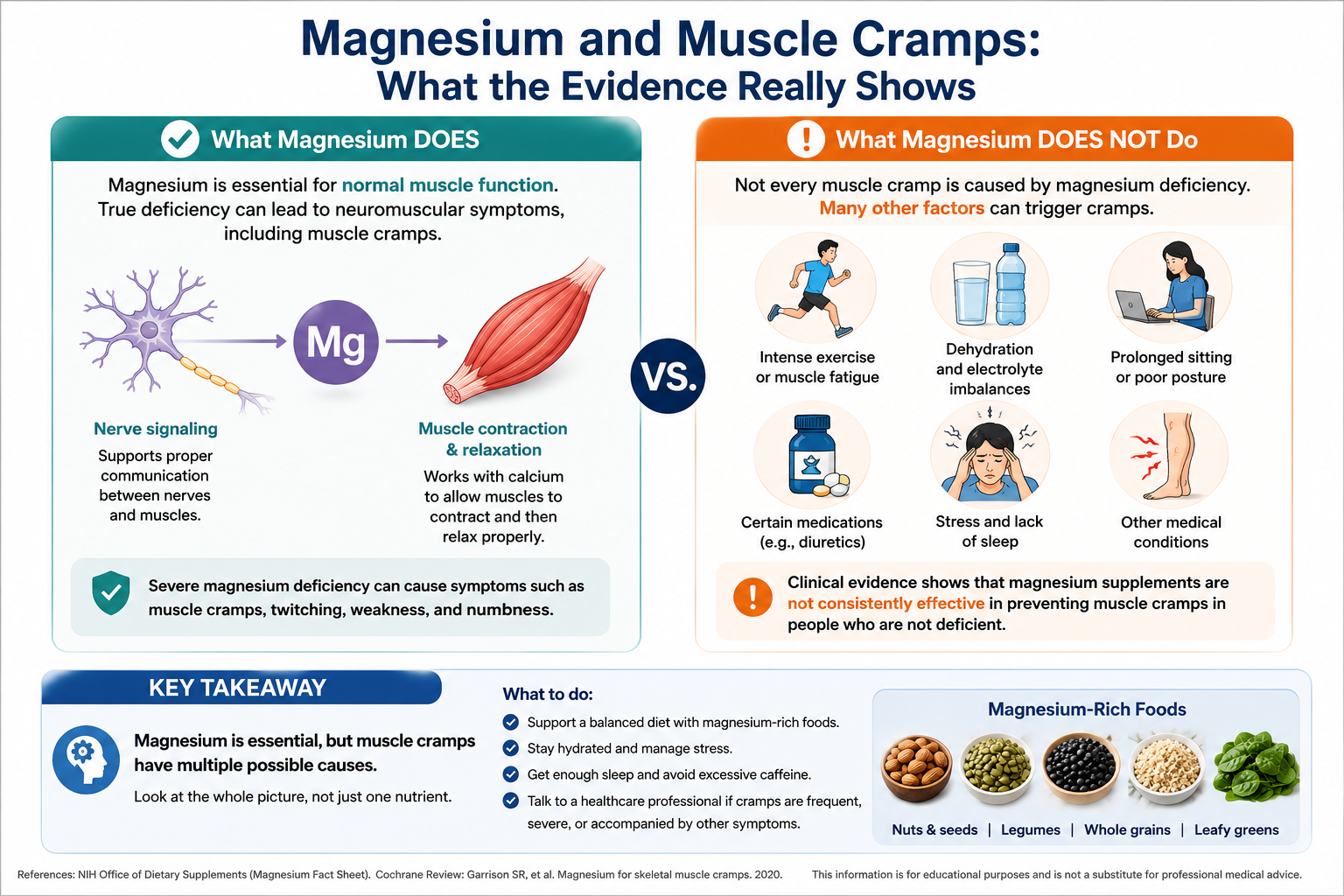
Muscle cramps are sudden, involuntary contractions that can be painful and temporarily make a muscle feel hard or difficult to move.
The calf is a common location, especially for nighttime cramps.
Magnesium status is only one part of the picture.
Cramps may occur in association with strenuous exercise, muscle fatigue, prolonged positioning, certain medications, underlying health conditions, and other physiological factors.
That is why treating every recurring cramp as a magnesium problem can be misleading.
The context matters.
A cramp that appears after unusually strenuous exercise, for example, should not automatically be interpreted the same way as recurrent unexplained cramps in someone with other symptoms or medical conditions.
Does Taking Magnesium Actually Prevent Muscle Cramps?
This is where the difference between biological plausibility and clinical evidence becomes important.
Because magnesium is required for normal muscle function, it may sound reasonable to assume that taking extra magnesium should prevent cramps.
Clinical trials, however, do not support such a broad conclusion.
A Cochrane systematic review evaluating randomized trials of magnesium for skeletal muscle cramps found that magnesium supplementation was unlikely to provide a clinically meaningful benefit for idiopathic cramps in older adults.
Evidence for pregnancy-associated leg cramps was less consistent, making firm conclusions difficult.
This does not mean magnesium is unimportant.
It means two different claims should not be confused:
Claim 1: Magnesium is necessary for normal muscle function.
Claim 2: Extra magnesium will prevent muscle cramps in anyone who experiences them.
The first is well established.
The second is not.
What About Eyelid Twitching?
A small, repetitive flutter in the upper or lower eyelid is often described as an eye twitch.
A common form is known as eyelid myokymia.
It is usually benign and self-limited, meaning it often disappears without specific treatment.
Commonly discussed triggers include:
- fatigue
- inadequate sleep
- stress
- high caffeine intake
- prolonged screen use and eye strain
- alcohol
- irritation of the eye surface
For someone who has been sleeping poorly, drinking more coffee than usual, and spending long hours looking at a screen, these factors may be more relevant than assuming a nutritional deficiency.
So an occasional eyelid twitch is not, by itself, a reliable indicator of magnesium status.
Why Did Magnesium Become So Closely Associated With Eye Twitching?
The connection probably sounds convincing because part of it is biologically true.
Magnesium is involved in normal neuromuscular function, and substantial magnesium deficiency can cause neuromuscular abnormalities.
The problem occurs when that information is reversed.
Consider these two statements:
“Magnesium deficiency can cause neuromuscular symptoms.”
and
“If I have a neuromuscular symptom, I must be magnesium deficient.”
They are not equivalent.
Many symptoms in nutrition work this way.
Fatigue does not automatically indicate iron deficiency. Tingling does not automatically indicate vitamin B12 deficiency. Likewise, an eyelid twitch does not automatically indicate magnesium deficiency.
Symptoms can provide clues, but they rarely identify a nutrient deficiency on their own.
Who Is More Likely to Develop Magnesium Deficiency?
Short-term fluctuations in magnesium intake do not necessarily produce immediate deficiency symptoms in otherwise healthy people.
The kidneys help regulate magnesium balance and can reduce urinary magnesium losses when intake is low.
Risk becomes more relevant when low intake persists or when absorption and excretion are affected.
According to the NIH Office of Dietary Supplements, groups that may be more likely to have inadequate magnesium status include people with certain gastrointestinal diseases, people with type 2 diabetes, individuals with long-term alcohol dependence, and older adults.
Certain medications can also influence magnesium status.
For example, some diuretics and long-term use of particular proton pump inhibitors can affect magnesium levels under certain circumstances.
This is another reason supplementation decisions should consider medical history rather than symptoms alone.
Can a Blood Test Confirm Magnesium Deficiency?
Testing magnesium status has limitations.
Only a small proportion of total body magnesium is found in the blood. Much of it is stored in bone and soft tissues.
Serum magnesium is commonly measured in clinical practice, but it does not perfectly represent total body magnesium stores.
That does not make the test useless.
Rather, it means a laboratory value is interpreted together with symptoms, medical history, dietary intake, medications, and other relevant findings.
For persistent or concerning symptoms, this broader clinical assessment is more informative than self-diagnosing a deficiency based on an eyelid twitch.
Which Foods Naturally Provide Magnesium?
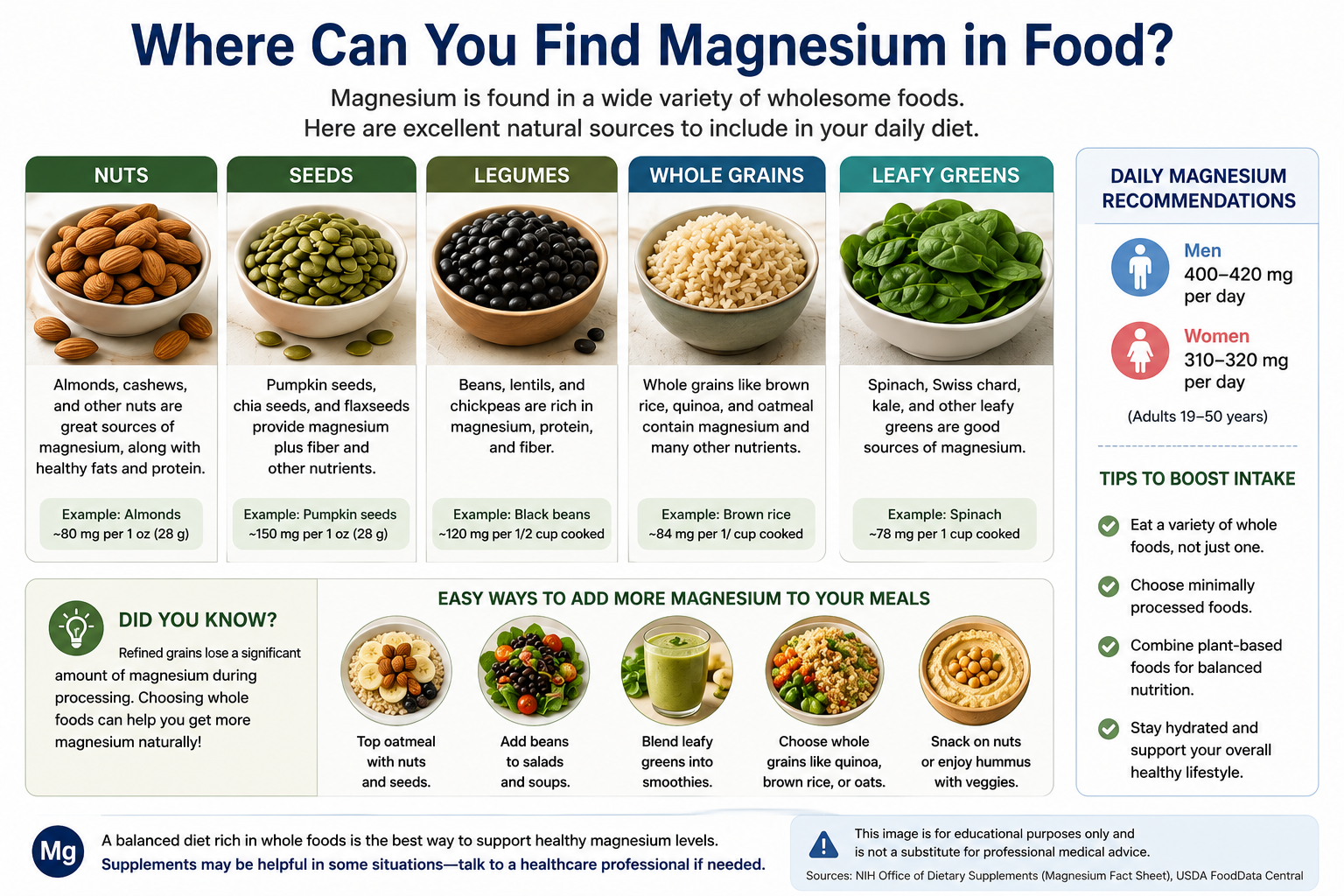
Magnesium is widely distributed in foods, so supplementation is not the only way to increase intake.
Useful dietary sources include:
Nuts and seeds
Almonds, pumpkin seeds, and other nuts and seeds can provide meaningful amounts of magnesium.
Beans and legumes
Beans offer magnesium along with fiber, protein, and other micronutrients.
Whole grains
Whole grains can contribute magnesium while providing additional nutrients that may be reduced during grain refining.
Leafy green vegetables
Spinach and other leafy greens are familiar dietary sources of magnesium.
Rather than focusing on a single “high-magnesium superfood,” a varied diet containing nuts, seeds, legumes, whole grains, and vegetables provides a more balanced nutritional approach.
Food Magnesium and Magnesium Supplements Are Not the Same Question
An essential nutrient can be necessary for health without everyone needing it as a dietary supplement.
This distinction is especially important with minerals.
Food provides magnesium within a broader food matrix containing protein, fiber, vitamins, minerals, and numerous other compounds.
A supplement, by contrast, delivers a concentrated amount of a specific nutrient.
Supplemental magnesium can cause diarrhea, nausea, and abdominal cramping when consumed in excessive amounts. Magnesium can also interact with some medications, including certain antibiotics and osteoporosis medications.
People with impaired kidney function may require particular caution because the kidneys play a major role in eliminating excess magnesium.
The appropriate question is therefore not simply:
“Is magnesium good for me?”
A better question is:
“Am I getting enough magnesium, and is there a reason I need additional supplementation?”
What Should You Check When Your Eyelid Starts Twitching?
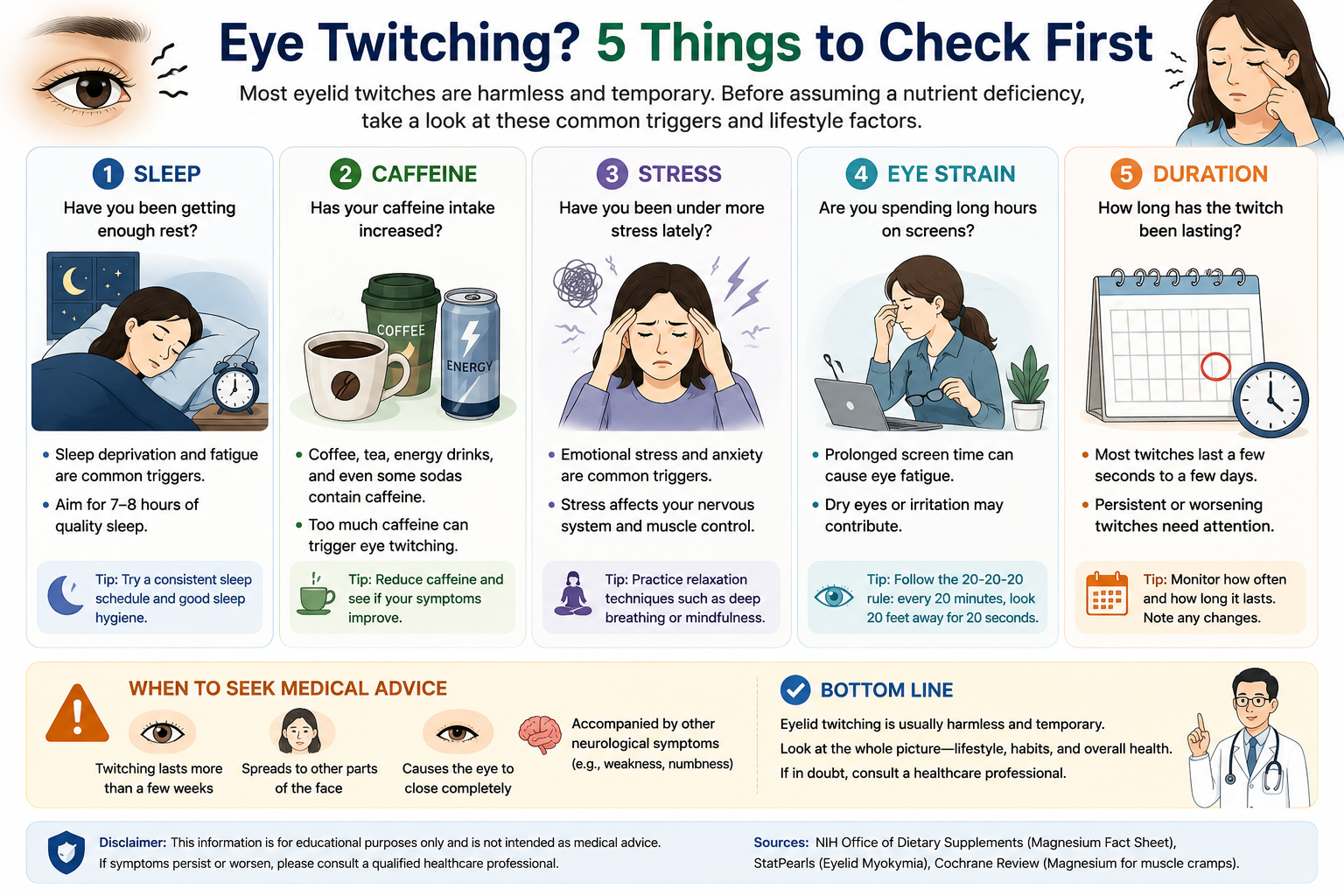
Before assuming a nutrient deficiency, look at what has changed recently.
Sleep
Have you been sleeping less than usual?
Fatigue is commonly associated with eyelid myokymia.
Caffeine
Has your coffee, tea, pre-workout, or energy drink intake increased?
Reducing excessive caffeine may be worth considering when twitching appears.
Stress
Has work, study, or another source of stress intensified recently?
Stress is another commonly reported trigger.
Screen time
Have you spent unusually long periods working on a computer or looking at a phone?
Eye fatigue and irritation may contribute.
Duration and progression
Did the twitch appear briefly and then disappear, or has it persisted and become more noticeable?
The pattern matters.
When Is an Eye Twitch Worth Medical Attention?
Occasional eyelid twitching is usually temporary, but persistent or unusual symptoms deserve more attention.
Medical evaluation is reasonable if twitching persists for an extended period, becomes progressively worse, causes the eyelid to close completely, or spreads beyond the eyelid to other parts of the face.
Other neurological symptoms occurring at the same time also warrant medical assessment.
Similarly, recurrent muscle cramps accompanied by weakness, sensory changes, or other unexplained symptoms should not simply be treated with supplements without investigating the cause.
The goal is not to make a harmless twitch seem alarming.
It is to avoid allowing a popular nutritional explanation to obscure other possible causes when symptoms are persistent or atypical.
Frequently Asked Questions
Does an eye twitch mean I am low in magnesium?
Not necessarily. Significant magnesium deficiency can produce neuromuscular symptoms, but common eyelid twitching can also be associated with fatigue, stress, caffeine, eye strain, and other factors. An eye twitch alone cannot diagnose magnesium deficiency.
Can magnesium deficiency cause muscle cramps?
Yes. Muscle cramps can occur with significant magnesium deficiency. However, cramps have many possible causes, so their presence does not prove that magnesium levels are low.
Should I take magnesium for nighttime leg cramps?
Evidence does not show a consistent clinically meaningful benefit for routine magnesium supplementation in older adults with idiopathic skeletal muscle cramps. Individual circumstances may differ, particularly when an actual deficiency is present.
Is food a good way to get magnesium?
Yes. Nuts, seeds, legumes, whole grains, and leafy green vegetables are among the foods that can contribute magnesium to the diet.
Can I take a high-dose magnesium supplement just in case?
More is not necessarily better. Supplemental magnesium can cause gastrointestinal side effects and interact with certain medications. People with medical conditions or those taking medications should discuss supplementation with an appropriate healthcare professional.
The Bottom Line: A Symptom Is Not a Diagnosis
Magnesium deserves its reputation as an important mineral.
Normal nerve signaling and muscle function depend on adequate magnesium, and significant deficiency can cause neuromuscular symptoms.
What the evidence does not support is turning every twitch or cramp into a magnesium diagnosis.
A better approach is to separate three questions:
Is magnesium essential?
Yes.
Can magnesium deficiency cause muscle-related symptoms?
Yes.
Does every eyelid twitch or muscle cramp mean you need a magnesium supplement?
No.
Sleep, caffeine intake, stress, exercise, diet, medications, medical conditions, and the duration and pattern of symptoms can all provide important context.
That distinction may be less appealing than a simple “take magnesium” answer, but it is a much better way to interpret nutrition and health information.
References
- National Institutes of Health, Office of Dietary Supplements. Magnesium: Fact Sheet for Health Professionals.
- National Institutes of Health, Office of Dietary Supplements. Magnesium: Fact Sheet for Consumers.
- Garrison SR, et al. Magnesium for skeletal muscle cramps. Cochrane Database of Systematic Reviews. 2020.
- Chardoub AAJ, Patel BC. Eyelid Myokymia. StatPearls.
Health Information Disclaimer
This article is intended for general educational purposes and does not provide medical diagnosis or treatment. Persistent or worsening eyelid twitching, recurrent muscle cramps, weakness, sensory changes, or other concerning symptoms should be evaluated by a qualified healthcare professional.
Supplement needs vary according to diet, health status, kidney function, medications, and other individual factors. Consult an appropriate healthcare professional before starting magnesium supplements if you have a medical condition or take prescription medications.