Apigenin is a naturally occurring flavonoid found in chamomile, parsley, celery, and other plant-based foods. Learn what current research says about apigenin, its food sources, bioavailability, safety considerations, and how it compares with other flavonoids.
Natural plant compounds have attracted growing attention in recent years, especially among people interested in nutrition, healthy aging, and antioxidant-rich foods. One compound that has been appearing more frequently in scientific discussions is apigenin.
Unlike many ingredients that become popular because of short-term trends, apigenin has been studied for decades. Researchers have investigated its biological properties in laboratory and preclinical studies, particularly its role as a naturally occurring flavonoid found in several herbs and vegetables.
However, if you've searched online, you've probably noticed that many articles either exaggerate potential benefits or simply repeat the same information without explaining the scientific context. Understanding where the current evidence stands is much more useful than relying on marketing claims.
This article reviews what apigenin is, where it naturally occurs, why researchers continue to study it, how it differs from other flavonoids, and what to consider before choosing a supplement.
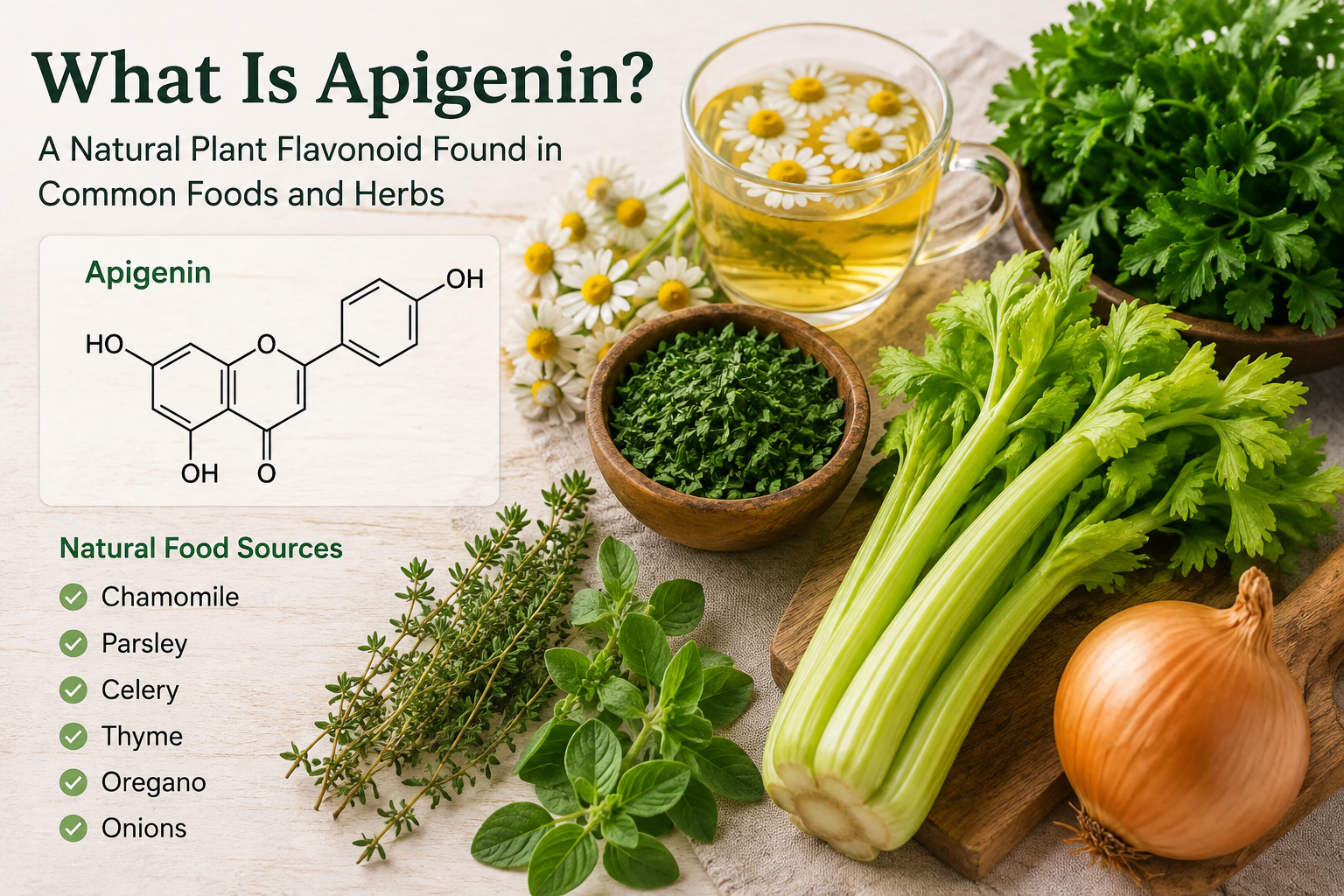
What Is Apigenin?
Apigenin is a plant-derived flavonoid, a group of naturally occurring compounds produced by plants as part of their defense system against environmental stress.
Flavonoids are present in many fruits, vegetables, herbs, and teas. Although thousands of flavonoids have been identified, apigenin has received increasing scientific interest because of its antioxidant properties and its wide distribution in commonly consumed foods.
Foods naturally containing apigenin include:
- Chamomile
- Parsley
- Celery
- Thyme
- Oregano
- Onions
Because these foods are already part of many traditional diets, apigenin is not considered an exotic compound. Instead, it is one of many naturally occurring phytochemicals that contribute to the nutritional diversity of plant-based foods.
Why Has Apigenin Become More Popular?
Interest in apigenin has increased for several reasons.
First, consumers are becoming more interested in plant-derived bioactive compounds rather than isolated synthetic ingredients.
Second, researchers continue to publish studies exploring how naturally occurring flavonoids interact with biological pathways related to oxidative stress and cellular function.
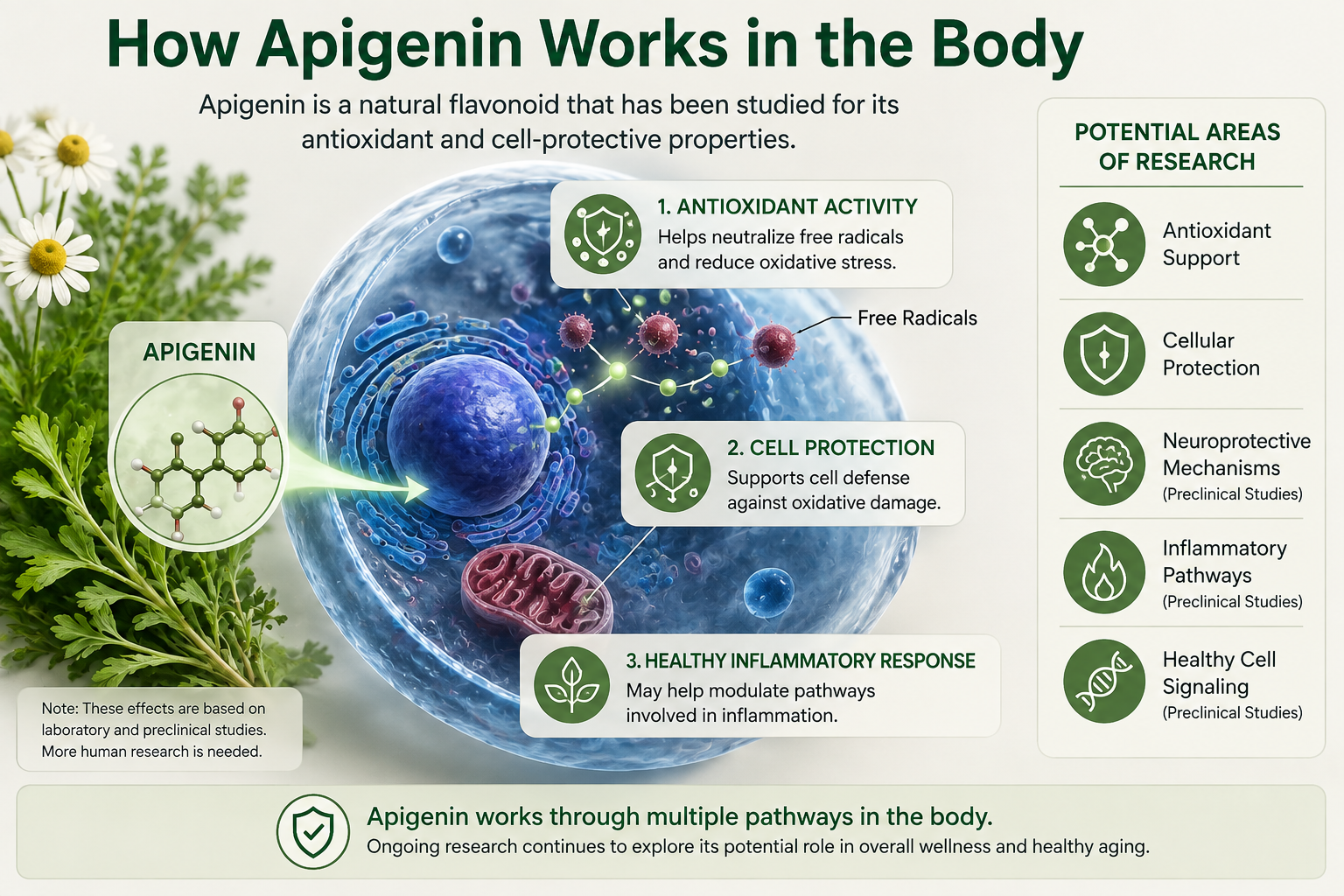
Current research has investigated areas such as:
- Antioxidant activity
- Cellular protection mechanisms
- Oxidative stress responses
- Plant polyphenol metabolism
- General biological activity of flavonoids
It is important to understand that much of this work comes from laboratory experiments and preclinical research. Human clinical evidence is still developing, meaning current findings should be interpreted carefully rather than viewed as confirmed health outcomes.
Understanding the difference between laboratory findings and established clinical evidence helps readers make more informed decisions when evaluating nutrition-related information.
What Does Current Research Focus On?
Scientific publications generally describe apigenin as one of several naturally occurring flavonoids that may contribute to antioxidant activity within experimental models.
Researchers are particularly interested in how apigenin interacts with oxidative stress pathways, inflammatory signaling, and normal cellular processes. These investigations help scientists better understand the biological characteristics of plant compounds, although they should not be interpreted as proof of disease prevention or treatment.
One important point often overlooked online is that scientific research develops gradually. Initial laboratory observations are valuable, but stronger conclusions require well-designed human clinical studies conducted over time.
For this reason, many review papers describe apigenin as a promising area of research while also emphasizing the need for additional clinical evidence.
Bioavailability: Why It Matters
Finding a beneficial compound in food is only one part of the story. Researchers also study bioavailability, which refers to how efficiently a compound is absorbed, metabolized, and utilized after consumption.
Current evidence suggests that factors such as food composition, preparation methods, digestive processes, and supplement formulation may all influence the bioavailability of apigenin.
For this reason, scientists continue investigating delivery systems and formulations that may improve absorption, although no universal standard has been established.
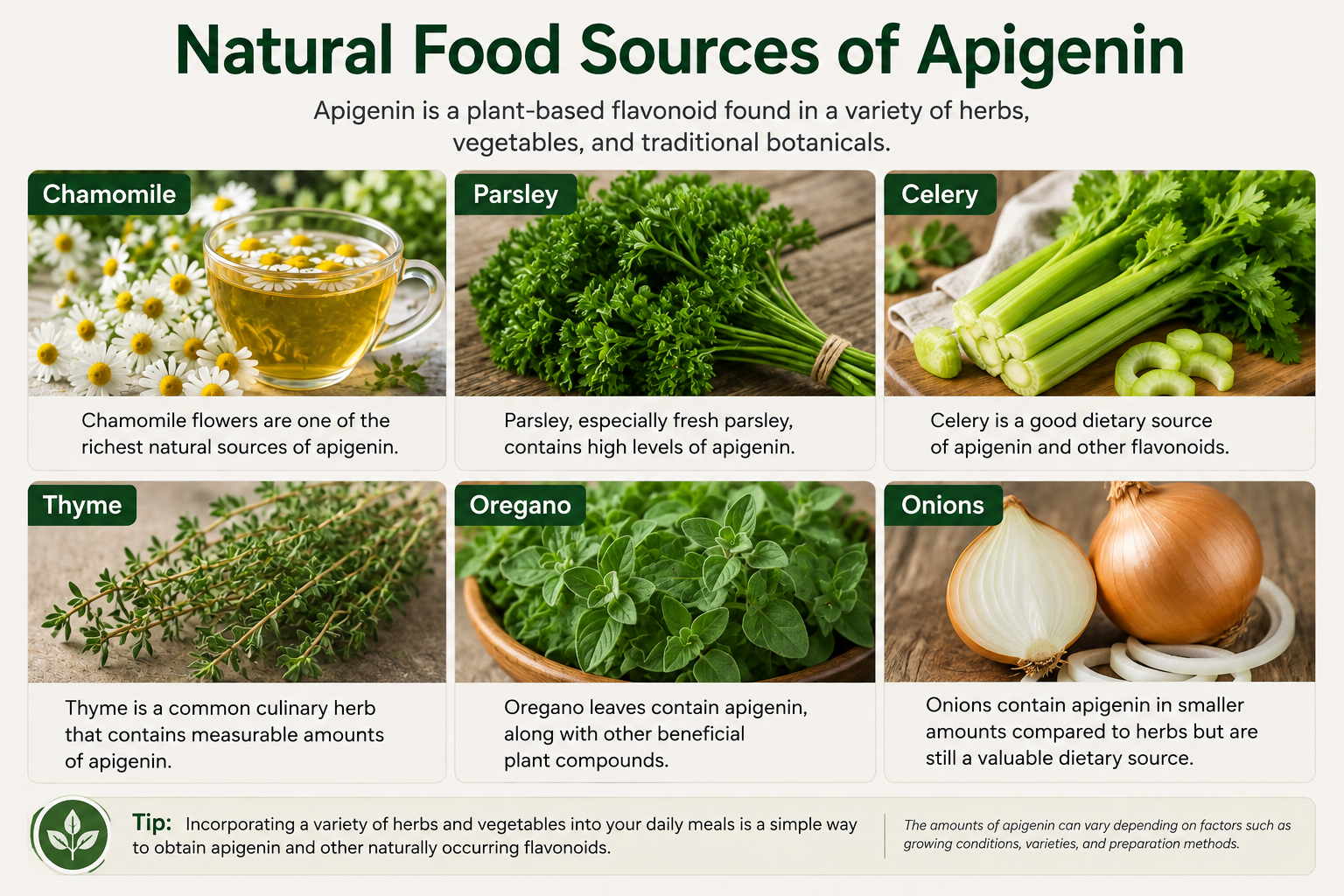
How Does Apigenin Compare with Other Flavonoids?
Apigenin belongs to a large family of naturally occurring plant compounds known as flavonoids. While these compounds share certain structural similarities, each one has unique biological characteristics and continues to be studied for different reasons.
Apigenin vs. Quercetin
Quercetin is one of the most widely researched flavonoids and is naturally found in foods such as onions, apples, berries, and capers. Scientific interest in quercetin has focused on antioxidant activity, immune function, and cardiovascular health.
Apigenin, on the other hand, is more commonly associated with herbs such as chamomile and parsley. Current research often explores its antioxidant properties, cellular signaling, and interactions within experimental biological models.
Rather than viewing one compound as "better" than another, it is more accurate to consider them different plant-derived flavonoids with distinct characteristics.
Apigenin vs. Luteolin
Luteolin is another flavonoid found in celery, thyme, peppers, and several herbs. Although apigenin and luteolin have similar chemical structures, researchers continue to investigate how each compound behaves differently in laboratory studies.
Both compounds are part of a varied plant-based diet and contribute to the diversity of naturally occurring phytochemicals.
Choosing an Apigenin Supplement
If you are considering an apigenin supplement, it is worth looking beyond the marketing claims on the label.
A few important points include:
- Clearly identified plant source
- Amount of apigenin per serving
- Manufacturing quality standards (such as GMP-certified facilities)
- Transparent ingredient list
- Appropriate serving instructions
- Minimal unnecessary additives or artificial colors
Quality supplements should provide clear information about both the active ingredient and supporting ingredients rather than relying on promotional language alone.
Safety Considerations
Although apigenin is naturally present in many foods, supplements may not be appropriate for everyone.
Extra caution is generally recommended for:
- Pregnant or breastfeeding women
- Individuals taking prescription medications
- People with underlying medical conditions
- Anyone with allergies to plants in the daisy family, including chamomile
- Individuals taking multiple dietary supplements simultaneously
As with any dietary supplement, reading the product label carefully and consulting a qualified healthcare professional when necessary is a sensible approach.
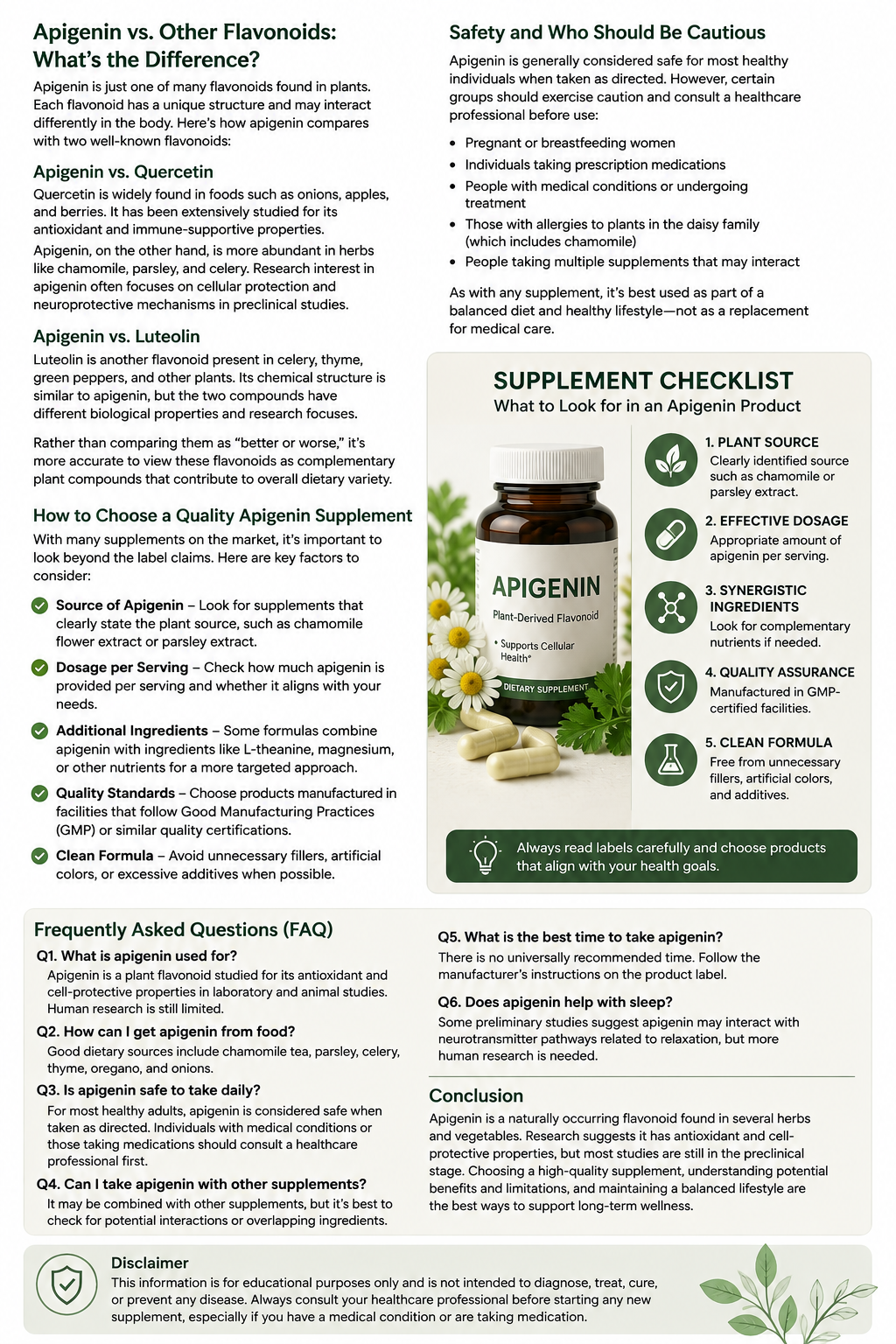
Frequently Asked Questions
Is apigenin naturally found in food?
Yes. Apigenin naturally occurs in chamomile, parsley, celery, thyme, oregano, onions, and several other plant-based foods.
Is apigenin considered a dietary supplement?
Apigenin itself is a naturally occurring plant compound. Whether it is available as a dietary supplement depends on local regulations and product formulations in each country.
What is the best time to take apigenin?
There is no universal recommendation. Following the serving instructions provided by the manufacturer is generally the best approach.
Can apigenin be combined with other supplements?
Many products combine apigenin with other ingredients. However, individual circumstances differ, so it is important to review ingredient lists carefully and seek professional advice when appropriate.
Is more always better?
Not necessarily. Taking more than the recommended serving does not automatically provide greater benefits. Following the manufacturer's suggested serving size is recommended.
Conclusion
Apigenin is a naturally occurring flavonoid found in a variety of herbs and vegetables, including chamomile, parsley, and celery. Growing scientific interest has made it one of the better-known plant compounds in recent years, particularly in discussions about antioxidant-rich foods and plant-based nutrition.
Current research continues to explore its biological properties, but much of the available evidence comes from laboratory and preclinical studies. While these findings are valuable, they should not be interpreted as established clinical outcomes.
When choosing any dietary supplement, focusing on product quality, transparent labeling, and evidence-based information is far more important than following trends or marketing claims.
A balanced diet, healthy lifestyle, and informed decision-making remain the foundation of long-term wellness.
References
- Peer-reviewed review articles on flavonoids and apigenin
- Scientific literature on plant-derived polyphenols
- Nutrition and food science publications
- Dietary supplement research reviews
Medical Disclaimer
This article is intended for educational and informational purposes only. It is not intended to diagnose, treat, cure, or prevent any disease. Dietary supplements should not replace a balanced diet or professional medical advice. If you have a medical condition, are pregnant or breastfeeding, or are taking prescription medications, consult a qualified healthcare professional before using any dietary supplement.